WiFi Locks for Tourist Apartments: Security and Management Guide
Optimize the management and security of your tourist apartment with WiFi locks. Remote control, autonomous check-in, and maximum efficiency. Discover the ideal solution for your property!
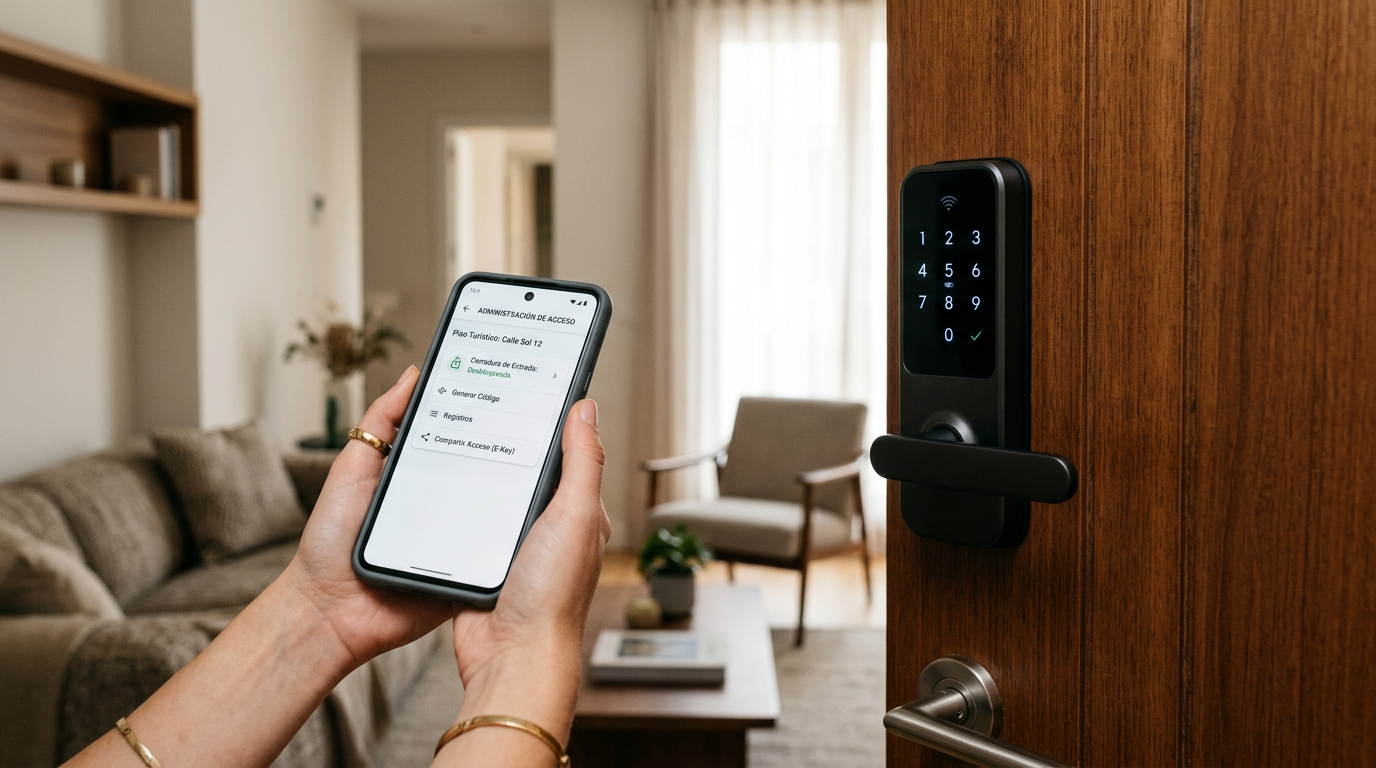
In the dynamic sector of vacation rentals and tourist apartments, efficiency and security are fundamental pillars for success. Managing guest arrivals and departures, ensuring property protection, and optimizing daily operations are constant challenges. This is where smart locks for tourist apartments, especially those incorporating WiFi technology, emerge as a transformative solution. These not only modernize property access but also offer unprecedented control, improving the experience for both owners and tenants.
The essentials
- WiFi locks optimize access management in tourist apartments, eliminating physical keys and facilitating remote check-in.
- They offer advanced security, real-time monitoring, and the ability to generate temporary or revocable codes for each guest.
- Various types exist, from knob or lever handle locks to surface-mounted systems, each with its advantages.
- Choosing the protocol (WiFi, Bluetooth, Z-Wave, Zigbee, Matter) is key for connectivity and integration with other systems.
- Considering ease of installation, battery life, integration with management platforms, and technical support is crucial.
WiFi Locks for Tourist Apartments: The Key to Success in Vacation Rental Management
WiFi locks for tourist apartments represent a significant evolution compared to traditional access systems. Their main advantage lies in direct internet connectivity, allowing for completely remote property management. Forget tedious key handovers, check-in delays, or worrying about unauthorized copies. With a WiFi lock, access control is literally in the palm of your hand, from anywhere, at any time.
This technology not only provides convenience but also elevates the level of security and operational efficiency. It allows the host to generate unique access codes for each guest, schedule entry and exit times, and even revoke permissions instantly if needed. Furthermore, many of these locks integrate event logging functionalities, providing a detailed history of who accessed the property and when.
The importance of network security
Ensure your WiFi network is protected with robust passwords and WPA3 encryption to secure the communication of your smart locks.
Advantages of installing WiFi locks in tourist apartments
Adopting WiFi locks is not a mere modernization but a strategic investment that offers multiple tangible benefits:
- Autonomous check-in and check-out Guests can access the property without waiting or needing to coordinate schedules, enhancing their experience.
- Comprehensive remote management Control all your accommodations from a single app, no matter where you are.
- Enhanced security Generate unique and temporary codes, revoke them instantly, and receive real-time access alerts. Eliminate the risk of unauthorized key copies.
- Cost optimization Reduce expenses associated with key management, reception staff, and lost key calls.
- Activity log Access a detailed history of who entered and when, useful for security and incident resolution.
- Integration with PMS/VMS Many locks allow connection with property management systems and tourist housing systems, further automating operations.
Types of WiFi locks for vacation rentals
The market offers a wide variety of smart locks, adapted to different door types and needs. It is essential to choose the model that best suits your property:
- Smart knob/lever handle locks Replace the existing knob or handle with a smart system. Easy to install on many standard doors.
- Surface-mounted or smart cylinder locks Maintain the door's aesthetics by replacing only the cylinder or adding a mechanism to the existing one. Ideal for doors with complex locking systems.
- Motorized multipoint locks Offer the highest level of security, motorizing all locking points of the lock. These are robust solutions, often used in hotels or high-value properties.
- Smart deadbolts Installed as an additional deadbolt on the door, offering an extra layer of security without replacing the main lock.
- Access control platforms More complete systems that can manage multiple doors and access types (keys, cards, mobile phones), ideal for buildings with several tourist apartments. Raixer offers solutions like Raixer Pro for these types of scenarios.
Key considerations when choosing a WiFi lock for your tourist apartment
Before making a purchase, it is important to evaluate several factors to ensure that the chosen lock meets your expectations and operational needs:
WiFi locks are not just a device, but a platform to reinvent the guest experience and property management.
Security aspects in smart locks with WiFi
Security is the top priority when it comes to property access. Quality WiFi locks incorporate multiple layers of protection:
- Data encryption Communication between the lock, app, and servers must be encrypted (128 or 256-bit AES) to prevent interception.
- Temporary access codes Codes are generated valid only for the duration of the stay, automatically expiring at the end of the period.
- Two-factor authentication (2FA) Optional in some apps to add an extra layer of security when accessing the management platform.
- Integrated alarm systems Some locks can emit audible alerts or send notifications in case of tampering attempts or forced entry.
- Physical resistance In addition to intelligence, the lock must be mechanically robust to withstand physical attacks.
Beware of connectivity
Ensure that the WiFi signal at the property's door is strong and stable. Poor connectivity can affect the lock's reliability and response.
The future of access: integration and automation
The trend in the tourism sector points towards greater integration and automation. WiFi locks are not an isolated element, but a fundamental part of a broader smart home ecosystem. The ability to interact with other devices (thermostats, lights, noise sensors) and management platforms will further optimize operations.
Imagine a scenario where, upon check-out, the lock automatically engages, the thermostat adjusts the temperature to an energy-saving level, and cleaning staff are notified. This vision of "automatic remote check-in" and integrated management is what Raixer provides to owners and managers of tourist homes. The ability to offer a frictionless experience to guests, combined with total control for the owner, makes WiFi locks an indispensable tool for modern vacation rentals.
Frequently Asked Questions

Do I need WiFi at the property for a smart WiFi lock to work?
Yes, it is essential. The WiFi lock connects directly to the property's internet network to allow remote control. If the WiFi signal is weak at the door, a range extender could be considered.
What happens if the power or internet connection goes out?
Most smart WiFi locks have backup systems. Generally, they continue to operate with their pre-set codes on the keypad (if they have one) and, in almost all cases, have an emergency physical key or an external emergency power option via USB. WiFi connectivity is only necessary for remote management, not for basic operation.
Can hackers access my WiFi lock?
WiFi locks from reputable brands incorporate advanced encryption and robust security protocols to protect against cyber attacks. It is crucial to use strong passwords for your WiFi network and for the lock's application, and to keep the lock's firmware updated. Security is a priority for manufacturers like Raixer.
What is the battery life of a WiFi lock?
Battery life varies depending on the model, usage, and battery type, but generally ranges between 6 and 12 months with normal use. Many locks send notifications to the app when the battery is low so you can replace it in time.
Can I integrate the WiFi lock with my property management system (PMS)?
Many manufacturers offer integrations with popular PMSs. This allows for automated generation and sending of access codes to guests directly from your management platform, greatly simplifying operations. Consult the lock provider about available integrations.