Smart Lock Without Changing the Key: User Guide
Want to install a smart lock without changing your key? Discover how it works, its benefits, and installation requirements. Upgrade your door today!
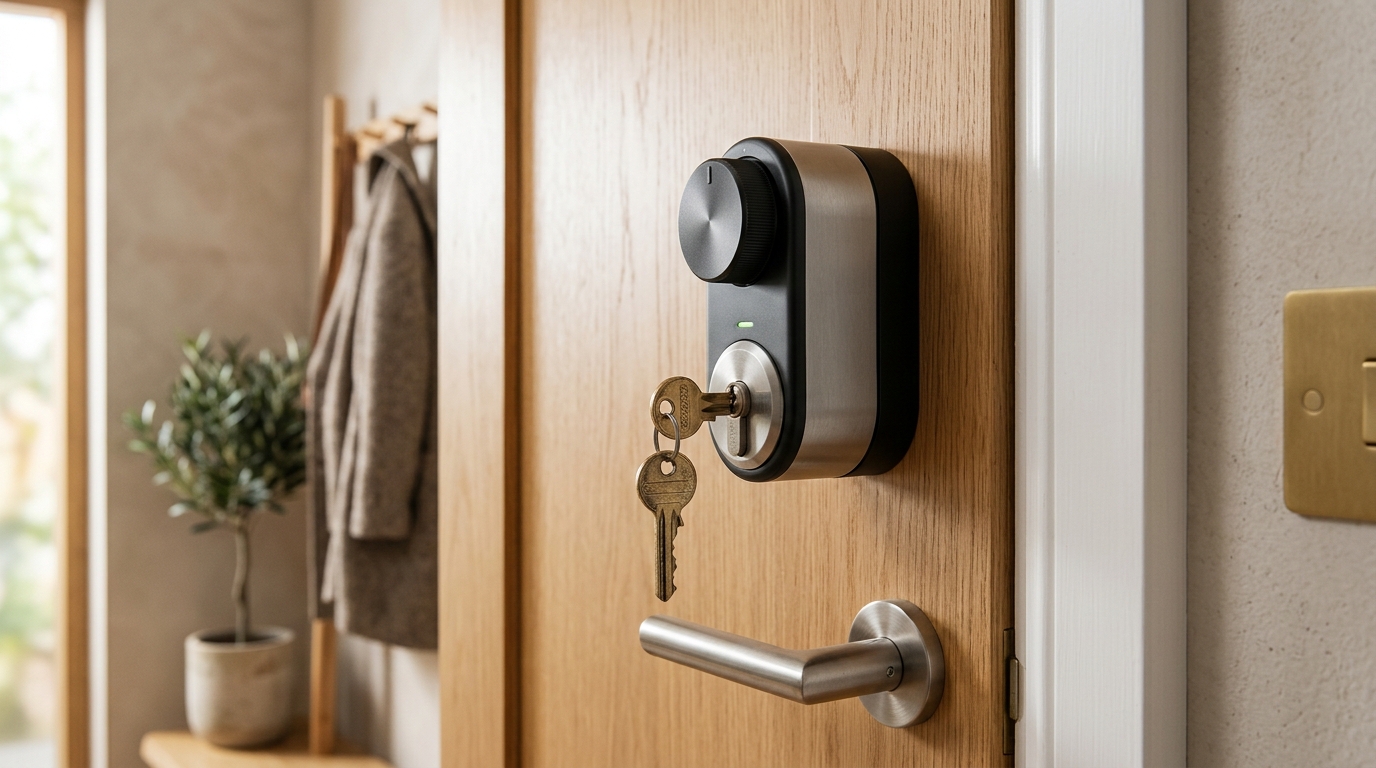
Transitioning to digital access does not always require dismantling the door or discarding your current cylinder. Many homes, offices, and holiday rentals look for a middle ground: the ability to install a smart lock without changing the original key. This hybrid approach preserves traditional mechanical access while adding the convenience and security of connected technology, solving common logistical headaches without invasive carpentry work.
Key Takeaways
- This retrofit allows you to keep your traditional physical key while adding digital access features.
- Installation is typically fast, fully reversible, and does not alter the door's deadbolts or main lock mechanism.
- It is ideal for vacation rentals, short-term lets, or anyone looking for a smooth transition toward access control.
Can You Install a Smart Lock Without Changing the Key?
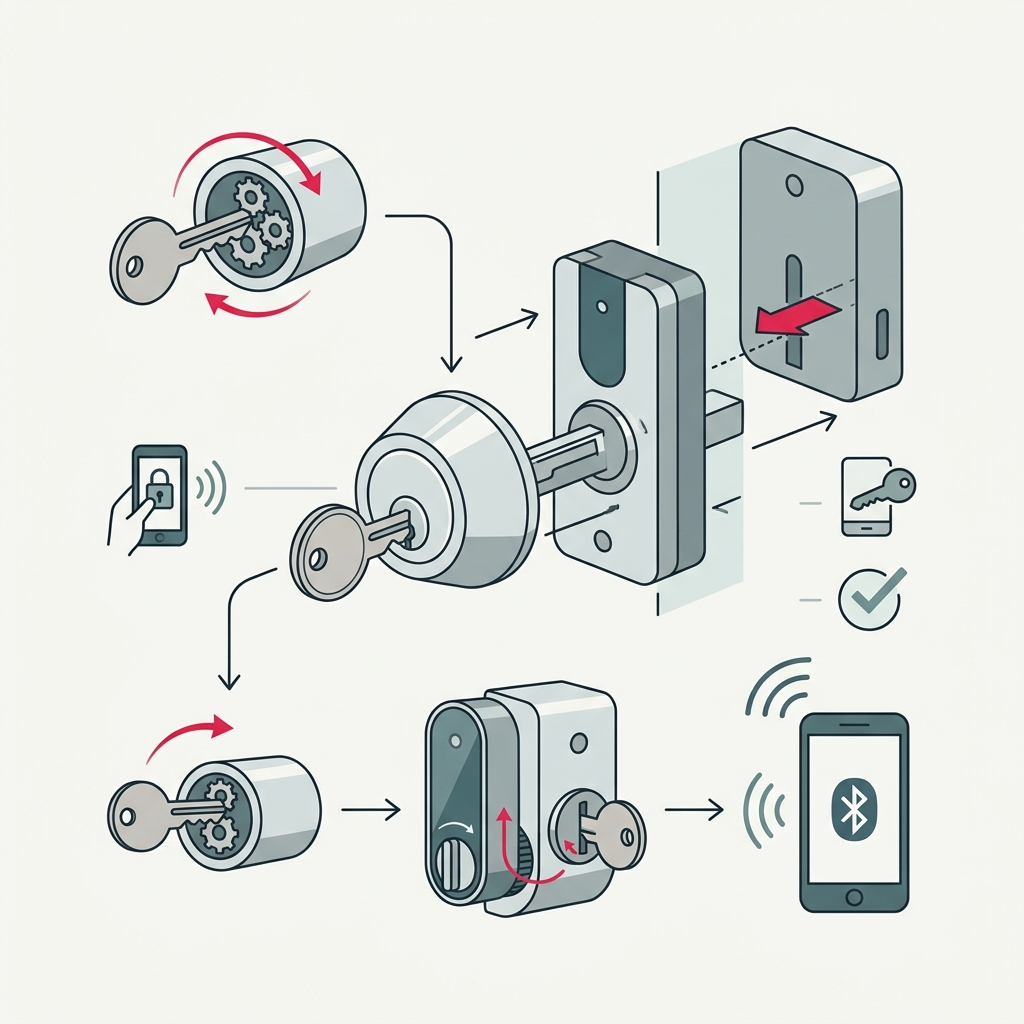
The short answer is yes. Unlike mortise locks or full motorized cylinders that replace the entire internal mechanism, smart retrofits are installed on the inside of the door. They mount directly over the existing cylinder—which in most cases is a Euro profile cylinder—leveraging the same turning motion you would make by hand to operate the latch via a motor.
For this system to work properly while ensuring you can still use your old key, your current cylinder must feature a dual-clutch function (also known as an emergency or external override cylinder). This ensures that even if the smart adapter holds a key inserted on the inside, another key can still turn the barrel from the outside to lock or unlock the door.
Key Trimming
On some ultra-compact models, it may be necessary to cut off the plastic or metal head of the interior key so the motor casing can fit flush against the door. This process is quick; while the key will no longer be usable for manual unlocking from the outside, it will perform its function perfectly inside the adapter.
Use Cases: Who Benefits Most from This System?
The ability to install a smart lock without changing the key removes friction across many scenarios. It facilitates a smooth technological transition where imposing 100% digital systems might otherwise cause resistance or operational hurdles.
- Vacation and Short-Term Rentals Offer automated remote check-in via smartphone, while allowing property managers or cleaning staff to retain quick access using a physical master key in emergencies.
- Real Estate and Renovations Grant access to contractors and inspectors for weeks at a time using virtual permissions. Once the work is done, unmount the motor and return the original, untouched physical keys to the owner.
- Elderly or Dependent Individuals Relatives or emergency medical services can enter using PIN codes or apps, while the primary resident can continue using the traditional key if they prefer.
- Community Buildings For shared storage units or common amenities. A relay like the Raixer 12V can be installed for digital opening, operating seamlessly alongside the traditional mechanical lock for residents without a smartphone.
Technology and Connectivity
Locks mounted over existing keys sacrifice none of the premium features found in modern access control systems. Communication typically relies on Bluetooth Low Energy (BLE), allowing your smartphone to communicate with the adapter even without internet reception in the stairwell.
However, to unlock its full potential in environments like a lock for vacation rentals, a remote connection is essential. This is achieved by pairing the lock with a Wi-Fi bridge. This enables property owners to grant access or check door status in real time from anywhere in the world.
The Role of the Bridge
The Wi-Fi bridge translates Wi-Fi signals from your router into Bluetooth signals that the adapter understands, enabling remote unlocking and integration with PMS platforms for digital key automation.
The seamless coexistence of traditional brass gearing and digital protocols is the key to adopting smart technology without friction or disruptive renovations.
Alternatives and Security Considerations
Adding smart functionality to a lock neither increases nor decreases the physical security level of your existing cylinder; it simply adds a layer of control over who enters and when. If your original cylinder is low-grade and vulnerable to lock-picking or bumping, it will remain just as vulnerable, regardless of how advanced the interior motor's software is.
In this respect, the main threat is not digital hacking, but physical attacks on the exterior lock. It is highly recommended that your door be fitted with a sturdy security escutcheon to protect the cylinder from heavy-tool tampering. The smart system handles access management; the physical barrier continues to rely on the hardened metal of your cylinder and protective escutcheon.
Frequently Asked Questions
What happens if the interior motor runs out of batteries?
The companion app sends low-battery notifications weeks before power runs out. If the batteries do deplete completely, you can always insert your traditional key from the outside (thanks to the dual-clutch cylinder) and unlock the door manually, as the motor yields to mechanical force.
Is the motor noisy when locking or unlocking the door?
It depends on the manufacturer and the condition of the door's lock. If the mechanical lock binds or feels stiff, the motor will have to work harder, producing a low mechanical hum (similar to an electric screwdriver). If the cylinder turns smoothly, the sound is barely noticeable from the hallway.
Does installing this system damage the door?
In the vast majority of cases, not a single hole needs to be drilled. The systems use mounting plates that either clamp securely around the existing cylinder or adhere with heavy-duty adhesive tape designed to be removed cleanly without peeling the door's paint or finish.
Does the adapter turn deadbolts and retract the latch?
Yes. During calibration, the smart lock learns the complete turning range. It is designed to turn the key multiple times (locking and unlocking the security bolts) and can even pull the latch back for a few seconds so the door unlatches automatically, removing the need to turn an exterior knob.
What happens if I forget to lock the door at night?
Many systems feature an Auto-Lock function. Using a door frame sensor, the motor detects when the door has physically closed and, moments later, engages the deadbolts automatically, ensuring your home is securely locked without any manual effort.