Easily Replace Garage Remotes with Your Smartphone
Discover how to replace garage remotes with your smartphone to open your door securely and without physical keys. Modernize your garage access today!
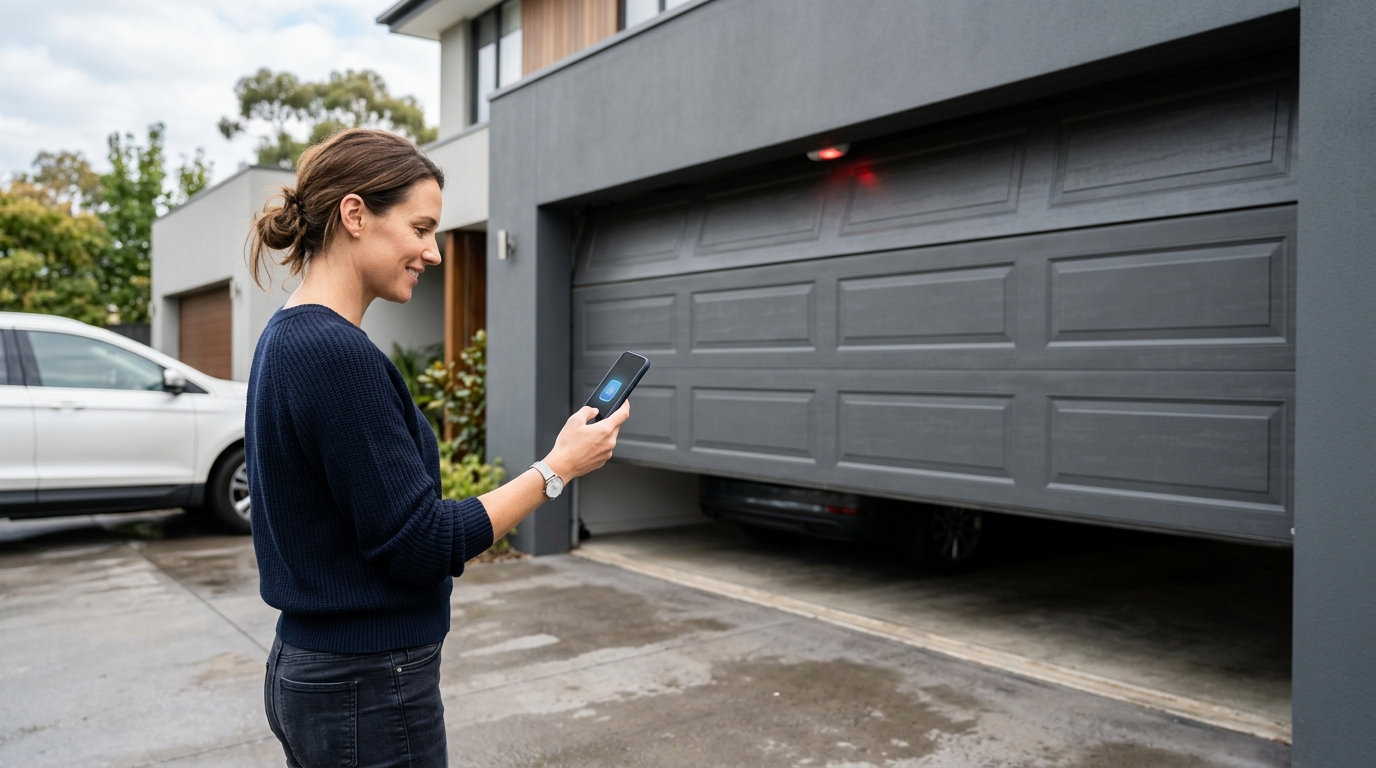
Traditional remote controls for automatic doors have been the standard access method for parking lots and garages for decades, but today they bring constant headaches: dead batteries at the worst possible moment, broken casings from drops, unauthorized cloning, and high costs every time a duplicate is needed. Taking the technological leap to replace garage remotes with your smartphone solves these issues by turning your phone into a secure, encrypted digital key manageable in real time.
Key Takeaways
- Turning your smartphone into a remote eliminates recurring expenses on duplicates and battery replacements.
- Installing a smart receiver is done in parallel with the existing control board without disabling traditional remotes.
- It allows granting and revoking temporary access permissions for family members, tenants, or delivery drivers without handing out physical keys.
- Combining technologies like Bluetooth Low Energy, Wi-Fi, and smart home protocols ensures reliable access even without cell service.
How to Replace Garage Remotes with Your Smartphone Step by Step
Modernizing your opening system does not require replacing the motor or altering the existing mechanical infrastructure. Any automatic door—whether overhead, sectional, sliding, or roller—operates via a central control board that receives electrical pulses to initiate opening or closing cycles.
To replace garage remotes with your smartphone, the standard procedure involves connecting a small receiver device to the external push-button terminal on the control board. This unit functions as a dry contact (voltage-free relay), mimicking the exact same signal sent by a wall switch or a conventional radio-frequency receiver when it detects an authorized physical remote code.
Access in Underground Garages
If the garage is located on a basement or underground level without 4G/5G coverage, always opt for receivers with native BLE (Bluetooth Low Energy) support. This allows authentication between the smartphone and the lock to happen directly and encrypted, without requiring an active internet connection at that moment.
Differences Between Private Garages and Community Parking Lots
The technical and operational approach varies significantly depending on whether the access point serves a single-family home or a multi-family residential building. The scale of the system dictates both the required hardware and management capabilities.
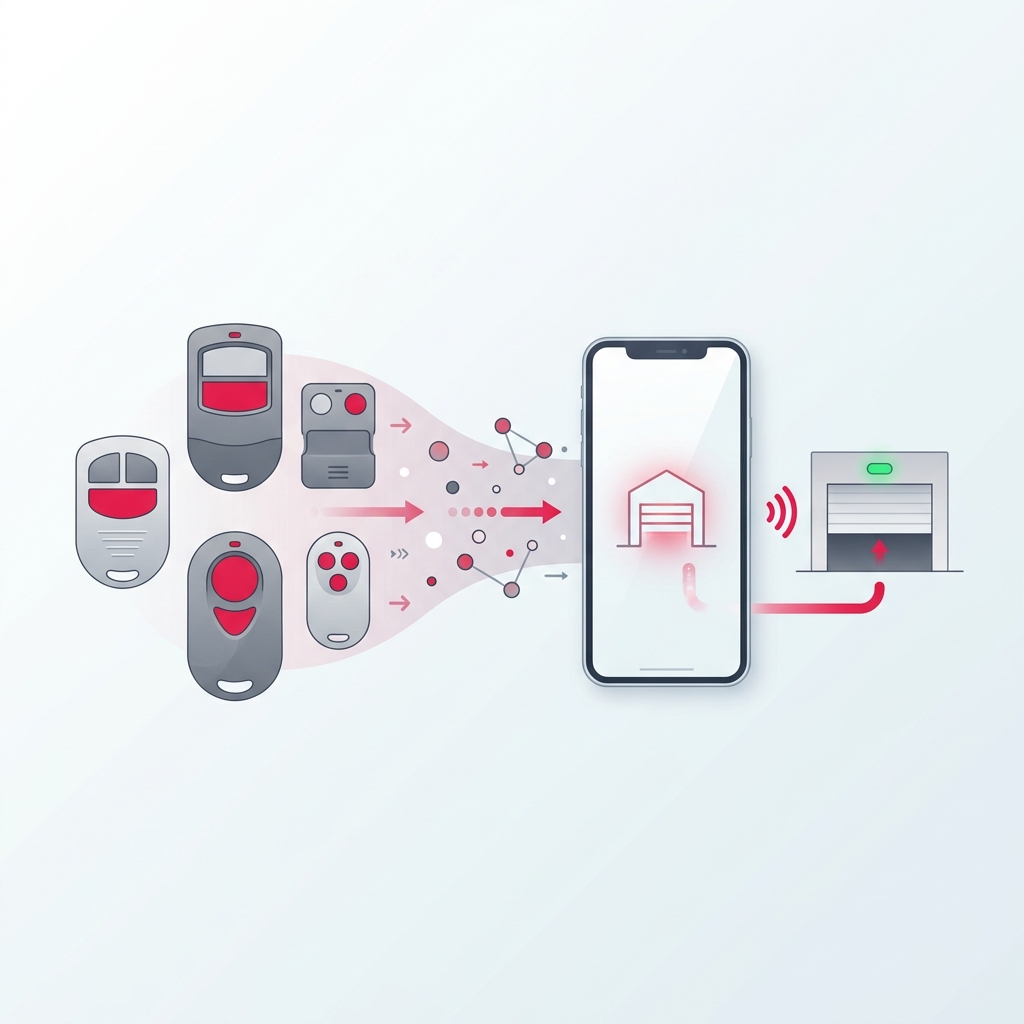
In a private home, the primary focus is convenience: entering without searching for a clicker, using voice commands while driving, or granting access to family members. In contrast, residential communities must consider shared building security, constant tenant turnover, and payment management.
For residential communities, choosing a dedicated solution such as a smart lock for residential communities radically streamlines building administration. The property manager or board president no longer needs to collect cash, order remotes from a locksmith, or worry about who keeps copies after moving out or renting out a parking spot.
| Aspect | Traditional RF Remote | Smartphone Opening |
|---|---|---|
| Cost of new users | Recurring hardware expense per unit | Instant creation via mobile app |
| Security against loss | Risk of unauthorized third-party use | Immediate access revocation |
| Guest management | Physical handover of the remote | Digital temporary key delivery |
| Activity log | None on standard remotes | Time-stamped entry logs |
Professional solutions like garage access control provide cloud platforms where managers can onboard users simply by entering a phone number or email address. In this space, devices such as Raixer Pro allow managing both vehicular gates and pedestrian doors from a single centralized dashboard.
Digital keys transform garage security: a lost remote is an open vulnerability; a lost phone can be blocked in seconds.
Operational Benefits Over Conventional Remotes
Beyond eliminating the need to carry an extra device in your pocket or glove compartment, replacing garage remotes with your smartphone fixes security vulnerabilities inherent to simple radio-frequency systems:
Many older remotes transmit signals over unencrypted frequencies (such as fixed-code 433 MHz). Readily available RF capture devices can intercept and replay these signals in seconds. Encrypted authentication via smartphone completely neutralizes this threat.
For short-term or residential rentals, this setup is ideal for streamlining guest check-ins. By integrating parking access into the broader smart lock system, guests can park their vehicles at any time without waiting or coordinating in-person key handovers.
Regulations and Coexistence with Existing Systems
A common concern raised in homeowners' association meetings is the digital divide affecting elderly residents who do not own or prefer not to use a smartphone. Community regulations and industry best practices strongly recommend an inclusive, hybrid transition.
Because smart receivers are wired in parallel, the installation does not require discarding traditional systems. Residents who prefer their classic pocket clickers can keep using them exactly as before, while others enjoy the benefits of smartphone access.
While wiring a relay module is technically straightforward, safety standards for motorized doors require that any modification to the main control board leaves emergency stop circuits and obstacle detection photocells fully functional.
By centralizing entry management within a modern access control infrastructure, the property significantly elevates its overall security. Uncontrolled duplicate remotes circulating among former tenants are eliminated, and a clear event log is readily available should an incident occur inside the garage.
Frequently Asked Questions
What happens if the phone runs out of battery or has no cell service?
If the installed unit features a Bluetooth Low Energy receiver, lack of mobile data coverage will not prevent opening, as communication connects directly between the phone and the receiver. However, in the event of a completely dead smartphone battery, it is always advisable to maintain a secondary backup method, such as an exterior physical key switch, an anti-vandalism numeric keypad, or a traditional remote kept inside the vehicle.
Is it legal to install this system in a residential community?
Yes, it is entirely legal. Under property laws governing multi-family buildings, modernizing or upgrading garage access systems does not require unanimous consent, but rather simple or qualified majority approval according to community bylaws. Furthermore, because it is installed in parallel without disabling existing remotes, full access rights are preserved for any residents who choose not to use the mobile app.
Can I open the door using voice assistants while driving?
Yes. Most modern smart receivers support in-car platforms like Apple CarPlay and Android Auto, as well as direct integration with voice assistants such as Siri, Alexa, or Google Assistant. This allows hands-free voice commands to open the door right before reaching the access ramp, preventing distracted driving.
Can a resident duplicate or share their virtual key with others?
Unlike physical remotes that can be cloned at any local hardware store without oversight, virtual keys are tied to each user's unique account. Only users with administrative privileges can issue new credentials or access passes. If an unauthorized user attempts to forward an access link, it can be automatically invalidated when systems enforce two-factor authentication or unique device hardware identifiers.
How long does it take to equip a garage door with this technology?
A qualified technician can typically complete the technical work on the control board in under an hour. The job simply involves mounting the receiver, connecting two power wires and two signal wires to the dry contact switch terminals, followed by software setup and basic range and safety testing.