Self Check-in: The Complete Guide for Vacation Rentals
Discover how self check-in works for vacation rentals. Cut costs, automate access, and stay legally compliant. Streamline your guest management today!
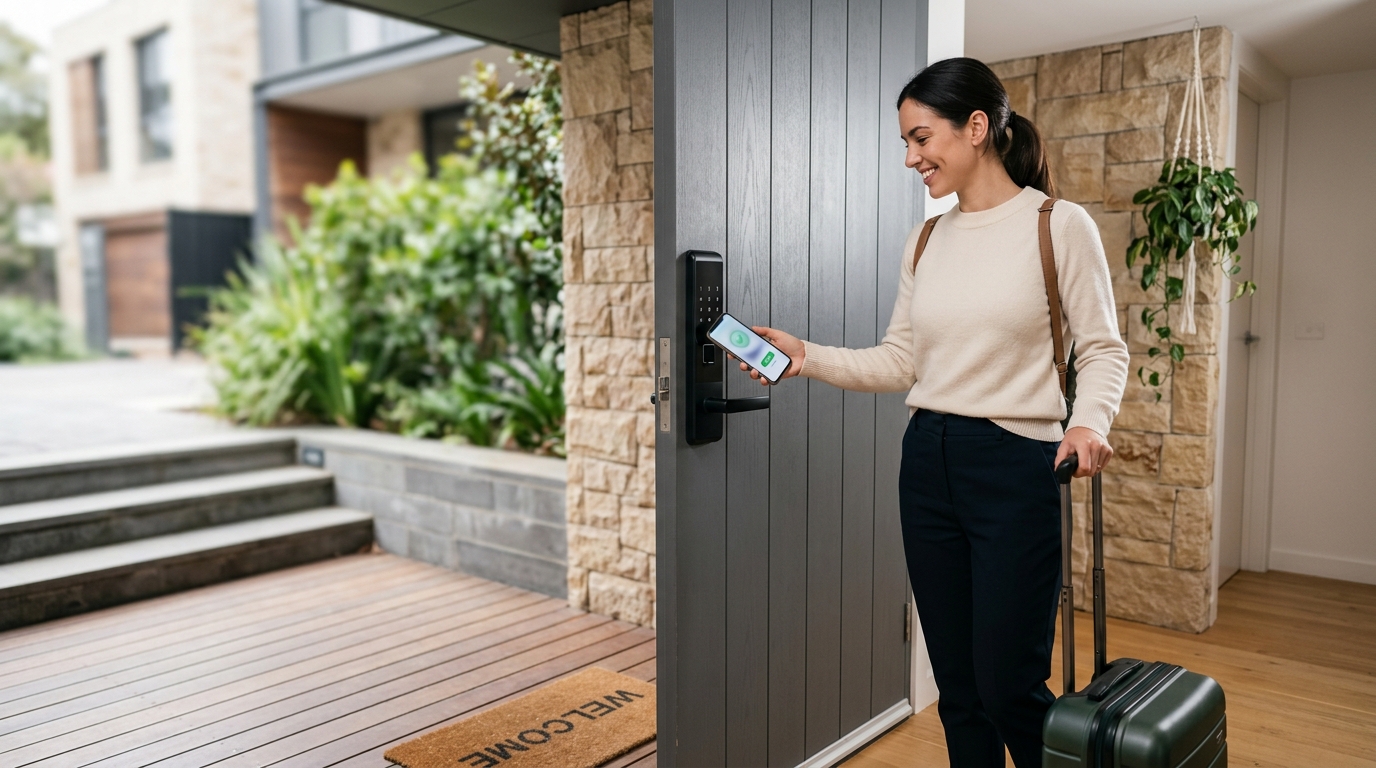
Managing arrivals in holiday rentals can quickly turn into a constant race against the clock. Flight delays, unpredictable traffic, and last-minute plan changes mean that greeting guests in person requires round-the-clock availability, 24 hours a day, 7 days a week. Self check-in has emerged as the ultimate technological solution to break free from this grind and scale your vacation rental business.
Key Takeaways
- Self check-in automates guest arrivals without the need for physical key handovers.
- It relies on a combination of smart locks, remote communication, and legal guest registration.
- It slashes operational costs and significantly elevates the guest experience.
What is self check-in and how does it work?
Self check-in (or automated check-in) is an automated process that enables guests to access a holiday rental or tourist accommodation without the host needing to be physically present to hand over the keys. By leveraging mobile technology and smart locks, the entire check-in and registration process becomes 100% digital.
This concept goes far beyond a simple manual lockbox. We are talking about an integrated digital ecosystem that manages reservations, delivers access credentials, unlocks doors via smartphone or temporary PIN codes, and handles mandatory guest registration.
Key integration
Make sure the smart lock brand you choose offers API integrations with major PMS platforms on the market. This ensures that whenever a booking comes in from Booking.com or Airbnb, access credentials are automatically generated without any manual intervention.
The guest registration process
Self check-in does not exempt you from complying with legal regulations. Legislation requires documenting guest identity details for all adult travelers and transmitting this data to local authorities (such as national police or law enforcement agencies).
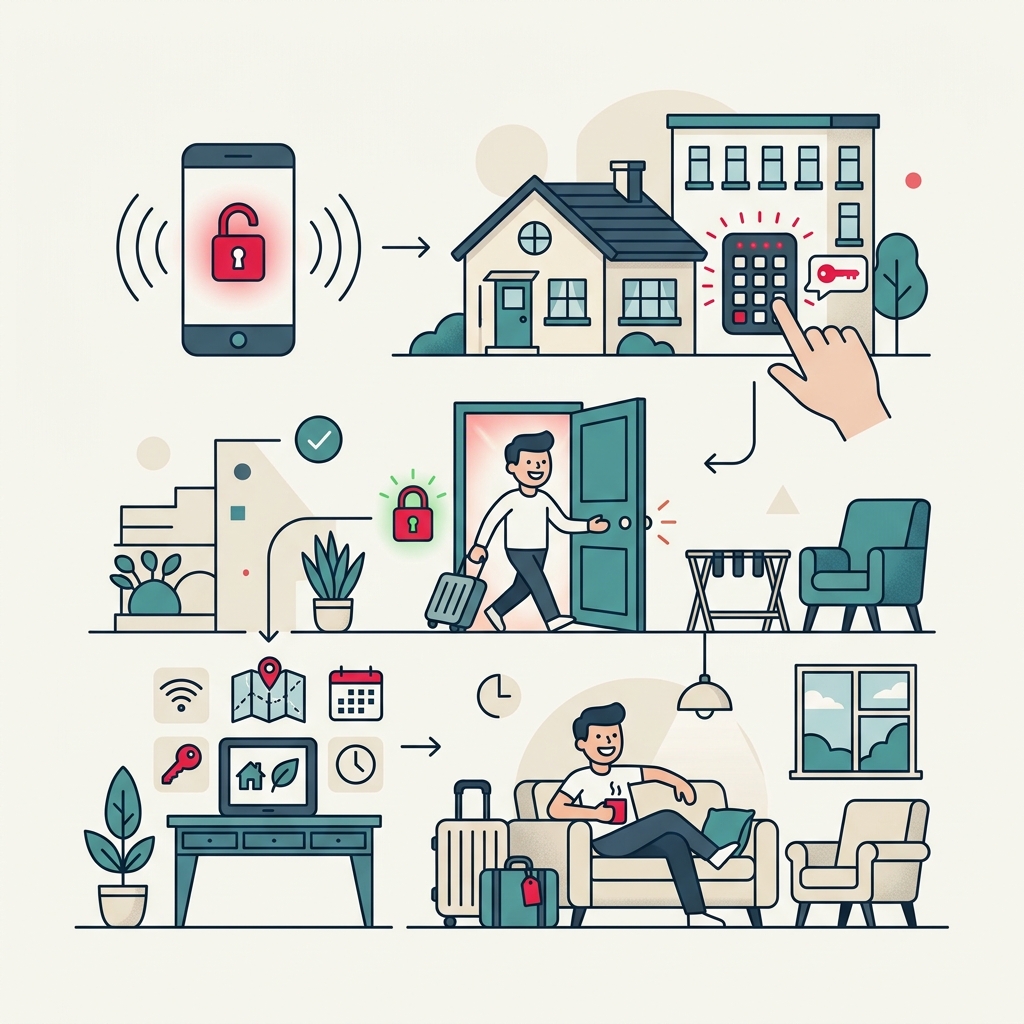
How do you handle this without being there in person? Through online check-in apps (Guest Experience Apps). A few days before arrival, the guest receives a link to complete their registration. The standard process involves:
- Document capture. The guest scans their ID card or passport using their smartphone camera.
- Biometric verification. A quick selfie verifies that the person matches the document (preventing identity fraud).
- Digital signature. Electronic signature of the guest registration form and house rules.
- Access release. Only once the legal registration is complete does the system reveal the "virtual key" or door access code.
Benefits of self check-in for your business
Adopting a keyless entry system radically transforms your business model, empowering property managers to run more listings with far less logistical hassle.
- Cost reduction Eliminates fees paid to keyholders, night-shift staff for late arrivals, and the cost of replacing lost keys.
- Schedule flexibility Guests can check in whenever they want within the designated window, eliminating travel stress caused by unforeseen delays.
- Enhanced security With no physical keys floating around, the risk of unauthorized duplicates or illicit entry completely disappears.
- Scalability Enables you to manage dozens of properties remotely—the perfect match for growing property managers.
For those managing entire buildings or multiple doors, setting up a centralized access control system allows you not only to manage guests, but also to grant temporary permissions to cleaning and maintenance staff.
Watch out for the main building entrance
The biggest bottleneck for apartment rentals is rarely the front door of the flat—it's the main building entrance. Make sure to install a device that lets guests unlock the street door keylessly without requiring approval from the homeowners' association.
Frequently asked questions about self check-in
What happens if there is a power cut or Wi-Fi outage in the apartment?
Most modern, high-quality smart locks maintain local Bluetooth connectivity. If the Wi-Fi drops, a guest who has already downloaded the app or digital credential onto their phone can still unlock via proximity (BLE). Moreover, if it is a motorized cylinder lock, you can always rely on a physical emergency key as a backup.
Is it legal not to be physically present for guest registration?
Yes, regulations permit remote registration as long as the system collects all legally required data, captures an image of the identity document, records the signature (digitally in this case), and transmits the details to local authorities within 24 hours.
Do older or less tech-savvy guests struggle with these systems?
It depends on the solution you choose. The best approach is to provide dual options: app-based unlocking (which requires a download and sign-up) alongside simpler alternatives like a direct browser link or keypad pin codes, ensuring effortless access for everyone regardless of tech skills.
How do I handle the building entrance door for a vacation rental apartment?
The ideal solution is to install a smart device connected directly to the intercom inside the apartment itself. These devices intercept the buzzer signal to buzz the door open. Because the installation stays strictly within your own property, you avoid tampering with the building's common areas and prevent potential complaints from neighbors.