Digital Door Lock: Complete Guide to Security and Comfort
Discover how a digital door lock transforms your access with advanced security and convenience. Explore types, technologies, and ideal applications for your home or business. Modernize your security today!
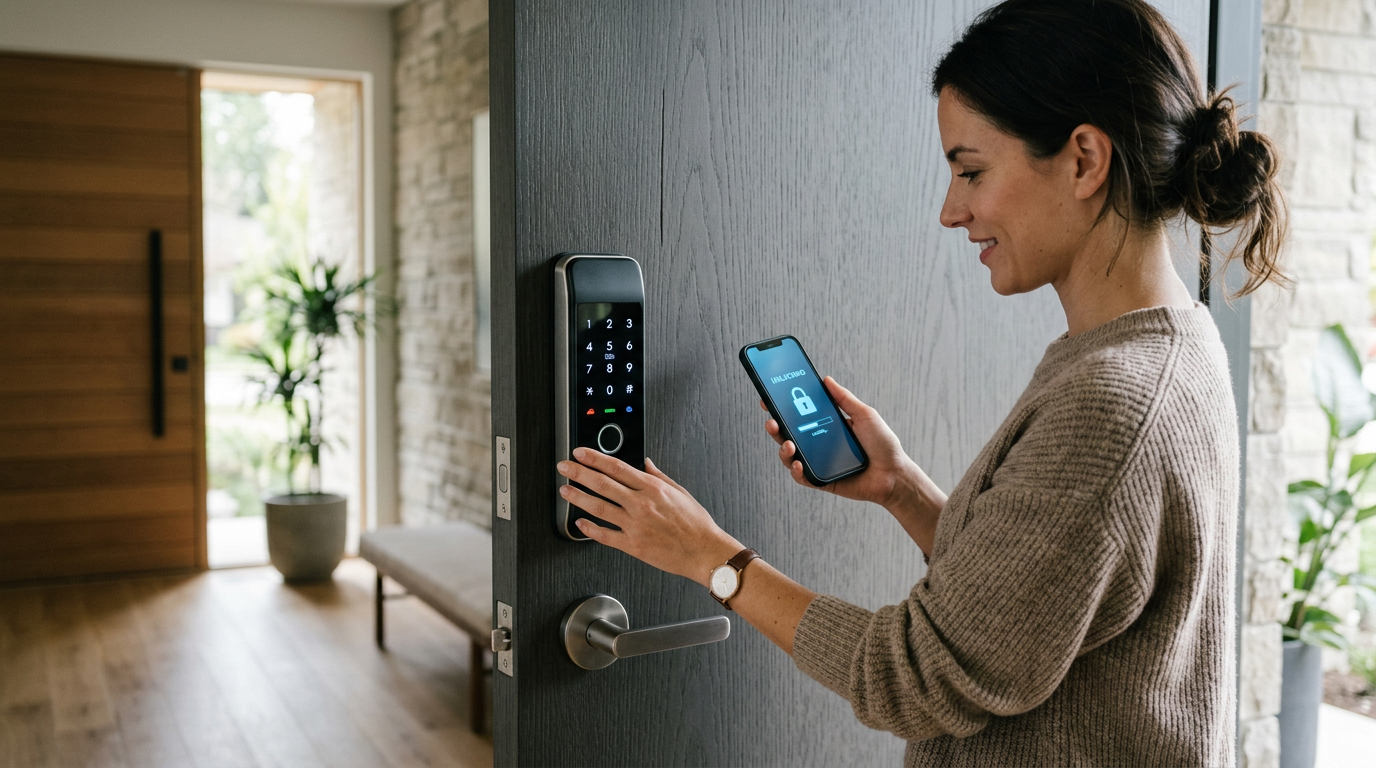
Security and comfort are two fundamental pillars in any space, be it a home, an office, a tourist accommodation, or a residential community. In this context, technology has advanced to offer solutions that transform the way we interact with our entries. A digital door lock is not just a security device; it is a gateway to more efficient, flexible, and secure access management.
The Essentials
- Digital locks offer advanced security and convenience through keyless access.
- There are various types (cylinder, handle, mortise) and technologies (BLE, Wi-Fi, NFC, Z-Wave, Matter).
- Ideal for tourist rentals, offices, communities, and as an anti-squatter solution.
- Installation can be simple, adapting to most existing doors.
- They improve operational efficiency and user experience in multiple sectors.
What is a digital door lock and how does it transform access?
A digital door lock, also known as a smart lock or electronic lock, is a security device that uses electronic and/or wireless methods to control access to a property, eliminating the need for traditional physical keys. Its operation is based on a system that verifies the user's identity through various mechanisms before allowing the door to open.
These locks not only offer a modern alternative to conventional locking systems but also introduce a layer of functionality and management that mechanical keys simply cannot match. From the ability to open the door with a mobile application to remote management of access permissions, digital locks are redefining the concept of security and convenience.
Consider compatibility
Before choosing, check the door type (wood, metal, PVC), thickness, and current cylinder or lock type to ensure optimal compatibility with the digital lock.
Communication technologies in digital door locks
Connectivity is the heart of a smart lock. Different wireless technologies determine how the lock communicates with other devices and the outside world.
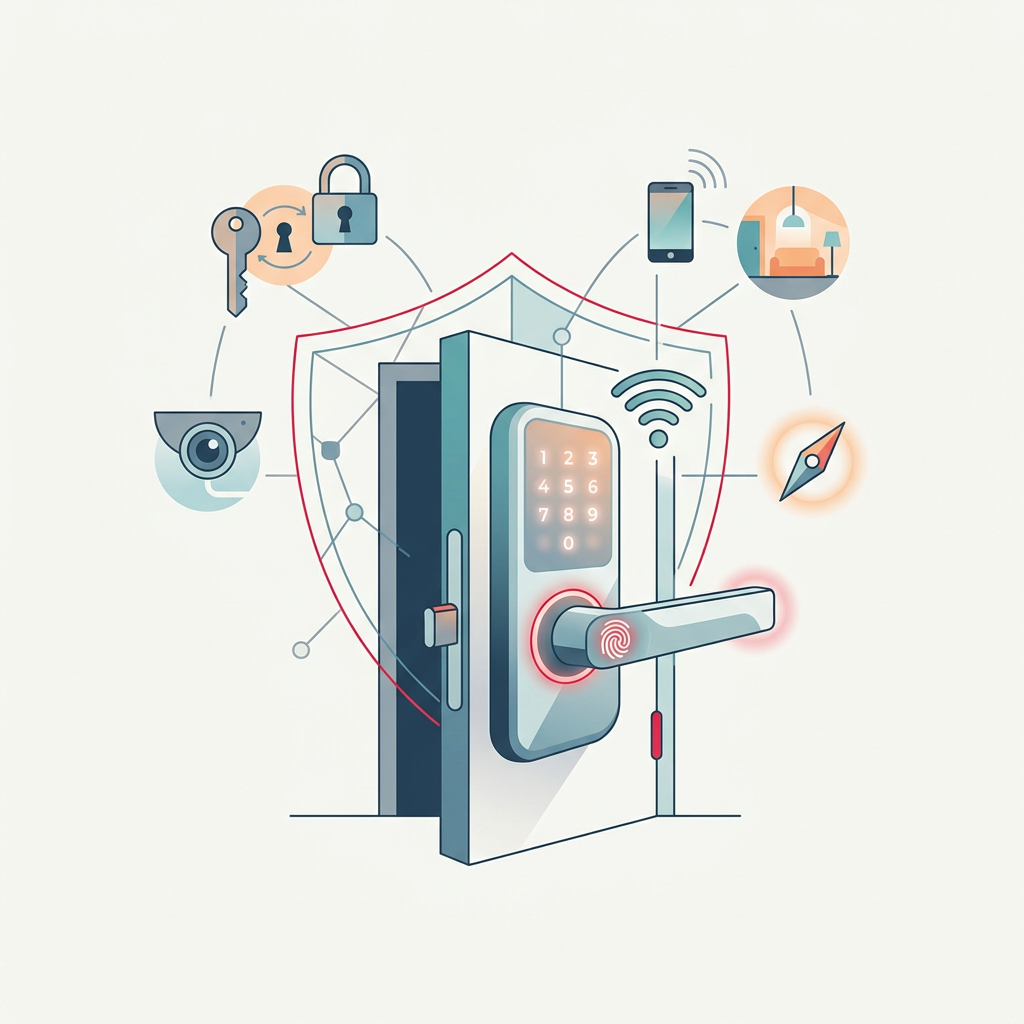
Common wireless protocols
Locks that use direct Wi-Fi tend to consume more battery power. BLE, Zigbee, or Z-Wave solutions are more energy-efficient and their batteries last longer, though they often require a bridge or hub for remote access and integrations.
Applications of digital locks in different sectors
The versatility of digital locks makes them an ideal solution for a wide range of contexts, improving security and operational efficiency.
- Tourist and holiday rentals (VUT) Automates check-in, generates temporary codes for guests, and allows remote management without needing to travel. Ideal for locks for tourist apartments.
- Hotels and aparthotels Modernizes the access system, improves customer experience, and facilitates room and staff management.
- Offices and coworking spaces Access control for employees and members, customizable access schedules, and meeting room management. More information on locks for offices and coworking.
- Residential communities Improves security for building entrances and common areas, allows access for service providers, and eliminates the problem of lost keys. Consult locks for residential communities.
- Real estate and renovation companies Facilitates access to properties for viewings or maintenance work without the need to coordinate key handovers. See locks for real estate and renovations.
- Care for seniors or dependent persons Allows authorized family members or caregivers to access in case of emergency, with entry and exit logs. Solutions in locks for senior care.
- Anti-squatter protection By offering remote control and unauthorized access alerts, a smart anti-squatter lock can be a deterrent and a quick response tool.
The digital lock is not just an advancement in security, it is a strategic tool for optimizing property and space management.
Installing a digital door lock: Is it complex?
The installation of a digital lock can vary in complexity depending on the type of lock and the existing door. Many locks are designed for "do-it-yourself" (DIY) installation, while others may require professional intervention.
General installation steps
Many Raixer models, such as Raixer Gyro or Raixer Mini, are designed for simple installation over existing European cylinders, without the need for construction work or wiring, making them ideal for most doors.
Integration and smart ecosystem
A digital lock reaches its maximum potential when integrated into a broader ecosystem. This can include:
- Property Management Systems (PMS) for tourist rentals or hotels, automating the generation and sending of access codes.
- Voice assistants like Alexa or Google Home, allowing voice commands to check the lock status or, with security precautions, to open it.
- Home automation platforms to create scenarios: for example, when the door opens, the lights turn on and the climate control adjusts.
- General access control systems for buildings or large complexes, centralizing the management of multiple doors and users.
Interoperability is a key factor, and the evolution towards standards like Matter promises to further facilitate these integrations.
Security and privacy considerations
Although digital locks offer a high level of security, it is important to consider certain aspects:
- Data encryption: Ensure that communications between the lock, the app, and the cloud are properly encrypted.
- Two-factor authentication (2FA): For accessing the management application, 2FA adds an extra layer of security.
- Strong passwords: Use strong passwords for the lock management account and avoid obvious PIN codes.
- Firmware updates: Keep your lock's firmware updated to benefit from the latest security improvements.
- Data privacy: Review the manufacturer's privacy policy to understand how your access data is managed.
The future of digital door locks
The smart lock market continues to evolve rapidly. Future innovations are expected to include greater integration with AI technologies, predictive capabilities to anticipate access needs, improvements in energy efficiency, and even greater standardization through protocols like Matter. The trend is towards increasingly autonomous, secure, and user-friendly systems that intelligently adapt to users' routines and needs.
At Raixer, we are committed to being at the forefront of this technology, offering solutions like our products that adapt to the demands of the current and future market, from automatic remote check-in to robust solutions for complex access control.
Frequently Asked Questions
Are digital locks safe against theft?
Yes, modern digital locks incorporate multiple layers of security, including data encryption, anti-jemmy systems, alarms, and the impossibility of being forced with traditional picking methods. Most offer security equal to or superior to high-end mechanical locks. Furthermore, the ability to change codes remotely or receive alerts in case of an attempted intrusion adds a layer of active protection.
What happens if the power goes out or the lock's batteries run out?
Digital locks are usually designed with backup systems. If they are battery-powered, they issue warnings in advance when the batteries are low. If the batteries run out completely, many incorporate an emergency power input (e.g., with a USB) or a manual backup key opening method. In the event of a power outage, as they operate on batteries, the lock continues to function normally.
Can I install a digital lock on any type of door?
Most digital locks are compatible with common door types (wood, metal, PVC) and standard European cylinders. However, it is crucial to verify the manufacturer's specifications, such as door thickness and the type of existing cylinder or lock, before purchasing. Specific solutions exist for glass doors or special profiles.
Do I need an internet connection for a digital lock to work?
Not always. Many digital locks can operate autonomously, allowing opening with a PIN, fingerprint, or card without an internet connection. However, for advanced functions such as remote control, distant user management, real-time event logging, or integration with other smart systems, an internet connection (Wi-Fi or via a gateway) is required.