Smart Access Systems for Tourist Accommodations
Optimize your tourist property management with smart access systems. Eliminate physical keys and automate check-in/out for a superior experience. Discover how to improve your efficiency and security now!
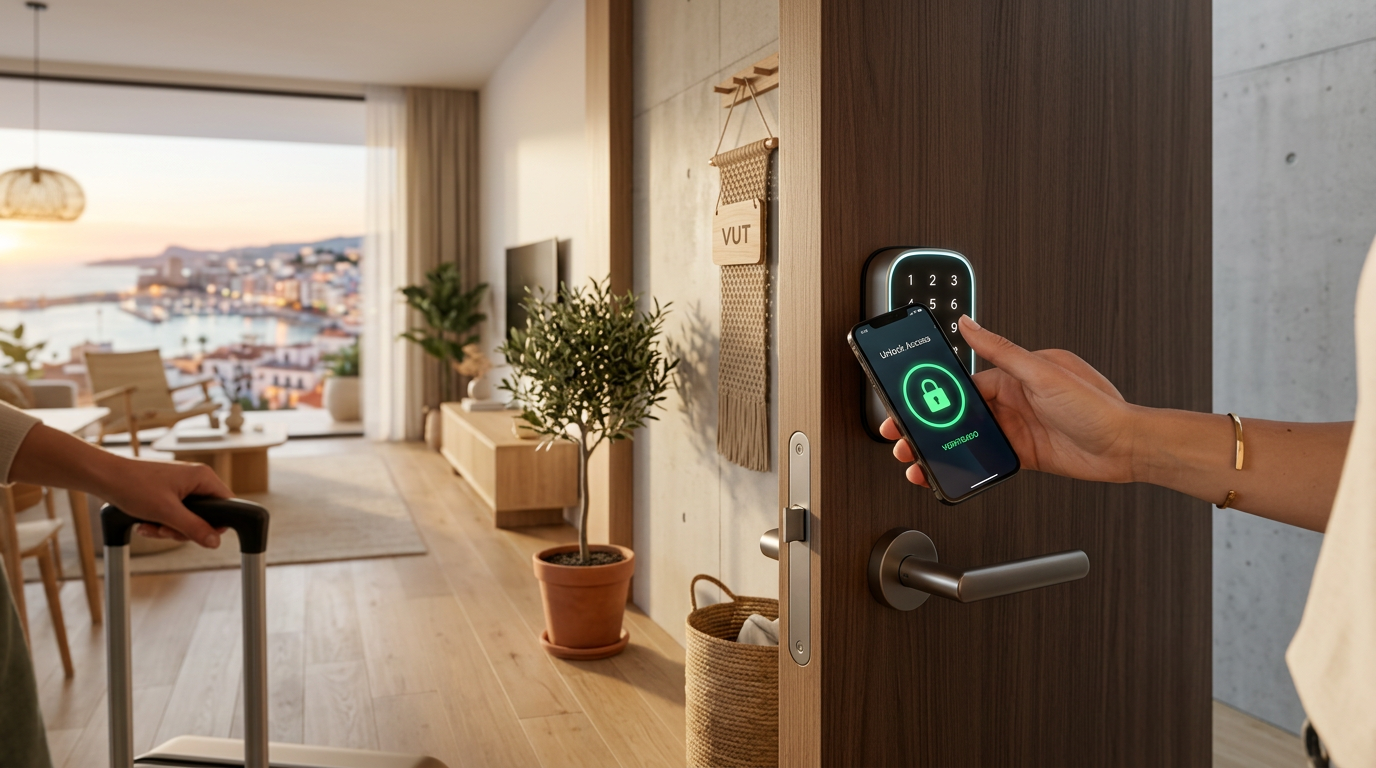
Optimizing property management for tourist accommodations and short-term rentals (VUT) is a constant challenge for owners and managers. The key to offering a superior guest experience, while maximizing operational efficiency, lies in the implementation of smart access control systems. These systems radically transform how entries and exits are managed, eliminating the need for physical keys and facilitating a completely autonomous and secure check-in and check-out process.
The Essentials
- Smart access systems for accommodations eliminate physical keys and automate management.
- They offer advanced security, flexibility for guests, and operational efficiency.
- System choice depends on specific needs, considering technology and scalability.
- Initial investment is offset by time savings, cost reduction, and improved customer experience.
Access Systems for Accommodations: Transforming the Tourist Rental Experience
The adoption of smart locks and access control solutions for accommodations is not just a trend, but a necessity in an increasingly competitive market. These systems offer a comprehensive solution to the most common problems in managing tourist properties, from key handover to property security. They allow owners and managers to control who accesses their properties, when, and for how long, all from a centralized and remotely accessible platform.
The essence of these systems lies in their ability to grant temporary and revocable access to guests. There’s no longer any need to coordinate in-person key handovers, wait for flight delays, or worry about lost keys. With digital codes, NFC cards, or even guests' own smartphones, entry becomes a fluid and frictionless process, significantly improving the guest's perception of the service. Furthermore, integration with property management systems (PMS) allows for the automation of access credential generation and dispatch, further optimizing daily operations.
No Worries About Lost Keys
Digital access systems eliminate the risk and cost associated with losing or duplicating physical keys, ensuring continuous property security.
Key Advantages of Implementing Smart Access in Accommodations
Technologies Behind Access Systems for Accommodations
Technology is the cornerstone of any smart access system. Modern locks for tourist rentals use a variety of communication protocols to ensure reliable and secure operation. Among the most common are:
- Bluetooth Low Energy (BLE): Allows direct communication between the guest's smartphone and the lock. It is ideal for solutions where access is managed via a mobile application. The Raixer Mini is an example of a device that leverages the benefits of this technology.
- Wi-Fi: Offers direct internet connectivity, allowing real-time remote management of the lock without the need for additional hubs. It is convenient for firmware updates and instant control. However, it may have higher power consumption in certain models.
- Zigbee/Z-Wave: These are low-power wireless communication protocols designed specifically for home automation and IoT devices. They require a gateway or hub to connect to the internet, but offer a robust mesh network and excellent battery life in end devices.
- Matter: A new unified connectivity standard that seeks to simplify interoperability between smart devices from different manufacturers. Although still in the adoption phase, it promises a smoother user experience and a more cohesive ecosystem for access systems.
- Mobile network communication (4G/5G): Some advanced solutions incorporate GSM/LTE modules, allowing the lock to connect directly to the mobile network if Wi-Fi is unavailable. This ensures remote connectivity in almost any location.
- Radiofrequency (RF) 868MHz: A frequency used in many security and access control systems due to its good range and indoor penetration. It offers a robust alternative for communication between locks and hubs.
The choice of technology will depend on factors such as existing infrastructure, desired power consumption, required security level, and ease of integration with other management systems. For example, locks like the Raixer Pro can offer various connectivity options to adapt to different scenarios.
Types of Smart Locks for Accommodations and Their Applications
The market offers a wide variety of smart locks, adapted to different needs and door types. It is crucial to choose the right lock for each context:
- Surface-mounted or overlay locks: These are installed on the existing door without modifying the internal structure. They are ideal for tourist homes where major modifications are not desired or for owners looking for an easy-to-install solution. Many Raixer models, such as the Raixer Mini, are of this type, offering high compatibility with conventional locks.
- Mortise locks: These completely replace the internal mechanical lock of the door. They offer a more integrated aesthetic and can incorporate advanced functions such as door status monitoring (open/closed). They are common in hotels and new constructions.
- Electronic cylinders: These replace the existing lock cylinder. They are a simple and quick option to upgrade a door without changing the entire lock. They allow mechanical keys to be kept if desired, offering hybrid access.
- Electronic escutcheons: These are installed on the exterior of the door and communicate with the internal mechanism. They are discreet and aesthetic, ideal for communities where a uniform appearance of doors is desired.
- Locks for glass doors: Specifically designed for glass doors, such as those found in offices or some modern apartments. Their installation is specific to avoid damaging the glass.
The choice of lock type directly impacts installation, security, and functionality. For a lock for tourist apartments, ease of installation and remote management capabilities are priorities. For offices and coworking spaces, integration with space management systems and robust access traceability are more important.
When selecting a smart lock, think about the volume of use and the climate. Devices for tourist rentals need to be robust and reliable.
Advanced Features and Centralized Access Management
Beyond remote opening, access systems for accommodations offer a range of functionalities that elevate management to a new level:
Smart access control not only opens doors but opens up new possibilities for efficient and profitable management of any rental property.
Steps for Implementing a Smart Access System
Implementing an access system for accommodations can seem complex, but following these steps simplifies the process:
Consider Scalability
Choose a system that can grow with you. If you plan to expand your property portfolio, make sure the access control is easily scalable.
Challenges and Considerations When Implementing Smart Access
While the benefits are numerous, there are also challenges to consider:
- Connectivity: A reliable internet connection is essential. If the property is in an area with poor Wi-Fi coverage, it might be necessary to consider solutions with cellular or radiofrequency (868MHz) connectivity.
- Power consumption: Battery-powered locks require efficient energy management. It is important to monitor battery levels and plan replacements before they run out.
- Integration: Ensuring that the access system integrates correctly with other management tools, such as PMS or home automation systems (noise sensors, smart thermostats), is crucial for seamless operation.
- Cybersecurity: As connected systems, they are susceptible to cyberattacks. Choosing providers with a proven track record in security and data encryption is essential.
- Legislation: Some local regulations may have specific requirements regarding the security of tourist rental properties. It is important to ensure that the system complies with applicable legislation.
Adopting access systems for accommodations is a strategic decision that translates into greater profitability, efficiency, and an unforgettable guest experience. The initial investment is fully justified by time savings, reduction of operational problems, and improvement of online reputation.
Frequently Asked Questions
Is a smart access system safe for a tourist rental?
Yes, well-configured smart access systems are generally safer than physical keys. They eliminate the risk of losing or duplicating keys, and allow for the creation of temporary codes that expire automatically. In addition, many systems log every access, providing a detailed history of who entered and when, which increases traceability and security.
What happens if a guest doesn't have a smartphone or doesn't know how to use the app?
Most systems offer multiple access methods. If a guest doesn't have a smartphone or prefers not to use the app, they can access via a pre-sent numeric code, an RFID/NFC card, or even a backup physical key in emergencies, depending on the lock model (such as the Raixer Gyro which retains the cylinder slot).
Can Raixer systems be integrated with my PMS or management software?
Yes, Raixer and many other modern systems are designed to be compatible with a large number of Property Management Systems (PMS) and other online management platforms through APIs (Application Programming Interfaces). This allows for the automation of access code creation and delivery to guests, facilitating a fully autonomous check-in process.
What is the battery life of smart locks?
Battery life varies significantly between models and usage. Many smart locks can operate for six months to a year with a standard set of batteries, performing daily openings. Systems usually send low battery alerts in advance to allow for replacement before they are completely depleted. Some options, such as the Raixer 12V, offer direct power for continuous operation.
Are smart access systems difficult to install?
Installation difficulty depends on the type of lock. Many models of surface-mounted locks or electronic cylinders are designed to be easily installed by the user themselves, without the need for special tools or major door modifications. However, for mortise locks or larger projects, it is recommended to rely on specialized professionals to ensure correct and safe installation.