How to Restrict Access to Delinquent Owners in an HOA Community
Can you restrict common areas for non-payment? Discover how to legally deny access to delinquent owners in an HOA and what systems to use. Learn more!
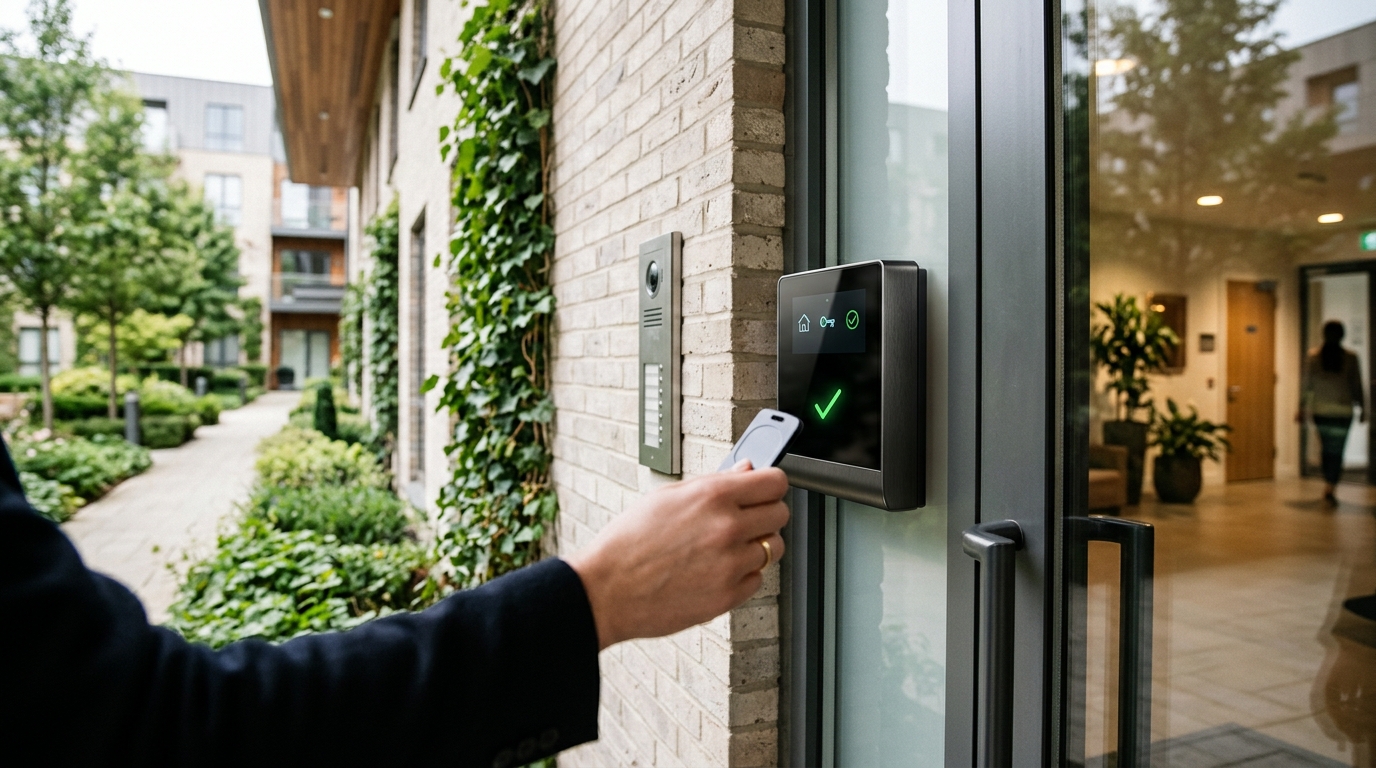
Dealing with unpaid dues is one of the most draining challenges for any homeowners' community. Everyday living becomes strained, budgets fall short, and paying owners end up subsidizing those who default. Faced with this situation, it is common to wonder how to restrict access to delinquent owners in the community, especially to non-essential facilities such as the pool, gym, or sports courts.
Key Takeaways
- The law allows restricting access to non-essential common areas for delinquent owners.
- It must be explicitly stated in the community bylaws.
- Access cannot be blocked to the home, garage, or mandatory passageways.
- Access control systems automate these restrictions securely and reliably.
Is it legal to restrict access to delinquent owners in a community?
The short answer is yes, but with important legal nuances. You cannot act arbitrarily or lock down just any door in the building. Measures must comply with the current legal framework—primarily the Horizontal Property Act (or local equivalent)—to prevent the community from being sued for harassment or coercion.
The key lies in distinguishing between elements essential for habitability and those intended for leisure or recreation. Restricting access to the former is completely illegal; restricting the latter, however, is a legitimate tool to encourage the settlement of overdue debts.
Consider the Tenant
If the property is rented out and the landlord is the one who owes dues, the restriction also applies to the tenant. The tenant will need to claim damages directly from their landlord, but the HOA retains the right to apply the recreational block to the entire unit.
The Technical Solution: Smart Access Control
Once the legal hurdles are cleared, logistical challenges arise. If the community relies on traditional metal keys, knowing how to deny access to delinquent owners quickly becomes a practical nightmare. Replacing the lock cylinder every time an owner falls into arrears and distributing new keys to everyone else is simply unfeasible in terms of cost and time.
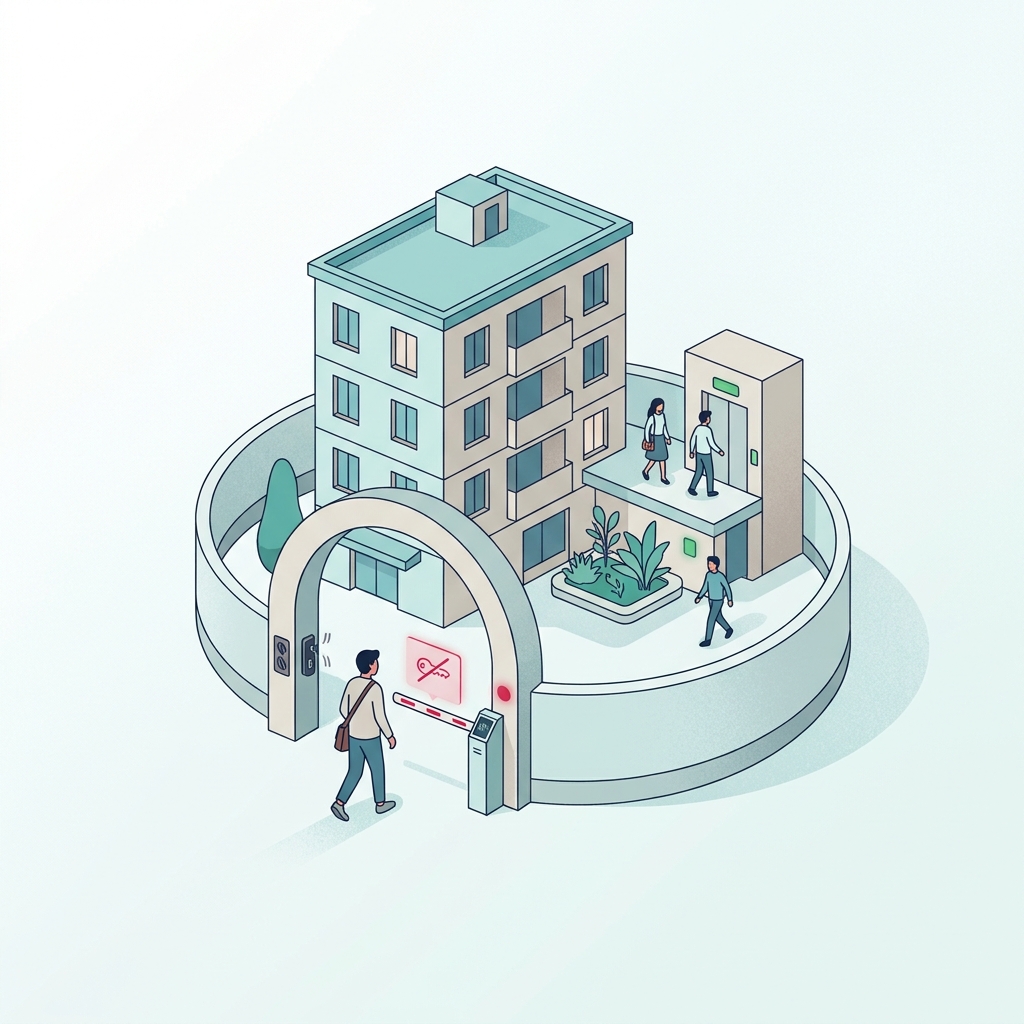
The most efficient solution is implementing a digital access control system. These systems let you manage credentials remotely and on a segmented basis, without disrupting owners who are up to date on their payments.
Credential Types for HOAs
Depending on the resident demographic and community budget, there are several ways to automate access to common facilities:
- RFID Key Fobs Easy to use for elderly residents and children; easily deactivated via software in case of non-payment.
- Mobile App Unlocking via Bluetooth (BLE) or web connectivity; provides real-time access management.
- Keypads Unique PIN codes per unit that can be revoked or changed in seconds.
Benefits of Cloud-Managed Systems
Installing a connected smart lock for residential communities (with Wi-Fi hardware or local gateways) completely transforms property administration. The property manager or board president no longer needs to travel on-site to retrieve physical keys.
When ongoing non-payment is confirmed and legal steps are met, the manager simply logs into the dashboard to temporarily suspend that specific unit's permissions for the pool or gym. As soon as the owner settles the balance, access can be restored within seconds.
Technology not only eliminates the costs of lost keys, but it also gives communities an agile, effective leverage tool against persistent non-payment.
Furthermore, these installations are designed for high-traffic environments, integrating easily with standard 12V electric strikes and automatic gates (such as a Raixer 12V for tennis or padel court enclosures).
Audit Trail of Access Attempts
Modern access control systems maintain detailed activity logs. If a delinquent resident attempts to enter the pool using a disabled credential, the administrator can see the denied entry event, verifying that the restriction is operating properly.
Considerations for Short-Term Vacation Rentals
If vacation rentals operate within the building and the owner falls behind on HOA dues, the community can also deny pool and amenity access to those guests. Using digital locks on shared amenities, the manager can block temporary guest codes linked to that specific apartment, effectively preventing the host from advertising full community amenities on platforms like Airbnb until their balance is paid.
Frequently Asked Questions
Can the community shut off elevator access for a delinquent resident?
No. Elevators are deemed essential for building accessibility and reaching private homes, not recreational facilities. Denying elevator access—especially to higher floors or individuals with reduced mobility—is unlawful and carries severe legal penalties.
Is it legal to post a list of delinquent owners on the community notice board?
Publicly posting names is generally prohibited and only allowed as an exceptional last resort when all direct formal notification attempts have failed. Posting lists systematically to embarrass or pressure owners violates data protection laws (such as GDPR).
Who handles the access control software?
Typically, the licensed property manager handles the web portal, provisioning credentials, revocations, and temporary lockouts according to the decisions made by the General Assembly. In self-managed communities, the board president usually takes on this role.
What happens if a delinquent owner tampers with a locked door?
If shared smart locks are installed and an individual forces, tampers with, or hot-wires the mechanism to gain entry, they are causing criminal property damage and potentially committing trespass into restricted areas, entitling the community to file a police report.