How to Open the Building Door for a Guest Remotely
Discover how to open the building entrance door for a guest remotely without community renovations. Automate your vacation rental check-in and save time today!
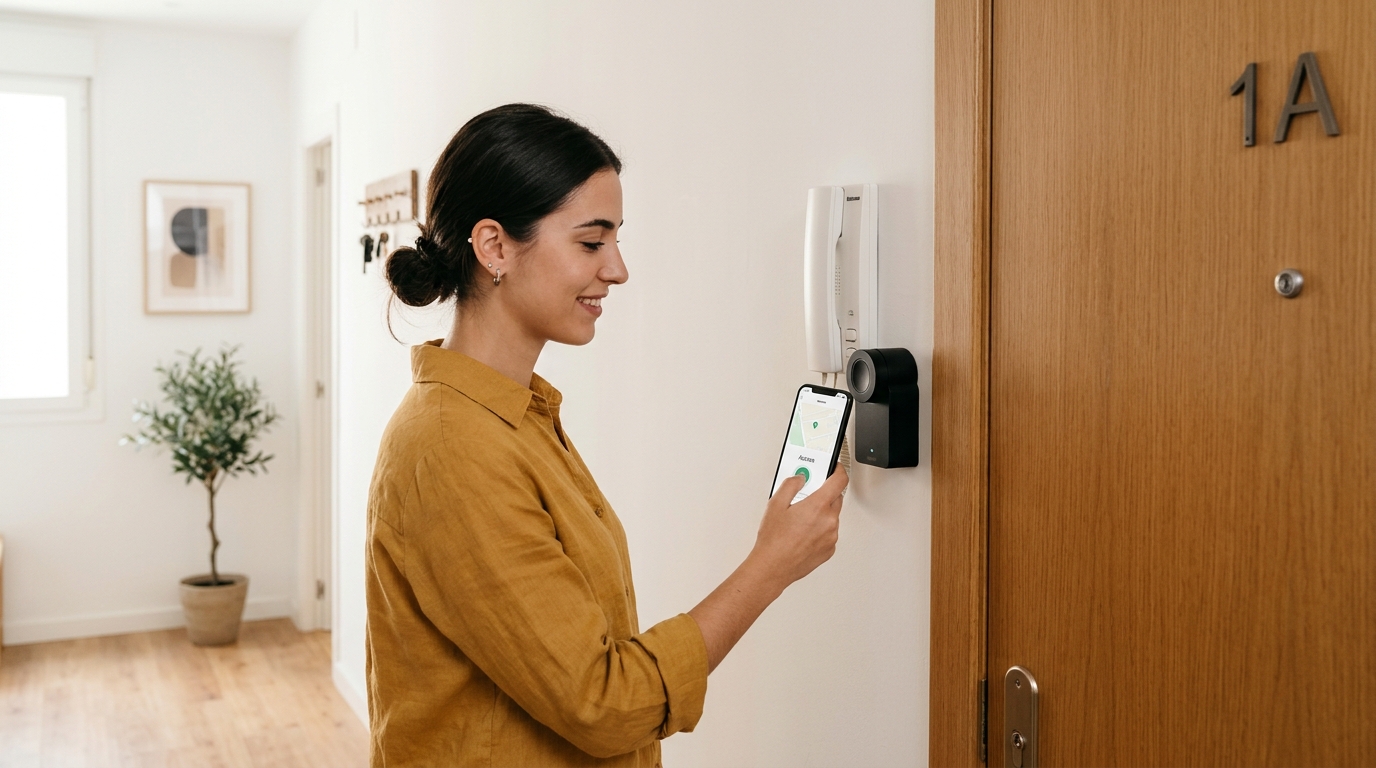
Early morning arrivals, unexpected flight delays, and endless city traffic jams are everyday realities in vacation rental management. Knowing how to open the building door for a guest remotely is no longer just a luxury or an added convenience; it has become a strategic necessity to maintain the property's profitability. Eliminating endless waiting on the street and being able to hand over keys completely virtually radically transforms the traveler experience, while freeing up hundreds of accumulated working hours for the owner or property manager.
Key Takeaways
- Remote access eliminates the need for in-person waiting during late arrivals or unexpected travel delays.
- Connecting a smart device to the apartment's intercom allows building access without modifying common areas.
- Pairing the building entrance unlock with a smart lock on the main apartment door fully automates the check-in process.
The Challenge of Late Check-Ins and the Building Door Barrier
When a traveler books a vacation apartment, their primary wish after hours of travel is to get inside and rest as soon as possible. However, access to the vast majority of apartments involves two major physical barriers: the building entrance door and the apartment door itself. While the apartment door is private property and allows you to install almost any smart lock for vacation rentals without asking for permission, the building entrance belongs to the homeowners' association. This means you cannot simply replace the shared building lock with a smart one without the unanimous consent of the neighbors.
This is where the real difficulty of access management lies. Many hosts successfully motorize their apartment door, yet their guests still get stuck outside on the street because they lack the physical key to the building. Solving the problem of how to open the building door for a guest remotely requires technological ingenuity. The key is not to alter the shared entrance door directly, but to act on the device you already have inside your home that controls that door: the intercom or buzzer.
Double-Clutch Cylinders
For the apartment door (not the building entrance), it is crucial to install a European double-clutch cylinder. This ensures that if the smart lock runs out of battery, you can still insert a traditional physical key from the outside and open it mechanically.
The Guest Journey: From Booking to the Room
To fully understand how to open the building door for a guest remotely, we must put ourselves in the traveler's shoes. The digital journey begins days before arrival. The system, often synchronized via API with the host's PMS, detects the new reservation and automates the entire process. Through an automated remote check-in workflow, it sends an email or WhatsApp message to the guest with a secure link.
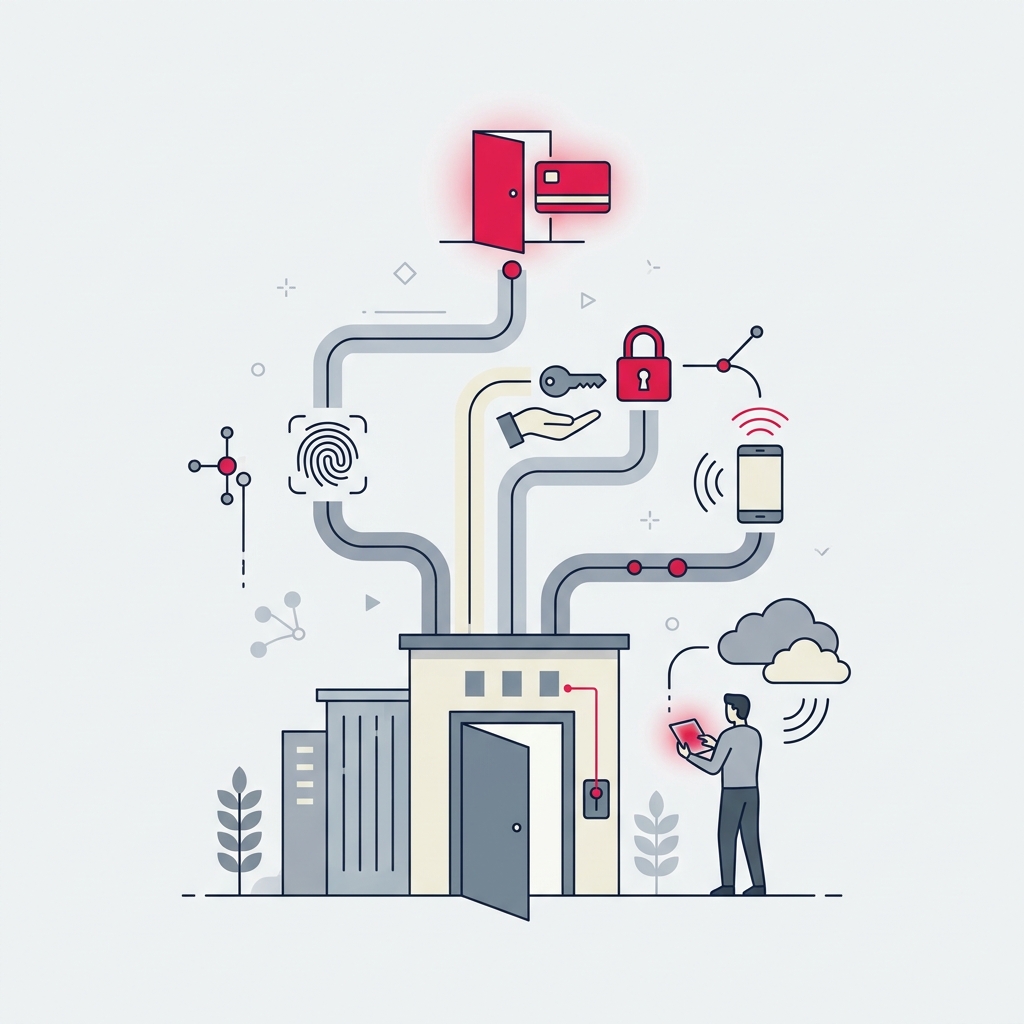
This link contains their "virtual keys", which have strictly limited validity: they activate at the official check-in time and expire at the exact minute of check-out. When the traveler lands in the middle of the night and arrives at the building, they don't need to wake anyone up or download heavy apps. They simply open the link in their web browser and see a straightforward interface with an unlock button. Upon tapping it, the command travels through their mobile network to secure cloud servers, and from there down to the apartment's router. The router communicates with the intercom relay, and within milliseconds, the building door's characteristic buzzer sounds, unlocking the entrance.
Automating access doesn't mean doing away with human hospitality; it means ensuring the guest enters at their own pace without stress, while preserving the host's peace of mind and sleep.
Once they reach their apartment landing, the process is repeated, but this time the signal activates the smart lock motor. Everything occurs smoothly, quietly, and securely, leaving a timestamped record in the owner's account to audit property entry at all times.
Regulatory Aspects, Security, and Data Protection in 2026
The maturity of home automation technologies has also brought increased regulation, especially regarding guests' personal data protection and installation safety. Providing a system to open the building door for a guest remotely requires complying with several legal frameworks to prevent penalties.
First, regarding property regulations: because intercom relays are installed strictly inside the private apartment (inside the intercom handset and not on the street-facing keypad), you are not altering the building's common areas in any way. This avoids friction and extraordinary meetings with the building's community of owners, and complies scrupulously with municipal regulations that increasingly forbid altering historic facades or attaching combination lockboxes to public lampposts and railings.
The convenience of remote opening does not exempt hosts from regulatory compliance. Current laws require unequivocal guest identification. It is mandatory to integrate document scanning and biometric validation software prior to delivering the virtual key link.
In terms of cybersecurity, access control devices have evolved. Instead of vulnerable radio frequency signals, they utilize single-use access tokens or asymmetric cryptographic signatures. This completely prevents cybercriminals or malicious guests from cloning the opening signal permanently. Furthermore, Bluetooth Low Energy (BLE) serves as a lifesaver fallback: if the apartment's fiber optic connection goes down during a severe storm, the guest can stand near the door with Bluetooth enabled to establish a direct encrypted phone-to-lock connection, unlocking the door without relying on cloud servers.
Battery Maintenance
Modern motors controlling the apartment door typically run on standard or lithium batteries. Thanks to stepper motor optimization, their battery life can exceed 6–8 months. Platforms will notify you via email whenever the battery level drops below 20%.
Frequently Asked Questions
Is it completely legal to install a smart relay inside my apartment's intercom?
Yes, it is entirely legal and permitted. Because you install the small device inside the handset located physically within your private apartment, you are not tampering with the outdoor street panel or altering the shared building electrical wiring. Therefore, you do not violate horizontal property laws nor do you require explicit authorization from the building president or property manager.
What happens if there is a general power outage or the Wi-Fi router goes down?
If only the apartment's Wi-Fi fails, the front door smart lock features Bluetooth (BLE) as a backup method, allowing the guest to open the door when standing right in front of it. However, for the main building entrance, because the relay relies on the local network, if there is no internet or if there is a total power blackout in the building (which would also disable the building's standard analog intercom buzzer), the guest would need to enter alongside a neighbor or receive in-person emergency assistance.
Does the guest have to download an app and register to get inside?
No, that would introduce unwanted friction. Modern, professional guest management systems allow sending a secure web link (Progressive Web App) directly via WhatsApp or email. By simply tapping that link, an interactive keypad opens in their web browser, allowing them to swipe to unlock both doors instantly—without registering personal data or installing third-party apps on their smartphone.
Does the same technology work for all types of intercoms and security doors?
Digitizing the building door depends almost entirely on the internal wiring of your intercom handset, with modern relays being compatible with the vast majority of analog and digital systems (such as 2-wire systems) across the European market. As for the apartment's armored or reinforced door, the essential requirement is that the lock cylinder is a European profile with a double-clutch function, ensuring the smart lock motor can mount on the inside and turn the heavy deadbolts without blocking traditional key access from the hallway.