Remote Access Management in Tourist Homes | Optimize and Secure
Discover how remote access management transforms your tourist home, offering autonomous check-in, enhanced security, and operational optimization. Modernize your vacation rental!
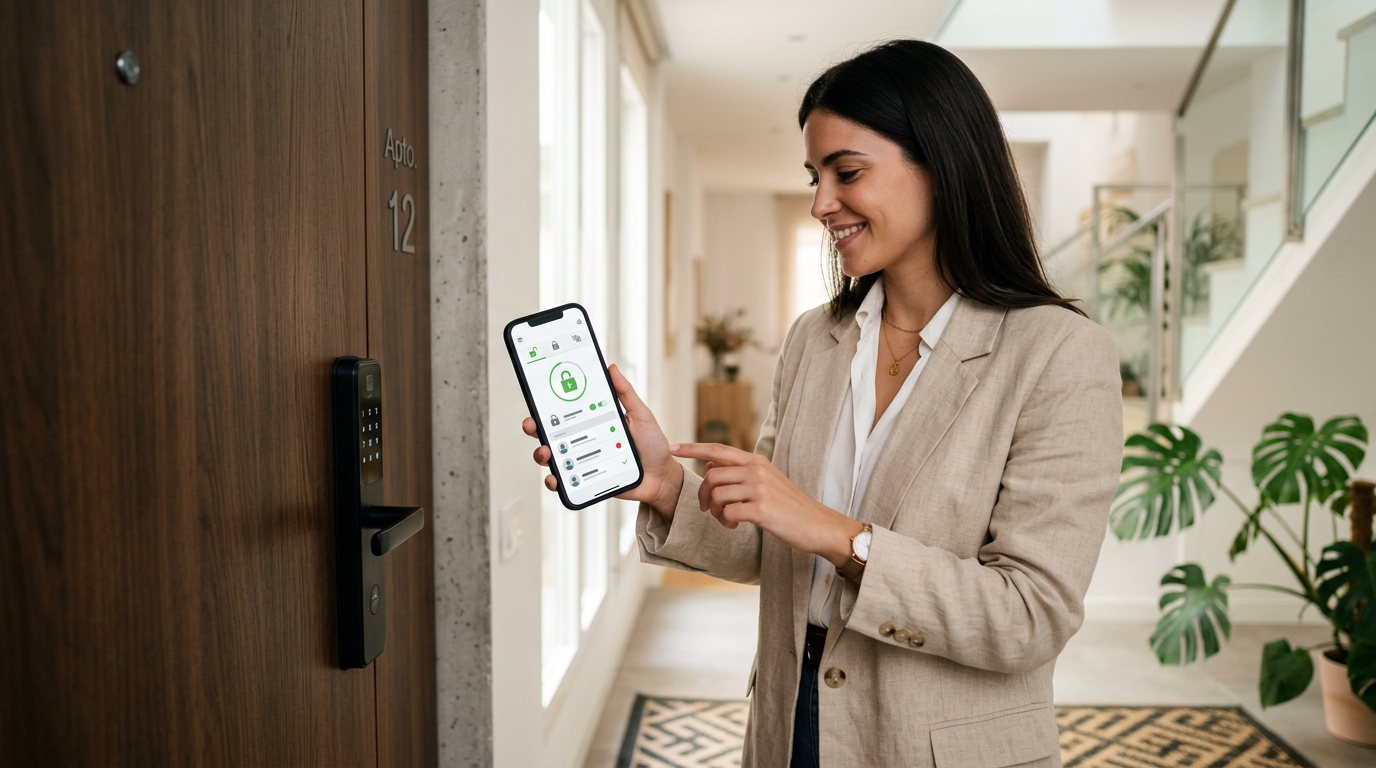
Optimizing operations in the tourist rental sector is a constant quest for owners and managers. The demand for flexible and autonomous check-in and check-out experiences, along with the need for efficiency and security, has driven the adoption of advanced technological solutions. In this context, remote access management in tourist homes has become an indispensable tool, radically transforming how these accommodations are administered. It's not just about opening doors remotely, but an integral strategy that impacts profitability, security, and guest satisfaction.
The Essentials
- Remote access management optimizes the operation and security of tourist homes.
- It offers total control over entries and exits without physical presence, enhancing the guest experience.
- Various technologies and lock types exist, adaptable to multiple needs and budgets.
- Implementation requires considering security, compatibility, regulatory compliance, and an adequate technological strategy.
The ability to control who enters and leaves a property, and when, without needing to be physically present, solves logistical challenges that previously required considerable effort. Owners with multiple properties in different locations can manage their portfolio centrally, while guests enjoy unprecedented freedom and convenience. This technology goes beyond mere convenience, adding additional layers of security and enabling the automation of key processes, such as automatic remote check-in.
The Revolution of Remote Access Management in Tourist Homes
The introduction of smart access systems has brought about a paradigm shift for the vacation rental industry. Historically, the hand-off of physical keys has been a source of problems: lost keys, late arrivals, complicated coordination, and the insecurity associated with unauthorized copies. Remote access management in tourist homes eliminates these friction points, offering an elegant and effective solution, similar to advanced access control systems used professionally.
Modern systems allow managers to generate unique access codes or send digital keys to guests' phones, valid only for the duration of their stay. These codes can be sent automatically upon reservation confirmation, or just before check-in, ensuring the guest has access at the precise moment. Once the stay ends, access expires, automatically invalidating the code or digital key, which significantly increases property security.
Encryption and Security Protocols
Smart locks use advanced encryption algorithms (AES 128 or 256 bits) to protect communication between the device, gateway, and the cloud. This ensures that access codes and usage data are impregnable against interception attempts, safeguarding privacy and security for every access.
Integration with Property Management Systems (PMS) and Channel Managers is fundamental. Through the use of APIs (Application Programming Interfaces), the access management system can "talk" directly with booking platforms like Airbnb or Booking.com. When a reservation is confirmed, the PMS API sends the information (check-in/check-out dates, guest data) to the smart lock software. This automatically generates a unique and temporary code and sends it to the guest, usually via email or SMS. At the end of the stay, the PMS notifies the departure, and the code is automatically invalidated, closing the cycle securely and efficiently.
Key Technologies in Remote Access Management
The robustness of a remote access management system lies in the combination of hardware and software that use various communication technologies. Understanding their particularities is crucial for choosing the right solution.
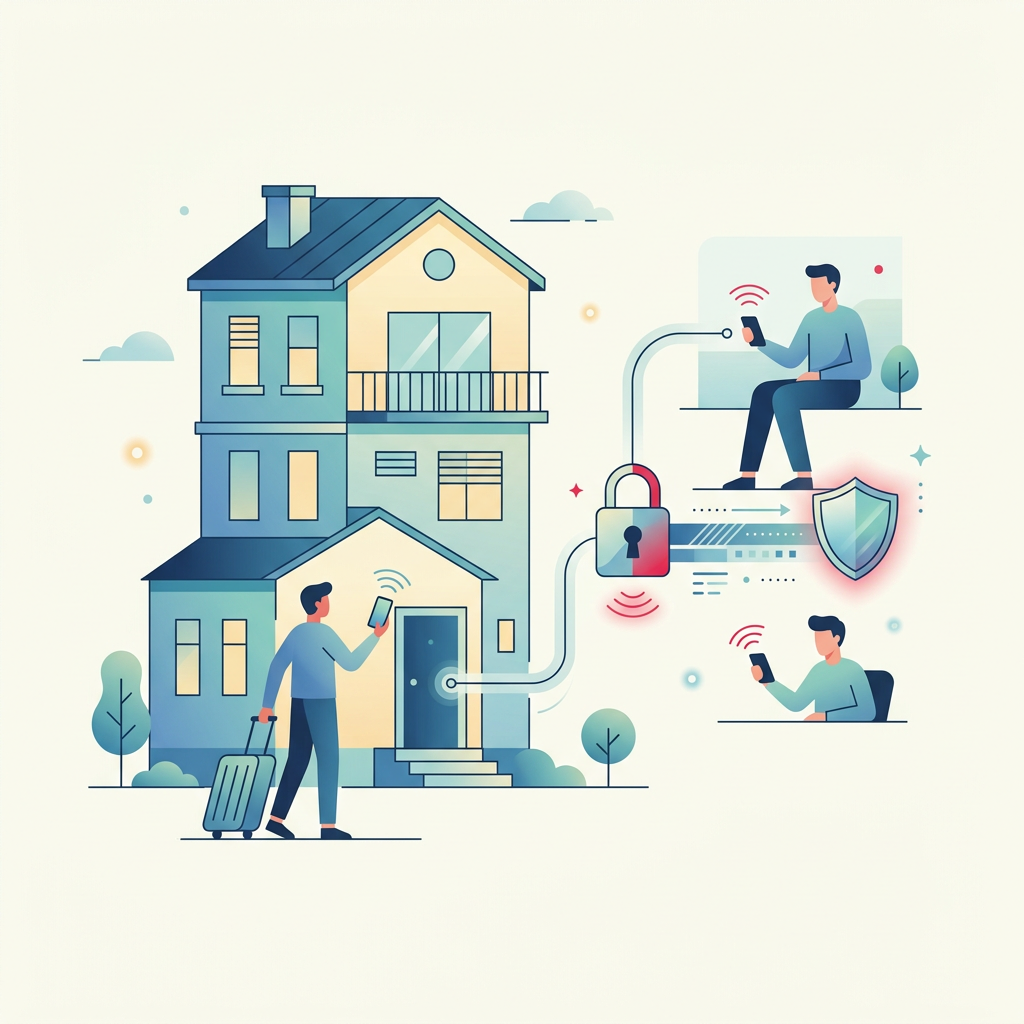
- Bluetooth LE (Low Energy) Ideal for short-range communication with smartphones. It consumes little battery, but requires the user to be near the lock to open it. It can be used as a backup or for initial setup.
- Zigbee / Z-Wave Low-power mesh network protocols, designed for IoT devices. They offer excellent range and reliability for interconnecting locks, sensors, and other smart home devices. Their low consumption extends battery life.
- Wi-Fi Allows a direct internet connection, ideal for constant remote control and real-time updates. However, it can be more intensive in terms of the lock's battery consumption, and its range depends on the existing coverage in the property.
- NFC (Near Field Communication) Similar to Bluetooth, but requires even closer contact or proximity. It is common in access cards or tags, offering quick and secure opening without the need for a battery in the card.
- Mobile Network (4G/5G) Some high-end solutions include cellular connectivity to ensure operation even without Wi-Fi. This eliminates reliance on the local network, ideal for remote locations or as a backup, although it involves a data cost.
Each technology presents advantages and disadvantages in terms of battery consumption, latency (response time), range, and security. A comprehensive system usually combines several, such as locks that use Bluetooth LE for local mobile interaction and a Zigbee/Wi-Fi hub for remote communication with the cloud. Raixer products offer a range of solutions that adapt to these needs, such as the Raixer Mini or the Raixer Pro.
Tangible Benefits of Remote Access Management
The adoption of this technology goes beyond convenience, generating a direct impact on the profitability and operation of the tourist home.
- Improved guest experience: Total flexibility in check-in, no waiting or worries about late arrival. Simple and autonomous access.
- Operational optimization: Reduction in the need for staff for key hand-offs, elimination of problems with lost or duplicated keys.
- Increased security: Temporary and unique access codes, entry and exit history, and real-time alerts for unexpected events. An anti-squatter smart lock becomes a powerful ally.
- Total control: Centralized management of multiple properties from a single platform, facilitating the administration of portfolios of locks for tourist apartments.
- Cost savings: Reduction in expenses for key copies, staff travel, and potential security incidents.
- Smart Home integration: Possibility to connect the lock with other smart devices such as lights, thermostats, or noise sensors, offering a more complete and automated experience.
It is crucial to assess the compatibility of the locks with the existing door type and cylinder, as well as the quality of the internet connection at the property. Some solutions require professional installation, while others like the Raixer Gyro are easily self-installable. Make sure the provider offers adequate technical support to resolve any issues.
The choice of a remote access management system must consider various factors. From ease of installation, through energy autonomy (battery life, power options like Raixer 12V), to integration with other systems and the level of technical support offered by the manufacturer. Cybersecurity is another fundamental pillar; ensure the system uses robust encryption protocols and that the company keeps its software updated against vulnerabilities.
Remote access management is not a luxury, but a necessity for competitiveness and efficiency in today's tourist home market.
Frequently Asked Questions
Is a smart lock secure for my tourist home?
Yes, quality smart locks are designed with high security standards. They use robust encryption (commonly AES 128 or 256 bits) for communications, temporary and unique access codes, and usually offer activity logs that show who accessed and when. Furthermore, they eliminate the risk of unauthorized copies of physical keys and allow instant permission management, which is vital for security.
What happens if the power or Wi-Fi goes out at the property?
Most smart locks are designed to operate autonomously with long-lasting batteries (6 months to 1 year, depending on use and model). If Wi-Fi goes out or there's a power cut, many locks can continue to operate via Bluetooth, pre-set codes, or even NFC. It is essential to choose models that offer an emergency access method, such as a physical key, a USB-C port for an external battery, or a low-voltage direct connection like Raixer 12V, to prevent guests from being locked out.
Do I need to change my entire current lock to install a smart one?
Not always. Solutions like the Raixer Mini or Raixer Gyro install over the existing cylinder or knob, transforming the traditional lock into a smart one without needing to replace the entire mechanism. Other solutions are complete locks (like Raixer Pro), suitable for a new installation or a total renovation. It is always advisable to check compatibility with your current door and cylinder.
Can I integrate remote access management with my booking platform (Airbnb, Booking)?
Yes, and it is one of the biggest advantages. Most access management systems offer robust integrations with major booking platforms (OTAs) and Channel Managers via APIs. This allows for fully automating the sending of access codes to guests, synchronized with their bookings, streamlining the check-in process, reducing the manager's workload, and minimizing manual errors.
What is the maintenance for a smart lock?
The main maintenance consists of periodically replacing the batteries. The frequency varies, but a low battery indicator usually alerts in advance. It is also important to keep the lock clean and ensure the mechanism works smoothly. Firmware updates are managed remotely by the provider to keep security and functionalities up-to-date, without owner intervention.
What initial cost should I expect and how does it impact profitability?
The initial cost of a smart lock varies significantly depending on the brand, functionalities, and communication technology. You can find models ranging from €150 to over €500 per unit. While it represents an investment, the return is seen in reduced operational expenses (less staff for key hand-offs, fewer costs for lost keys), time optimization, and improved customer satisfaction, which can translate into better reviews and higher occupancy.
Are there legal or regulatory requirements for installing these systems?
Generally, the installation of smart locks for access management in tourist homes is not subject to specific legal requirements beyond general property safety regulations. However, it is prudent to consult local or regional regulations for tourist rental activity, especially regarding security and guest data privacy. Ensuring the system complies with GDPR is fundamental for personal data protection.