Access System for Communal Storage Rooms | Raixer
Upgrade your building's security with an access control system for communal storage rooms. Control access from your phone and forget about keys. Discover more!
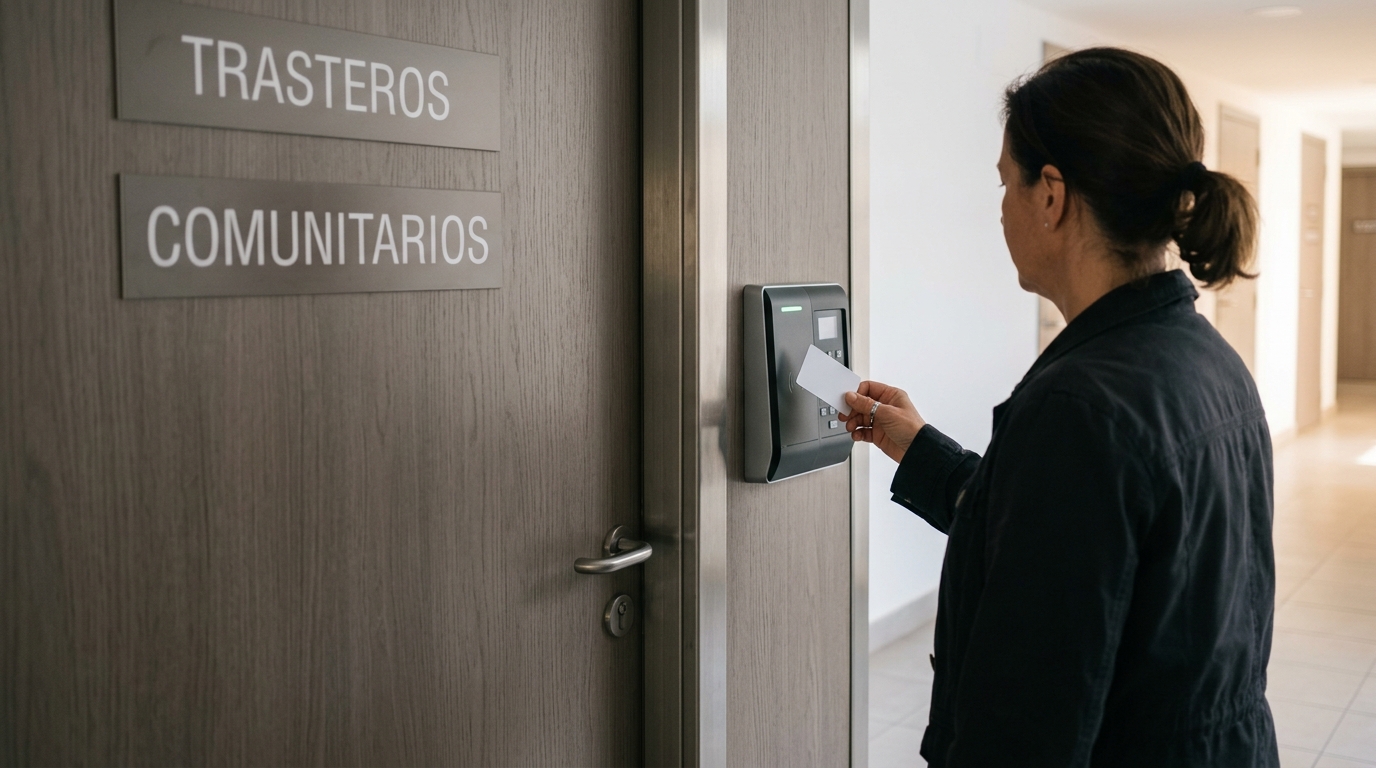
Communal storage rooms, along with meter rooms and cleaning closets, are among the most vulnerable spots in any apartment building or residential complex. Housing valuable items and often located in secluded areas, managing traditional keys for these spaces becomes a headache for property managers, concierges, and residents alike. Implementing an access system for communal storage rooms not only deters break-ins, but also completely modernizes access management, eliminating the cost of replacing lost copies and carrying around heavy keychains.
Key Takeaways
- Communal storage rooms and utility closets require secure, keyless access control to prevent thefts and uncontrolled key duplication.
- A smart opening system enables remote permission management for concierges, residents, and temporary maintenance staff.
- Systems like Raixer install wirelessly on most doors and offer connectivity via Bluetooth and Wi-Fi.
Why install an access system for communal storage rooms?
Security in common areas is an ongoing challenge. The traditional physical key model suffers from critical flaws: keys are copied without supervision, lent to tenants who then fail to return them, and whenever a master key is lost, the homeowners' association must bear the heavy cost of rekeying entire lock cylinders. An access system for communal storage rooms resolves these problems at the root.
The BLE standard and battery life
Using the Bluetooth Low Energy protocol allows battery-operated devices, such as certain motorized cylinders or invisible smart locks, to retain their charge for months without requiring frequent battery changes.
How to modernize storage rooms with Raixer
Integrating access control technology does not have to involve complex construction work or exorbitant community assessments. Scalable solutions make it possible to retrofit fire doors, main building entrances, or metal storage doors with minimal disruption.
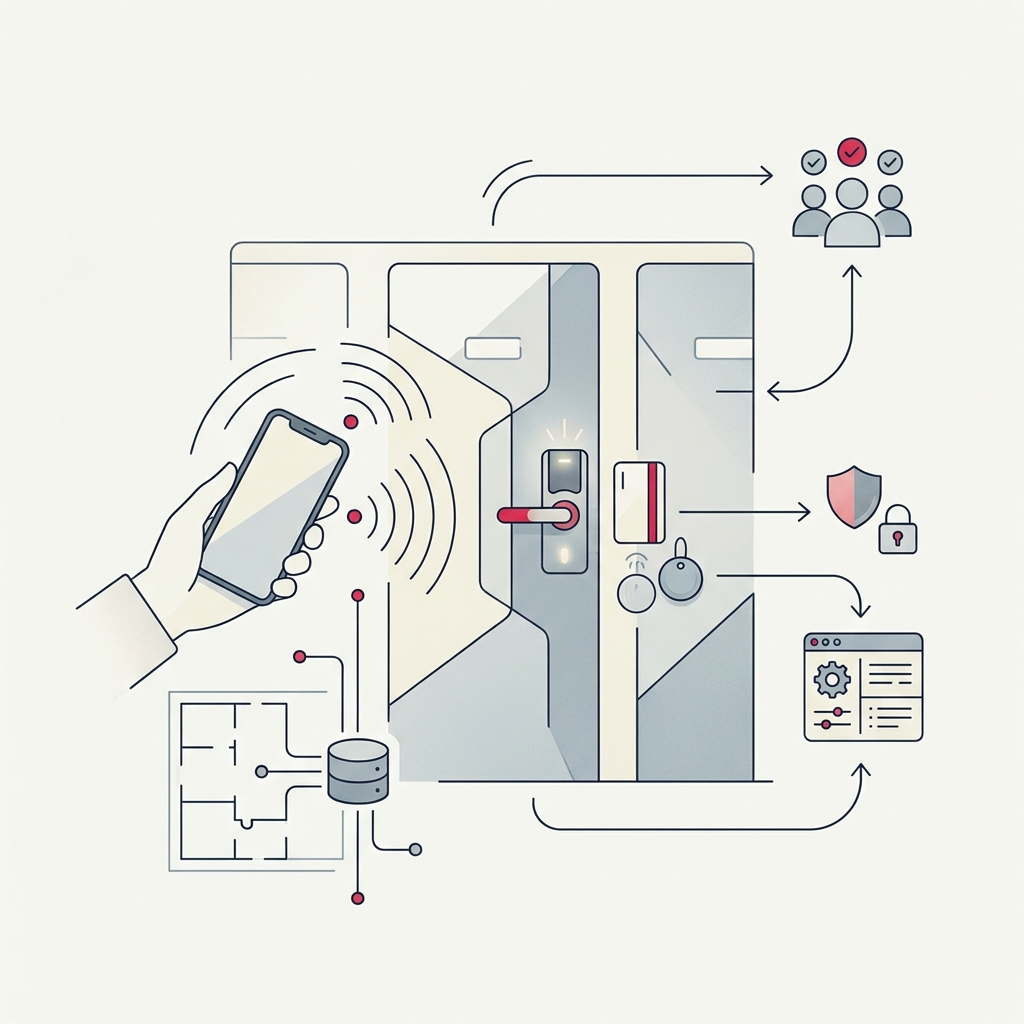
For instance, in communal entrances to storage room hallways that already feature an intercom or electric strike, devices such as Raixer Pro enable access automation without replacing the existing lock, combining smartphone unlocking with the option to keep the traditional key as an emergency backup. This is essential in large residential complexes where the digital transition demands flexibility.
Key use cases in residential communities
The versatility of a solid access system for communal storage rooms solves real, everyday property management challenges.
- Cleaning closets Ensure cleaning supplies and equipment are only accessible to the active cleaning contractor, revoking access automatically if the vendor changes.
- Technical maintenance Grant plumbers, elevator technicians, or electricians temporary access to utility rooms without requiring the community president to show up with physical keys.
- Concierge turnover When staff changes occur, the incoming concierge receives immediate access to all facilities via their phone, eliminating the need to track master key lockboxes.
- Storage unit rentals When owners rent their storage units to third parties, they can grant exclusive, temporary access to the area and instantly revoke it once the lease ends.
"Replacing bulky keychains with mobile access in storage areas is the definitive step toward a truly secure and manageable building."
Security and regulatory considerations
When implementing technology for communal storage access or utility rooms, it is critical to verify that the installation complies with fire evacuation codes and building regulations. On fire doors, for instance, any electronic adaptation must never compromise the door's fire resistance rating or hinder emergency egress from the inside.
Every locking mechanism in common areas must allow immediate, manual mechanical opening from the inside (panic bar or door handle) during an emergency, without relying on electrical power or mobile devices.
From a cybersecurity standpoint, robust access management platforms utilize bank-grade encryption to protect communication between mobile devices, cloud servers, and the lock hardware itself. This prevents signal interception, a vulnerability common in older technologies like basic RF remote controls (often used for garage entries connected to storage areas).
Frequently asked questions
What happens if the storage room is in a basement with no mobile signal or Wi-Fi?
Modern systems run on Bluetooth (BLE) technology. Permission verification occurs locally between the app on the user's smartphone and the storage door lock, meaning no cellular data or internet connection is required at the exact moment of unlocking.
How is access managed if a user does not own a smartphone?
In these cases, many systems support alternative access methods alongside the app, such as exterior pin-code keypads, RFID keyfobs, or, depending on the hardware setup, retaining the original mechanical cylinder as a backup contingency plan.
Can access hours be restricted?
Yes, one of the main advantages of smart access control is setting strict operating schedules. For example, cleaning staff can be restricted to Mondays through Fridays between 8:00 AM and 2:00 PM, automatically denying access at any other time.
What happens if the building experiences a power outage?
It depends on the specific setup. Electronic cylinders and smart surface locks typically run on standalone batteries, remaining fully operational. Relays wired to building intercoms or electromechanical strikes should be backed by an uninterruptible power supply (UPS) or provide a mechanical key override to guarantee safe entry and egress during blackouts.