Guardia Civil Accommodation: Registration and Legal Obligations for VUT
Learn everything about accommodation registration with the Guardia Civil. Discover legal regulations, how to digitise the process, and avoid penalties with solutions like Raixer. Ensure security and comply with the law!
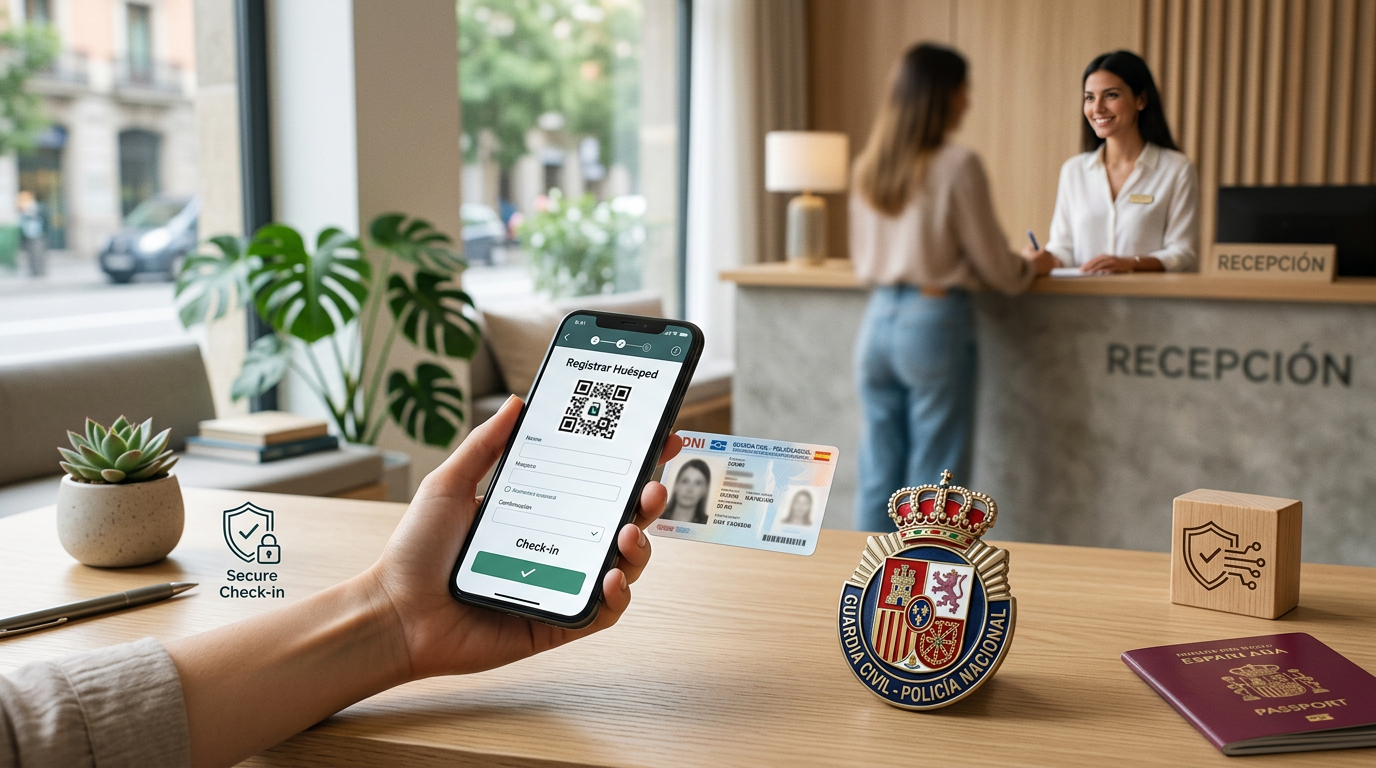
In the field of tourist rentals and property management, security is an unavoidable priority. For owners of tourist accommodation (VUT), hotels, communities, or even co-working spaces, understanding how regulation impacts access management is fundamental. One of the most recurring and doubt-generating aspects is the communication and registration of guests with authorities, such as the Guardia Civil. This process, far from being a mere formality, is a pillar of public safety and a legal requirement for any establishment offering tourist or commercial accommodation.
The Essentials
- Guest registration is mandatory and must be carried out with the Guardia Civil or National Police, ensuring security and legal compliance.
- The digitisation of check-in, using smart locks and management systems, simplifies this process and improves the guest experience.
- Raixer offers solutions to automate data collection and facilitate submission to authorities, ensuring privacy and efficiency.
- Choosing smart locks with robust protocols (BLE, Wi-Fi) is key for secure and reliable access management.
The Obligation to Report Accommodation to the Guardia Civil: Legal and Practical Framework
Spanish regulations establish the obligation for accommodation establishments to report the identity of the people staying with them. This requirement is not new, but its application has been modernised, especially with the emergence of holiday rental platforms. The communication of accommodation to the Guardia Civil (or National Police, depending on the territorial demarcation) aims to prevent crimes and guarantee public safety.
Every owner or manager of an accommodation must keep a record of traveller entries, complying with Organic Law 4/2015, of March 30, on the protection of public safety. This law, in its Article 25, establishes the obligation for natural or legal persons engaged in accommodation activities to register the people staying in their establishments. The regulation that develops this law and the specific sectoral regulations of each autonomous community detail the procedures. This registration involves collecting guests' personal data, signing an entry form, and subsequent electronic communication to the competent authorities (Guardia Civil or National Police, through platforms such as e-Hospedaje or Webpol).
Failure to comply with this duty or the submission of erroneous or late data can lead to significant administrative sanctions, classified as minor, serious, or very serious infringements, with fines ranging from €100 to thousands of euros, depending on the severity and recurrence. It is therefore vital to have a reliable and automated system to ensure legal compliance.
Choose the right lock
Consider the type of door, the required security level, and integration with other systems before deciding which Raixer lock best suits your accommodation needs.
Technology Behind Raixer: Security and Connectivity
The reliability of a smart lock system lies in its technology. At Raixer, we rely on advanced and secure communication protocols to ensure that every access is controlled and every piece of data is managed optimally.
Communication protocols and security
Our locks use a combination of technologies to offer flexibility and robustness, ensuring a reliable and secure connection:
- Bluetooth Low Energy (BLE): Allows direct and secure communication between the lock and the user's smartphone or a nearby gateway device. It is energy-efficient, ideal for battery autonomy, and ensures robust access control.
- Wi-Fi: For remote control of the lock, a gateway is used to connect the lock to the existing Wi-Fi network. This allows access to be managed from anywhere in the world and real-time notifications to be received, which is fundamental for efficient digital check-in.
- 868MHz Frequency: Some of our locks can use low-power radio frequencies like 868MHz for internal communications between Raixer devices. This band offers a good balance between range and obstacle penetration, with low interference, improving communication reliability within the property.
- Data encryption: All communication between Raixer devices and the cloud is protected with advanced encryption, guaranteeing the privacy and security of access data, in line with GDPR principles.
The choice of these technologies is not arbitrary; it seeks to offer a flexible system that can adapt to different environments and needs, from a small tourist apartment to an office building with multiple accesses, always with maximum security and reliability.
Digital access management is the future of accommodation: secure, efficient, and in full compliance with regulations.
Implementation and Daily Management: Facilitating Compliance
The implementation of a Raixer smart lock system for Guardia Civil accommodation registration is a process designed to be as simple and efficient as possible, from initial setup to daily operation.
Once configured, the Raixer system allows the property manager to:
- Create temporary and personalised access codes for each guest or user.
- Monitor lock activity in real-time, with detailed records of entries and exits.
- Securely collect guests' identity data, facilitating digital signing of entry forms.
- Generate access and occupancy reports for internal or external audits.
- Integrate guest data with submission platforms for the Guardia Civil/National Police (e-Hospedaje, Webpol).
The digitisation of registration is not only a matter of compliance but also of operational efficiency. It reduces administrative burden, minimises manual errors, and allows staff to focus on providing a better guest experience, without the complications of physical key management.
Legal and Privacy Considerations
When collecting guests' personal data, it is crucial to rigorously comply with the General Data Protection Regulation (GDPR) (EU Regulation 2016/679) and Organic Law 3/2018, of December 5, on Personal Data Protection and guarantee of digital rights (LOPDGDD). Raixer adheres to the strictest privacy and data security policies, ensuring that guest information is stored and processed securely, transparently, and legally.
Make sure to clearly inform your guests about the purpose of processing their personal data (legal compliance, access management) and obtain their explicit consent for any additional purpose. Keep your privacy policy updated.
The use of property management software (PMS) that integrates the automatic submission of traveller forms to the authorities is highly recommended. These solutions usually have the necessary security protocols for the transmission of sensitive data and are updated with current regulations, which significantly reduces the risk of non-compliance for the owner or manager.
Frequently asked questions
Is it mandatory to register all guests, including minors?
Yes, the regulations, specifically Article 25 of Organic Law 4/2015 and its developing regulations, require the registration of all persons staying at the establishment, regardless of their age or nationality. For minors under 16, their personal data will be registered, and the identity of the responsible person accompanying them will be indicated, with the latter signing the entry form.
What happens if I do not register guests or do so late?
Failure to comply with the registration obligation or the submission of traveller forms outside the established deadlines (generally 24 hours from entry) can lead to financial penalties. These infringements are considered serious according to Organic Law 4/2015, with fines ranging from €601 to €30,000, depending on the severity of the omission and whether there is recurrence. It is essential to comply with the deadlines and the method of submission (electronically via platforms such as e-Hospedaje or Webpol).
What are e-Hospedaje and Webpol?
e-Hospedaje and Webpol are electronic platforms enabled by the Guardia Civil and the National Police, respectively, for accommodation establishments to comply with the obligation to register and communicate their guests' information digitally and securely. Each platform corresponds to the security force with jurisdiction in the geographical area where the accommodation is located. Traveller entry forms are sent through these platforms.
How does Raixer help with compliance with registration regulations?
Raixer facilitates compliance with traveller registration regulations by integrating guest data collection during the digital check-in process. Our platform allows managers to obtain the necessary data and the signature of the entry form remotely and securely. Subsequently, this data can be exported or integrated with your PMS for submission to the Guardia Civil (e-Hospedaje) or National Police (Webpol) platforms, minimising errors and streamlining the process.
What is a PMS and why is it important for traveller registration?
A PMS (Property Management System) is property management software that helps owners and managers administer all aspects of their accommodations: bookings, rates, cleaning, maintenance, and, crucially, check-in and guest registration. For traveller registration, an integrated PMS facilitates the automation of sending entry forms to the Guardia Civil or National Police, ensuring that all data is up-to-date and sent within legal deadlines, saving time and reducing the risk of fines.