Changes to the Balearic Holiday Rental Law: Regulatory Guide
Discover the latest changes to the holiday rental law in the Balearic Islands in 2026. Learn about new restrictions and adapt your tourist property today.
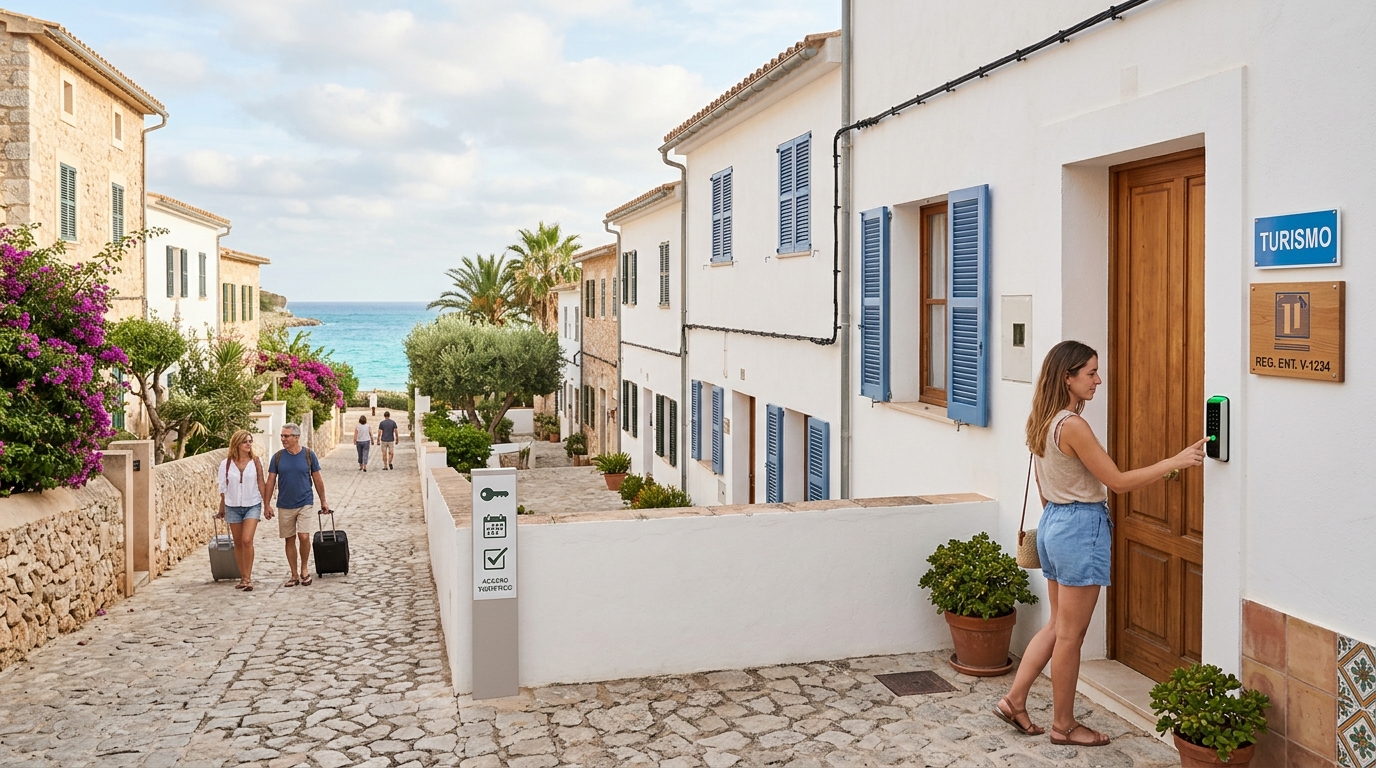
Tourism regulations in Spain are constantly evolving, and if you manage holiday homes in the Islands, you need to stay up to date on the changes to the Balearic holiday rental law. In 2026, pressure on housing access and the sustainability of the tourism model have triggered amendments that directly impact hosts. From the freeze on new licences to stricter requirements for registration and daily operations, ignoring these adjustments could cost you dearly.
Key Takeaways
- The Balearic Islands maintain strict restrictions on new tourist beds in 2026.
- Inspections and penalties have been tightened to combat illegal rentals.
- Access control and guest registration are now high-priority areas of focus.
Current Context of Holiday Rentals in the Balearics in 2026
The Balearic archipelago has led the sector's regulation for years to strike a balance between tourism and local life. The changes to the Balearic holiday rental law currently focus on consolidating the moratorium on new licences (active and extended) and ramping up pressure on unlicensed properties.
For hosts already operating legally, this means safeguarding your licence is as good as gold. Any infraction—from exceeding permitted occupancy to failing to transmit guest data to the authorities—can lead to the revocation of your permit.
No registration, no key
Best practice is to release the digital key or entry code only after the guest has successfully completed their online guest registration.
Steps to Adapt Your Property to Operational Requirements
If you feel manual management leaves you exposed to mistakes, follow this roadmap to align your holiday let with the best practices required by the regulatory changes.

Implementing an automated remote check-in system has become essential for ensuring regulatory compliance without adding hours of manual work for the host. These systems verify the guest's identity and transmit the data legally before granting physical access to the property, closing the security loophole targeted by the new regulations.
Neighbourhood Coexistence: From Recommendation to Requirement
With recent legislative amendments and growing social pressure, avoiding disturbances to neighbours has become a de facto requirement to operate peacefully. Homeowners' associations (comunidades de propietarios) hold legal mechanisms to restrict or veto holiday lets if they severely disrupt community harmony. Recurring excessive noise alone can jeopardise your property and hospitality investment.
To protect your business, you must demonstrate you are fully in control. Locks for tourist apartments (holiday rentals) not only eliminate the hassle of physical key exchanges (along with the risk of unauthorised duplicates or lost keys), but they also provide an audit trail of who enters and at what time. Technologies based on BLE (Bluetooth Low Energy) or Wi-Fi connectivity ensure access is fast and secure, without requiring the host to be on-site.
Protecting your licence in the Balearics hinges on automating legal registration and ensuring your property's activity does not disturb the neighbourhood.
How Technology Helps You Comply with the Law
To effortlessly meet the Balearic administration's standards, adopting digital tools is the most direct route. Integrating your various management systems (bookings, identity verification, access, and monitoring) minimises the margin for human error and provides solid proof of your professional due diligence during an inspection.
- Cloud-based registration Guest reports are submitted automatically to the Ministry of the Interior.
- Access traceability Know precisely when a guest arrives and departs.
- Automatic security lockout Virtual keys expire at the exact time of check-out.
- Noise prevention Acoustic sensors alert you before a neighbour calls the police.
Ensure the smart lock you install integrates seamlessly with your booking management software to automate the entire process.
In this regard, having robust access control is the first line of defence for any responsible host. You avoid hand-delivering physical keys, guarantee that only registered guests enter the accommodation, and demonstrate strict oversight of your holiday home's day-to-day operations.
Frequently Asked Questions
Can I obtain a new tourist licence in the Balearics in 2026?
Currently, due to the moratorium and active tourism management plans, the issuance of new tourist bed places (bolsa de plazas) is frozen across most areas of the islands.
What happens if I forget to register a guest?
Failing to comply with the obligation to register and report guest data to the authorities carries severe financial penalties (which can exceed €4,000 for serious infractions) and, in cases of repeat offences, may lead to the suspension or revocation of your licence.
Is it legal to require guests to use a smart lock?
Yes, provided this is clearly stated in advance within the booking terms and conditions. Electronic access systems (keycodes, app-based unlocks, or phone access) are completely legal and increasingly serve as the industry standard to meet required safety levels.
How do I prevent more people from entering than permitted?
You must clearly outline house rules. In addition, technological solutions such as connected locks and noise sensors (which only monitor decibel levels without recording conversations) alert you to unusual activity indicating a party or overcrowding.