CCTV Camera Costs for Residential Communities: Complete Guide
How much does it cost to install CCTV in your residential building? Discover the prices of security cameras for community blocks and request a quote.
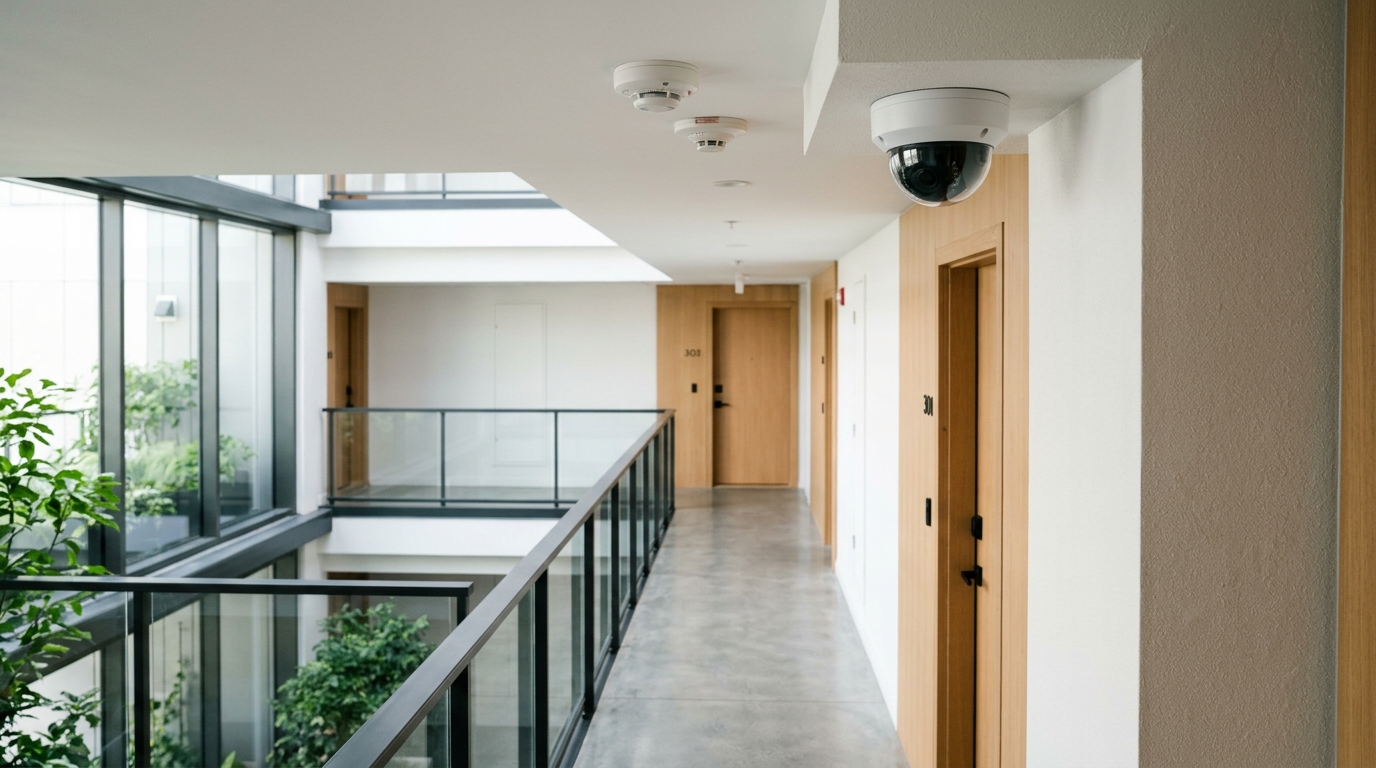
Home security begins before you reach your front door. The cost of CCTV cameras for residential communities is one of the most common topics raised at homeowners' association meetings. When the need to improve building security arises due to storage unit break-ins, vandalism, or general precaution, video surveillance is usually the first option on the table. However, it is not just a matter of buying the cheapest camera. You need to consider installation, maintenance, and, most importantly, strict compliance with current regulations to avoid heavy fines that would easily exceed the cost of the system itself.
Key Takeaways
- The cost of installing CCTV in a residential building varies depending on the technology, the number of access points, and the maintenance plan chosen.
- Approval from the Homeowners' Assembly and full compliance with data protection laws are mandatory.
- An effective alternative or complement to video surveillance is upgrading garage access control and the locks in communal areas.
What Determines the Price of CCTV Cameras in a Residential Community?
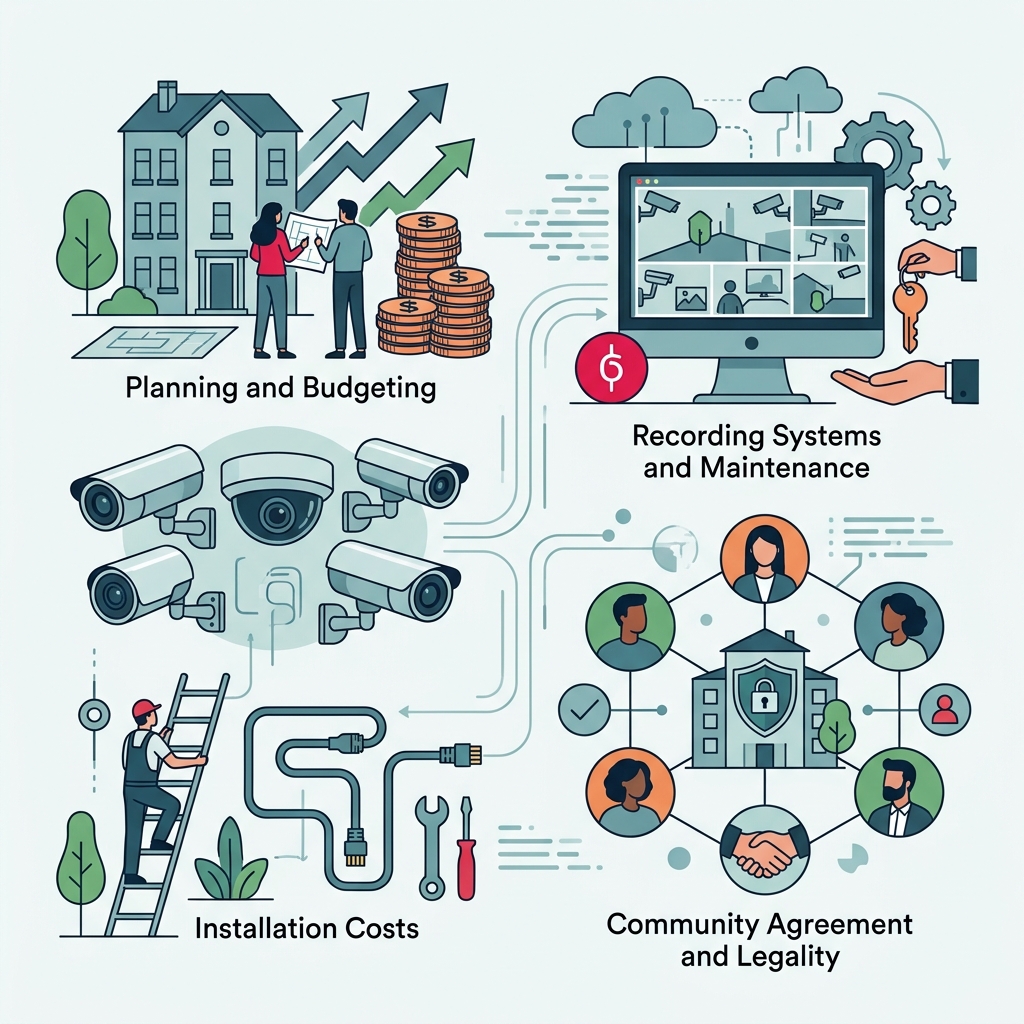
There is no one-size-fits-all flat rate. The final quote for installing a video surveillance system in an apartment building depends on multiple technical and logistical factors. It is essential to understand that the initial hardware cost is only part of the total investment the community will take on in 2026.
Cost Breakdown
- Recording Equipment. The cost of cameras (IP or analogue) and the video recorder (DVR/NVR).
- Installation and Cabling. Labour costs, cable routing, and the complexity of the building layout.
- Maintenance. Monthly fees covering regular inspections, troubleshooting, and equipment cleaning.
- Legal Compliance. Register of processing activities and GDPR/data protection advisory.
Approximate Price Ranges
For a medium-sized residential building (1 or 2 main entrances, garage area, and storage rooms), the initial cost is typically structured as follows. It is always advisable to request itemised quotes from certified installation companies.
A basic setup with 3 to 4 cameras covering the main entrance and key access points typically ranges between €800 and €1,200. For larger residential complexes that require 10 to 15 cameras (garages, swimming pools, sports facilities), the initial cost can easily surpass €2,500 to €4,000.
Maintenance Contract
Subscribing to a monthly service plan with the installation company is strongly recommended. This covers repairs, parts replacement, and, crucially, legal handling and extraction of footage in the event of an incident.
Legal Requirements for Installing Cameras in Common Areas
The main obstacle is often not the cost of the CCTV system itself, but the associated red tape and legal requirements. Common areas (lobbies, landings, garages, courtyards) are spaces used daily by residents and their visitors, meaning their right to privacy is strictly protected by law.
Approval by the Homeowners' Assembly
To approve the installation of a video surveillance system as a security measure in communal areas, property laws generally require a qualified majority vote—typically three-fifths of all property owners who also represent three-fifths of the total ownership quotas.
Data Protection Regulations (GDPR)
- Warning Signs. Certified warning signs must be clearly displayed at every entrance to the monitored area, explicitly stating that CCTV is in operation.
- Record of Processing Activities. As the data controller, the community must keep a Record of Processing Activities (ROPA) detailing who captures the footage and for what specific security purpose.
- Restricted Access. The monitor and recording device must be kept in a secure location (such as a locked cabinet), and only designated individuals (typically the building president or property manager) should hold access credentials.
- Storage Period. Recordings cannot be stored indefinitely. Regulations dictate that footage must be erased within a maximum of 30 days, unless requested by law enforcement or judicial authorities in connection with an offence.
Recording Public Spaces
Cameras at entrances or garage gates must not capture public roads, footpaths, or neighbouring private properties. They must be angled strictly to monitor only what is necessary within the community's boundaries.
Alternatives and Complements to Video Surveillance
If the price of installing CCTV seems prohibitive or the required majority cannot be achieved at the meeting, there are other effective ways to secure the building. Very often, the root issue is not the lack of cameras, but how easily unauthorised individuals can gain access through the main door.
Reinforcing physical security should be your first line of defence. Many communities choose high-security anti-snap lock cylinders or dedicated locks for residential communities, which provide much tighter control than traditional physical keys that anyone can easily duplicate.
Smart Access Control
While a camera only records who entered (after the damage is done), an active access control system can prevent intruders from entering in the first place. Devices using BLE (Bluetooth Low Energy) or 2.4GHz Wi-Fi let residents unlock doors using their smartphones, log precisely who entered and at what time, and instantly revoke permissions if a tenant moves out or an access credential is compromised.
Preventing unauthorised access with an effective access control system is far more proactive than simply filming intruders once they are already inside.
For buildings with high turnover, such as those hosting multiple short-term holiday lets, combining CCTV with solutions like Raixer Pro dramatically reduces incidents in communal areas by ensuring that only individuals with valid temporary or permanent credentials can enter.
Frequently Asked Questions
Can we install dummy cameras as a deterrent?
While a dummy camera does not record images—and therefore falls outside data protection regulations—it can create a false sense of security and make neighbours uncomfortable. Legally, it remains a grey area; when dummy cameras point towards common areas, courts have occasionally sided with residents demanding their removal on the grounds of invasion of privacy.
Can an individual resident install a camera in the communal hallway?
No. An individual owner cannot install security cameras in common areas (hallways, landings, stairwells) without formal community approval, even if the camera only points toward their own front door. For personal home security, smart digital door viewers are an option, but they must adhere to strict rules to avoid recording neighbours passing by.
How long can CCTV footage be kept?
Under current data protection regulations, footage captured by video surveillance systems must be deleted within a maximum of one month from the time of recording. The only exception is when an incident or crime has been detected; in such cases, the relevant clips must be isolated, protected, and handed over to law enforcement or court authorities.
Are security cameras allowed to record audio?
As a general rule, recording audio in residential buildings is considered disproportionate and unlawful. Security objectives are sufficiently met through video capture alone. Recording residents' conversations in communal entrances or garages is considered an excessive invasion of privacy and is frequently subject to heavy regulatory fines.