Smart Door Lock: Security and Convenience in Your Access
Discover what a smart door lock is, how it works, and its types. Modernise your access control with smart locks for homes, offices, or tourist rentals. Explore Raixer's solutions!
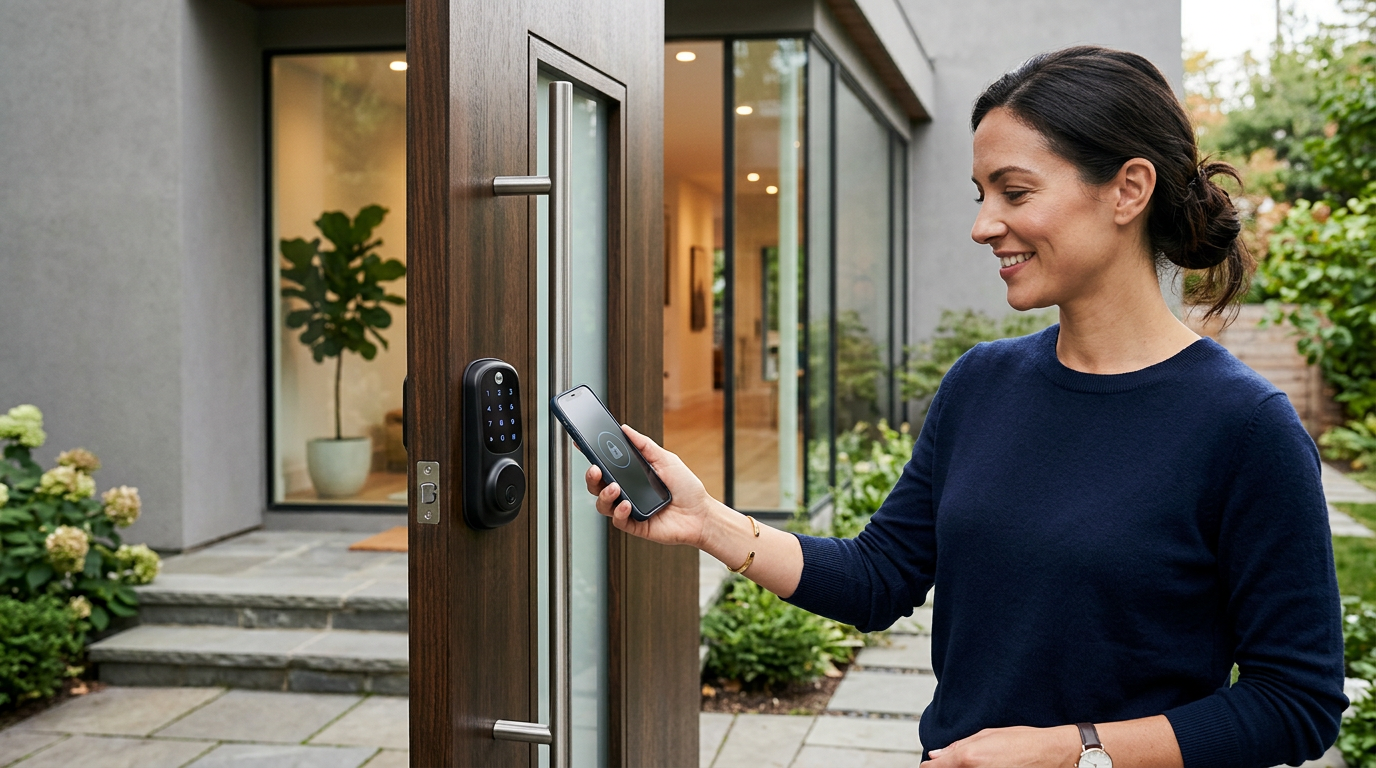
Security and convenience are two fundamental pillars in any space, whether a home, an office, or a tourist accommodation. In this context, the smart door lock has emerged as a technological solution that redefines the way we interact with our access points. Far from being a simple gadget, it is a control system that integrates hardware and software to offer unprecedented management of entries and exits, adapting to the needs of the 21st century with advanced functionalities.
The essentials
- Smart door locks modernise access control, offering security, convenience, and efficiency.
- There are various types (cylinder, surface-mounted, invisible) and communication technologies (BLE, Wi-Fi, Z-Wave, Matter).
- They are ideal for tourist rentals, offices, communities, and care for individuals, optimising management and user experience.
A smart lock is much more than a lock that opens with a mobile phone. It represents a digital security ecosystem that allows you to manage who, when, and how accesses a space, all remotely and with a detailed record. Its adoption has soared in sectors such as holiday rentals, where access management is critical, but also in corporate and residential environments, where automation and security are increasingly valued.
What exactly is a smart door lock and how does it work?
A smart door lock is an electromechanical device installed on a door, allowing it to be opened and closed using digital credentials, instead of a traditional physical key. These locks connect to a network, either local or the internet, facilitating remote control and interaction with other smart home or business devices.
The basic operation involves a motor or a solenoid mechanism that actuates the lock's bolt. This motor receives commands from an internal controller, which in turn communicates with external devices (smartphones, tablets, computers) or with other components of a home automation system. Communication can occur through various protocols, each with its own advantages in terms of range, security, and energy consumption.
Consider the future
Opt for locks that support open standards like Matter or offer APIs for developers, ensuring greater flexibility and long-term integration for future expansions.
Raixer, with its range of products such as Raixer Mini and Raixer Pro, offers advanced solutions designed to meet these needs, standing out for their robustness, ease of installation, and powerful management software that adapts to the demands of any environment. From basic access control to the most complex integrations, our products are designed to provide maximum peace of mind and efficiency.
Installing a smart door lock: DIY or professional?
The complexity of installing a smart door lock varies significantly depending on the model and door type. Some models are designed for "Do It Yourself" (DIY) installation, which can be done with basic tools following the manufacturer's instructions. However, for others, especially those requiring modifications to the door or frame, it is advisable to use a professional installer.
Opting for a qualified installer ensures that the lock functions correctly, that the door's security is not compromised, and that future problems are avoided. Raixer has a network of trained Raixer installers who can ensure optimal commissioning of our locks.
Guaranteed installation
Although many smart locks are designed for simple installation, professional intervention guarantees correct functioning and maximum security, especially in critical environments or with specific requirements.
Investing in a smart door lock is a strategic decision that improves security, optimises management, and enhances user experience. By understanding its functionalities, types, and key considerations, it is possible to choose the perfect solution that aligns with the demands of modern life and the requirements of a constantly evolving market.
Frequently asked questions
Are smart locks secure against cyberattacks?
Quality smart locks use advanced encryption protocols (such as 128 or 256-bit AES) to protect communications and credentials. Reputable manufacturers invest considerably in cybersecurity to protect their devices against attacks. However, like any connected device, security also depends on keeping software updated and using strong passwords.
What happens if the power goes out or the battery runs out?
Most smart locks run on batteries and are designed to give advance warning when the charge is low. In case of complete depletion, many models include an emergency input (e.g., micro USB for an external battery) or allow access via a backup physical key. 12V/24V locks, being connected to mains power, usually have uninterruptible power supply (UPS) systems or backup batteries in the building's general access control system.
Can I integrate my smart door lock with other smart devices?
Yes, most modern smart locks are designed to integrate with smart home ecosystems or management systems. They can connect to voice assistants like Alexa or Google Home, or to home automation platforms using protocols such as Z-Wave, Zigbee, or the emerging Matter, allowing for scene automation and centralised control.
Do I need an internet connection for a smart lock to work?
It depends on the model and the desired functionality. Many locks can operate with Bluetooth without an internet connection for local control. However, for remote management (opening from outside the home, managing permissions remotely, receiving notifications) and integration with most smart systems, an internet connection is necessary, generally via Wi-Fi or a hub/gateway.
Are smart door locks resistant to weather conditions?
Smart locks designed for outdoor use or for doors that face directly onto the street must have an appropriate IP (Ingress Protection) rating, which indicates their resistance to dust and water. It is crucial to verify this specification if the lock will be exposed to the elements, to ensure its durability and correct functioning.