How to Prevent Tourist Flats from Being Set Up in Your Building
Learn how to prevent tourist flats from being set up in your building under the Horizontal Property Act and what majorities you need. Protect your community!

The surge in vacation rentals has transformed the dynamics of many residential areas, raising concerns among owners who want to maintain the peace and quiet of their daily surroundings. If you are wondering how to prevent tourist flats from being set up in your building, the key lies in acting quickly, thoroughly understanding the tools provided by the Horizontal Property Act, and coordinating with your community of owners before the situation becomes irreversible. The law offers specific defense mechanisms, but they require following a formal and strictly legal procedure to ensure they are effective and binding against third parties.
Key Takeaways
- The Horizontal Property Act allows communities to limit or prohibit new tourist accommodations with a 3/5 majority of owners.
- Agreements are not retroactive: they cannot shut down holiday lets that were already operating legally prior to the vote.
- It is essential to register the agreement with the Land Registry so that it is binding on future buyers.
- Legal remedies exist, such as the cessation action (injunction), to shut down properties that cause serious and ongoing disturbances.
Understanding the Current 2026 Regulations on Vacation Rentals
The regulatory framework for short-term rentals has evolved significantly to grant greater decision-making power to communities of owners. Today, national legislation allows residential communities to veto the establishment of new tourist accommodations (VUTs) through a qualified majority agreement, removing the need for the unanimity previously required years ago.
This amendment to the Horizontal Property Act marked a major turning point. The primary objective is to balance private property rights with the right to rest and the security of the remaining residents. However, for this ban to be entirely legal and shielded from potential lawsuits, the voting and registration process must be carried out meticulously.
Beware of Retroactive Community Fees
Although increasing community fees for holiday rentals is legal, it cannot be applied retroactively either. It will only take effect from the moment it is formally approved at the Owners' Meeting and notified to the affected owner.
This increase in fees is justified by the greater wear and tear suffered by the building's common elements (elevators, entry halls, lighting, cleaning) due to the high turnover of guests rolling luggage and unfamiliarity with house rules.
Control and Cohabitation Measures Against Vacation Rentals
When banning the activity is no longer an option, the focus must shift toward strict oversight and mitigating negative impacts. While knowing how to prevent tourist flats from being set up in your building in the future is vital, managing the present is just as critical. Communities can implement internal bylaws that, without outright banning the activity, strictly govern the use of the property.
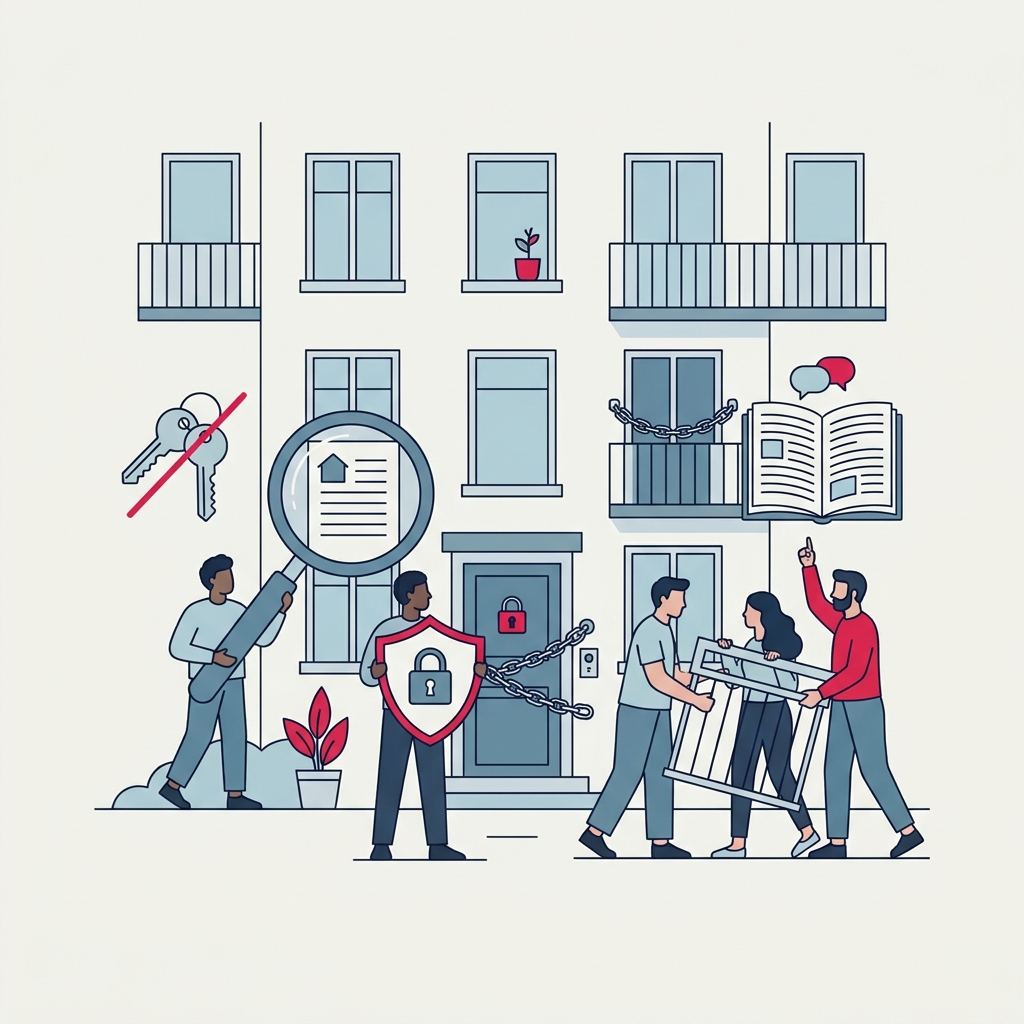
- Internal Bylaws House rules establishing strict schedules for using common areas, moving furniture, or disposing of garbage.
- Noise Monitoring Recommending or requiring the installation of a noise sensor for tourist apartments that alerts the host before disturbances affect neighbors.
- Amenity Restrictions Restricting access to non-essential facilities, such as swimming pools or gyms, for non-residents, provided the community statutes support it.
- Bilingual Signage Clear signs in the main lobby detailing quiet hours, party bans, and emergency phone numbers.
Repeated violations of internal community rules serve as vital supporting evidence should the community later decide to take stronger legal action, such as an action for cessation, against the owner of a problematic flat.
The Role of Technology in Building Entrance Security
The constant flow of strangers increases the feeling of insecurity within a building. One of the greatest risks of traditional tourist flats is the uncontrolled duplication of physical front door keys. Many hosts hand out sets of keys that can easily be lost or copied, compromising security for the entire building.
To solve this, more and more residential communities are opting to modernize their access systems. Installing a smart lock for residential communities eliminates traditional physical key sets, allows entry via smartphone or temporary passcodes, and maintains an accurate audit log of who opened the main door and at what time.
Access control technology specialists, such as Raixer, provide solutions that install into the intercom system or directly into the building's electric strike. In this way, the community regains control: the host can issue temporary access credentials that expire precisely when the guest's booking ends. Once the stay is over, the code or link stops working, preventing unauthorized entry in the future and eliminating the risks associated with copied keys.
Automated Temporary Access
Encouraging hosts to adopt remote check-in systems on their apartment doors not only saves them unnecessary trips, but also ensures the community won't have guests wandering the halls or buzzing other residents' intercoms in the middle of the night.
The Cessation Action: The Last Resort for Severe Nuisances
If tourist rental activity leads to substantial property damage or intolerable disturbances (such as persistent late-night noise, illegal parties, or confrontations in common areas), the community can invoke Article 7.2 of the Horizontal Property Act to file an action for cessation (injunction). This legal remedy can result in a court order temporarily prohibiting the tourist use of the flat, even if it holds an official license.
This route requires thorough preparation and the gathering of irrefutable evidence. Verbal complaints alone are not enough; every incident must be documented objectively.
Steps to Pursue an Action for Cessation
First, the community president must serve a formal cease-and-desist notice (typically via burofax with recorded delivery and certified content) on the property owner, demanding the immediate cessation of the disruptive activities and warning that legal action will follow if the notice is ignored. It is also advisable to notify the property management agency, if one is involved.
If the violation persists, the Community of Owners must convene a meeting to formally authorize the president to initiate court proceedings. When presenting the case before a judge, submitting police reports regarding noise complaints, expert reports, witness statements from affected neighbors, and a detailed log of emergency calls will be crucial. If the court rules in favor of the community, it may order the permanent termination of tourist rental activities in that unit and even suspend the owner's right to occupy the property for a specified period.
Frequently Asked Questions
Can a single neighbor object and prevent the ban on tourist flats?
No. Following changes to the Horizontal Property Act, unanimity is no longer required. If 3/5 of the owners (representing 3/5 of the participation quotas) vote in favor of banning tourist rentals, the measure is approved, regardless of opposition from a minority.
Does the ban apply to renting out individual rooms?
Regulations and court rulings vary, but generally, renting individual rooms to tourists (where the owner lives on the premises or rents out sections of the home) is governed by specific regional or municipal bylaws. However, if the community statutes explicitly prohibit any hospitality use or commercial activity within the residential units, this format may be covered as well.
Does registering the agreement with the Land Registry incur any costs?
Yes, registration requires paying notary fees (since the community resolution must be executed as a public deed) and Land Registry fees. Costs depend on document length and official tariff schedules, but it is an essential investment that is typically covered by the community's general operating budget.
Can a tourist flat owner be forced to pay higher community fees?
Yes, the law allows the community to agree on an increased share of common expenses for units used for tourist activities, up to a legally established cap (often up to 20%). This increase cannot be applied retroactively and must be approved by the same 3/5 majority.
What should I do if guests from a tourist flat ring the wrong intercom late at night?
This is a frequent nuisance. The community can require the owner to provide clearer access instructions to guests or install a remote access system tied strictly to their own intercom unit. If the problem persists, log each occurrence and send formal written notices (such as a burofax) warning about the ongoing disruption to residents' rest.