Renting a Parking Space with Mobile Access: Essential Guide
Discover the benefits of renting a parking space with mobile access. Forget physical remotes and manage permissions instantly. Digitalize your parking today!
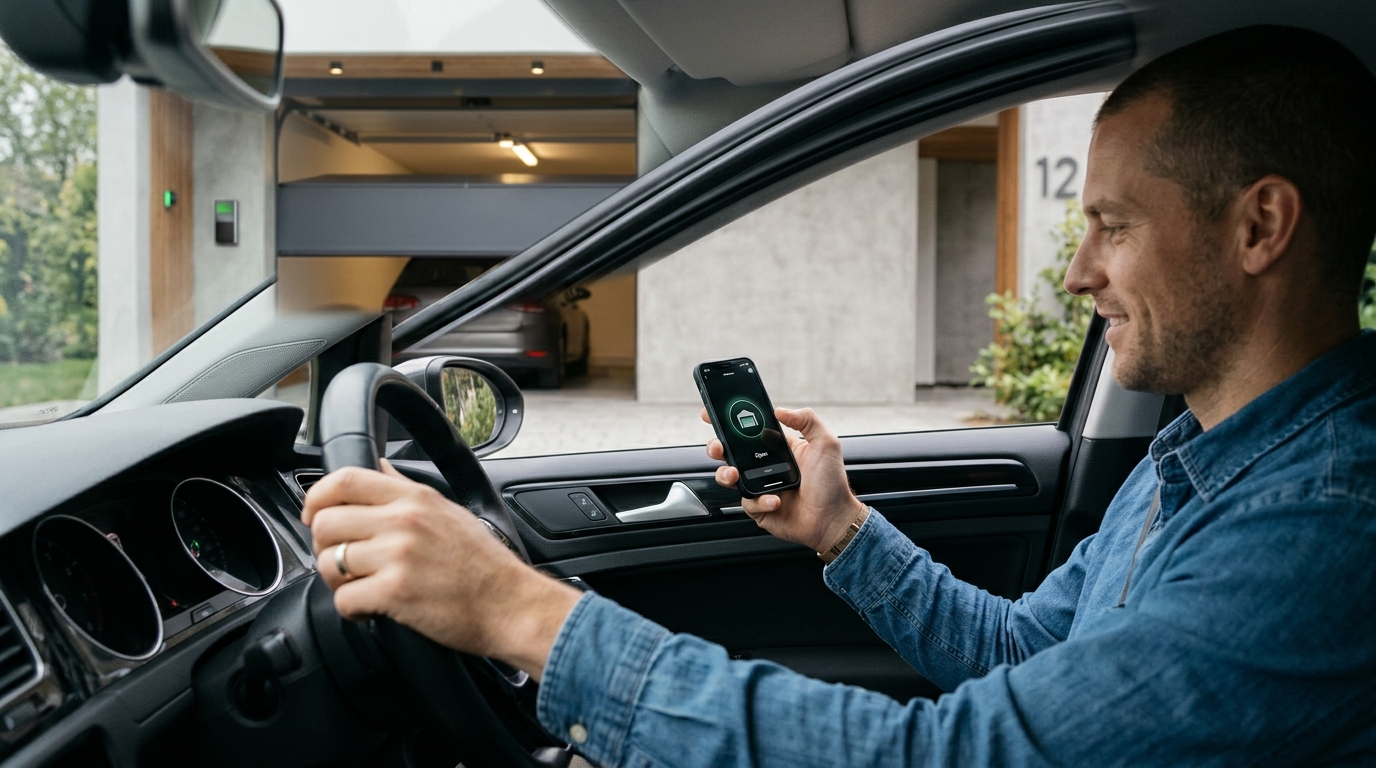
Forget about meeting up with tenants to hand over remote controls or magnetic keys for the parking gate. If you are thinking about renting a parking space with mobile access, you are taking the definitive step toward a system that eliminates replacement costs for lost remotes and streamlines all logistical operations. Today's technology allows opening any motorized gate or barrier directly from a smartphone securely—even in underground levels without an internet connection—thanks to low-power proximity protocols. Transforming your parking space into a digital asset is the first step toward maximizing its profitability.
Key Takeaways
- Smartphone opening eliminates the need to purchase, hand over, and replace physical remotes.
- The system utilizes Bluetooth Low Energy (BLE) technology to work seamlessly in basements without cellular coverage.
- Installation onto the motor control board is fast, universal, and leaves traditional opening systems completely intact.
The Rise of Renting a Parking Space with Mobile Access in 2026
The real estate market and property management have become profoundly digitized, and parking spaces are no exception. Until very recently, managing these assets inevitably involved dealing with heavy metal keys and radio frequency receivers. These traditional systems, while reliable in their basic mechanisms, present continuous management headaches: in-person handoffs, collection at the end of the contract, and the unavoidable loss or damage of remotes. When renting a parking space with mobile access, the owner simply sends a virtual credential in a matter of seconds via an app.
Nowadays, flexibility is the greatest added value. Drivers look for immediate, frictionless solutions, while owners need tools that allow them to monetize their vacant parking spots without wasting time traveling back and forth. The widespread adoption of this standard caters precisely to this dual need, merging hardware installed at the gate with cloud management platforms.
Direct Benefits for Owners and Drivers
Transitioning toward a smart garage model radically transforms the user experience. It is not just about the obvious convenience of not carrying an extra device on your keychain, but about an exponential increase in security and the financial optimization of the rented space.
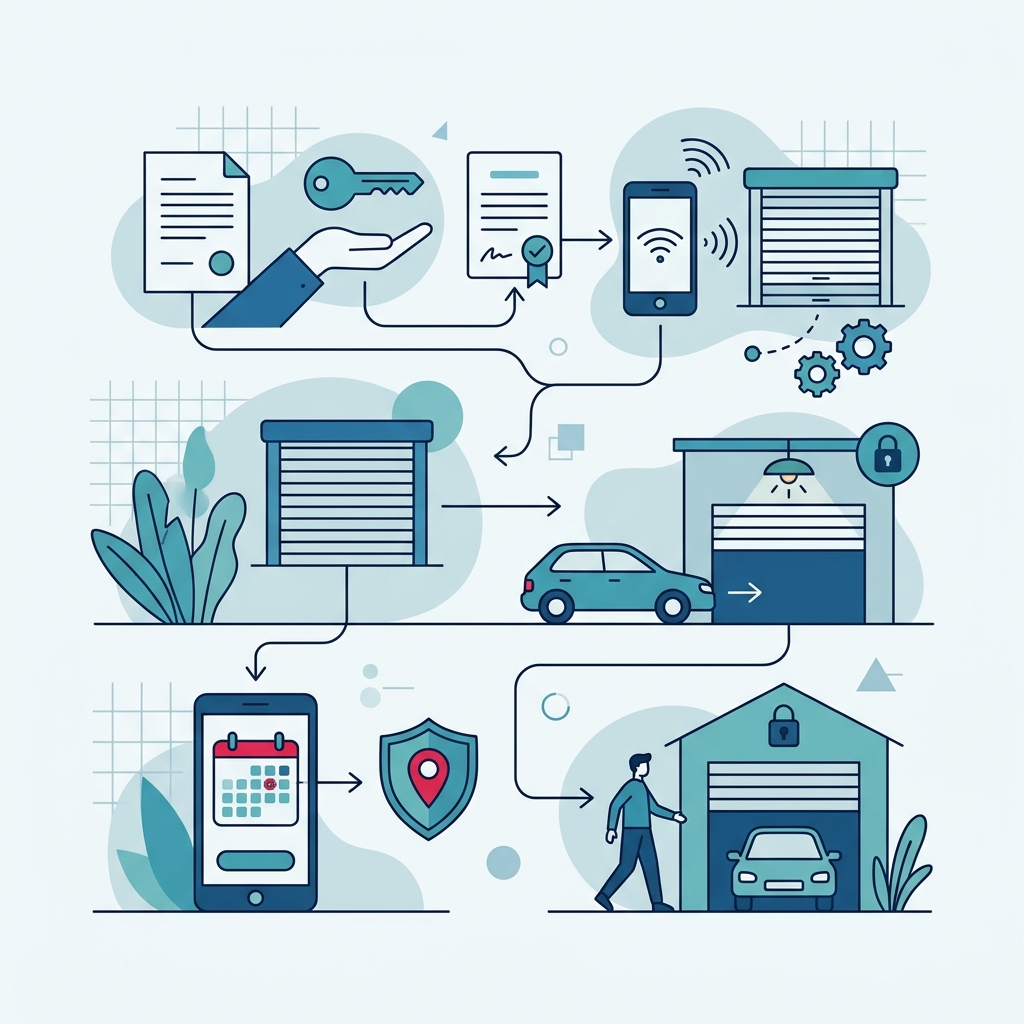
- Zero lost remotes Permanently eliminate recurring costs for duplicating and replacing old radio frequency devices.
- Temporary access Set precise expiration dates and times for the virtual key, preventing unauthorized use outside the contract.
- Access logging Keep an accurate, real-time audit trail of who accessed the facility, when, and how.
- Instant cancellation Revoke access for defaulting tenants or upon contract termination with a single click.
Technology Behind the System: How Does It Work in Basements Without Signal?
One of the biggest concerns when digitalizing an underground parking facility is the well-known lack of cellular coverage (4G/5G) or Wi-Fi. Lower building levels act as veritable Faraday cages, blocking external signals. To solve this structural challenge, the most advanced Garage access control systems use hybrid architectures and local communication protocols.
The standout protocol in this sector is Bluetooth Low Energy (BLE). Unlike direct server connections over cellular networks, BLE enables the driver's smartphone to communicate directly and in an encrypted manner with the receiver module wired to the garage door control panel. The device acts as a local validator for security credentials that the mobile app previously downloaded in the background when the user did have coverage (for instance, at home before getting into the car). Furthermore, emerging standards like Matter and Z-Wave mesh networks are beginning to integrate into smart building infrastructure, enabling centralized access in newly developed properties.
The Role of Bluetooth Low Energy (BLE)
BLE ensures that drivers can open the garage gate instantly even without mobile data, validating a cryptographic token locally between their phone and the receiver.
Technical Differences: Traditional Radio Frequency vs. Virtual Keys
To grasp the qualitative leap, it is essential to review how a traditional garage operates. Traditionally, remote controls operate by broadcasting bursts of radio frequency, typically on the free 433.92 MHz or 868.35 MHz bands. Older systems used fixed codes (easily cloned with inexpensive equipment), while modern ones employ Rolling Code technology. However, even rolling codes present vulnerabilities against replay and capture attacks, and they also require the administrator to be physically present at the receiver to register a new remote.
Virtual credentials shift the paradigm. They utilize symmetric and asymmetric encryption algorithms (such as AES-128 or AES-256 bit), equivalent to those used in banking transactions. The key resides in the smartphone's secure enclave and is unclonable. If a user loses their phone, the administrator can revoke that user in the cloud, and access will be blocked as soon as the receiver syncs or the time-based token expires.
Digitalizing garage access eliminates the risk of uncontrolled cloning of traditional remotes, returning full ownership and control of the space to its rightful owner.
Relay Installation on Automatic Doors
Contrary to what many owners fear, replacing the expensive motor of an overhead door, sliding gate, or barrier is not required. The technological integration is carried out in parallel and non-intrusively using a small smart relay that acts as a dry contact on the existing control board.
Once installed, this device simulates a physical button press each time it receives an encrypted, authorized command from the mobile phone. Crucially for shared facilities, the original remote control system (at 868MHz or 433MHz) and magnetic keys continue functioning exactly as before. This guarantees a seamless transition in homeowner communities where some neighbors prefer keeping their conventional method while others switch to mobile access.
Respect Motor Safety Mechanisms
It is imperative to ensure that the installation of the new module does not bypass, override, or interfere with anti-crush safety photocells or resistive safety edges on the automatic gate.
Comprehensive Management for Vacation Rentals and Leases
If you manage multiple spaces or if parking is offered as an add-on within a vacation rental property, coordinating and handing over multiple physical keys can become a serious operational bottleneck. By enabling the system to rent a parking space with mobile access, the property manager's entire workflow becomes completely asynchronous and remote.
Imagine a tourist arriving in their own vehicle outside standard check-in hours. Thanks to digitalization, this guest can complete an Automatic remote check-in from their couch a few days prior to traveling. Once their identity is verified, they receive an app or a web link (PWA) on their smartphone featuring a button to open the garage. That button will only become active on the check-in date and time of their booking, and will disappear promptly at check-out time. In this hyper-connected ecosystem, having robust hardware and centralized software is vital, making systems like Raixer a perfect ally to manage the main entrance, the apartment door, and the basement gate from a single control dashboard.
Automation via API or iCal
Advanced owners connect their booking engine or PMS directly with the garage controller, creating and revoking access permissions in a fully automated way.
Advanced Use Cases: Hourly Monetization and Coworkings
The flexibility of digital access control opens the door to new business models. While a traditional rental ties a space to a single vehicle for months or years, virtual access allows seamless turnover and space sharing without logistical friction.
- Hourly time-slot rentals An office worker uses the parking spot during the morning, and a local resident utilizes it overnight.
Regulatory Considerations in Community Garages
Operating in 2026 under the legal framework of horizontal property regulations requires following specific procedures if the parking space is located in a community garage. Installing a mobile access device on the main gate—as it is a common building element—generally requires submitting the project for approval by the homeowners' association. Fortunately, since parallel installation does not affect neighbors who prefer traditional remotes and delivers mid-term savings in maintenance costs, these proposals are usually approved without objection.
If the community does not approve modifying the main control board, the private owner still has options. They can install mechanical parking barriers or automatic Bluetooth parking locks directly on the floor of their private stall. In this scenario, the tenant accesses the main garage using a conventional remote provided by the owner, but lowers the parking barrier using their smartphone. While less streamlined than a fully centralized setup, it still protects the parking stall from unauthorized third-party use.
Frequently Asked Questions
What happens if my smartphone battery dies in front of the door?
Because the smart hardware is always installed in parallel with the original electronics, preexisting access methods remain fully functional. In an emergency or dead battery situation, the traditional radio frequency remote control or the physical key for the pedestrian door can always be used, ensuring the user is never locked in or out of the premises.
Is a Wi-Fi connection required at the parking space?
Not at all. While the administrator needs an internet connection on their computer or mobile device to issue the cloud credential, the exact moment of gate opening is handled locally. The vast majority of market devices rely on Bluetooth Low Energy technology, allowing the driver's smartphone to authenticate directly with the garage control unit without needing 4G, 5G, or Wi-Fi in the basement.
Can you rent a parking space with mobile access on a fractional or hourly basis?
Yes; in fact, ultra-flexibility is the strongest argument in favor of digitalization. Cloud management dashboards allow you to configure digital passes that work exclusively from Monday to Friday during office hours, on specific weekends, or even during defined hourly slots. This makes it easy to maximize revenue by renting out a single space to multiple complementary user profiles.
Are these systems compatible with older garage door models?
The vast majority of garage door operators, regardless of their age or brand, feature a dry contact input designed for connecting a manual wall button or an external key switch. The smart mobile relay connects to this very same universal input. Therefore, technical compatibility is near 100% across swing, up-and-over, sliding gates, and electromechanical barriers currently in use.