Noise Sensors for Vacation Rentals: Legality
Is it legal to install a noise sensor in vacation rentals? Learn about privacy regulations and how to prevent neighbor complaints. Find out now!
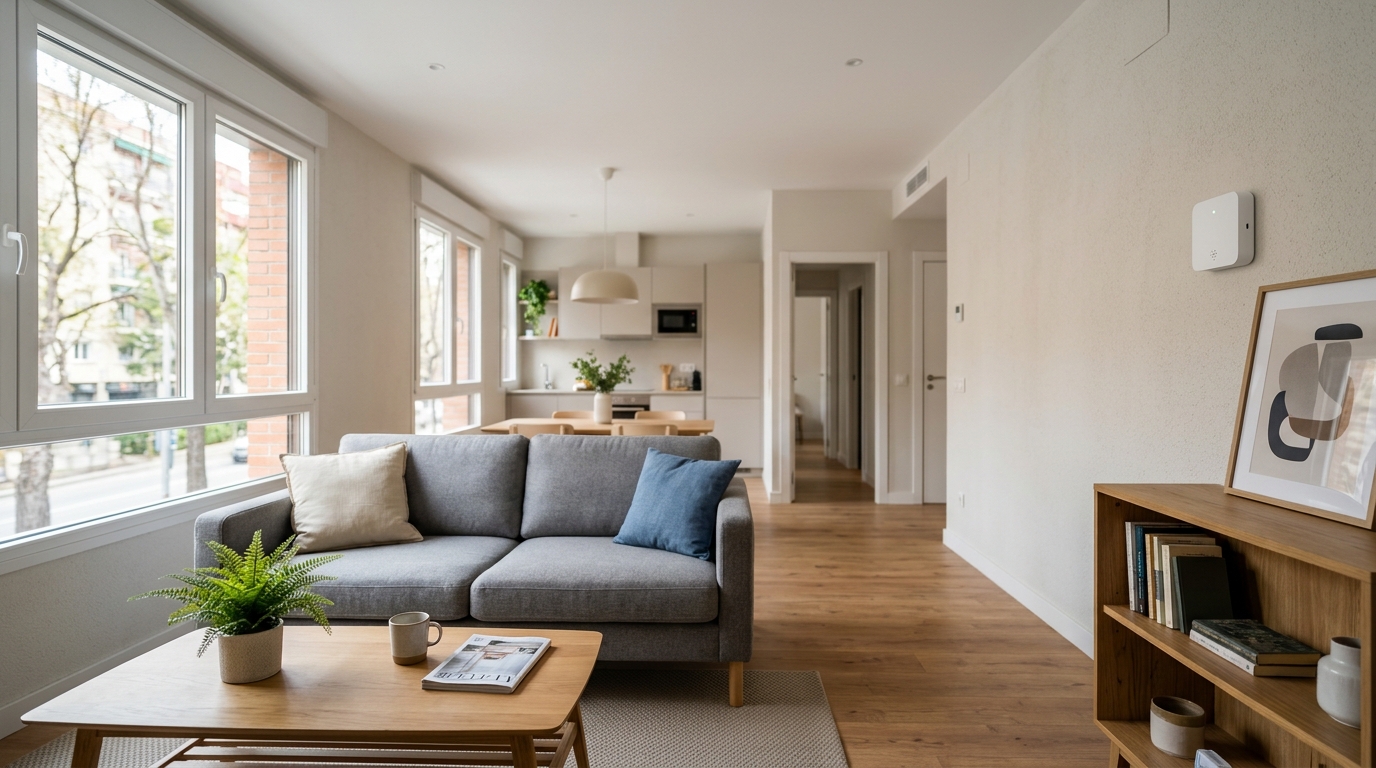
The profitability of a vacation rental goes hand in hand with the peace of mind of the neighbors and the property manager. In the short-term rental sector, complaints about nighttime disturbances can lead to reports, fines, or even the suspension of business operations. Faced with this risk, more and more hosts are wondering about the legality of noise sensors for vacation rentals and how to monitor the environment without crossing the line into guest privacy.
Key Takeaways
- Noise sensors are legal in Spain if they measure decibels (dB) without recording conversations (they do not violate privacy).
- You must inform guests about the presence of the device both in the listing description and in the house rules.
- Combined with a smart lock for vacation rentals, they allow you to manage incidents in real time without being physically present.
Noise Sensors for Vacation Rentals: Legality and Privacy in Spain
The primary concern for any host when installing a monitoring device is whether it violates data protection laws or the right to privacy. In Spain, the regulations are clear: installing hidden cameras in private areas or devices that record audio (conversations) is strictly prohibited. However, a noise sensor is designed completely differently.
Legal noise sensors for tourist rentals are not microphones. Their technical function is to continuously measure ambient sound pressure levels (decibels). Since they do not capture, process, or store voice content, no personal data processing related to conversations takes place, making their use fully legal to protect community coexistence and property.
The Legal Limit: Voice Recording
If the device can record and store audio snippets (for instance, to process complex voice commands while keeping an accessible history), it could conflict with privacy regulations. Make sure to purchase sensors that are 100% focused on decibel measurement.
What Requirements Must You Meet as a Host?
Even if the device itself is legal by its technical nature, transparency is essential. To avoid complaints from guests who might feel unfairly surveilled, we recommend following these basic guidelines:
How Noise Monitoring Works Day-to-Day
These devices connect to the property's Wi-Fi network (typically on the 2.4 GHz band for greater range) and send alerts to the host's smartphone when decibel levels exceed a configured threshold for a specific period (for example, above 70 dB for 10 minutes).
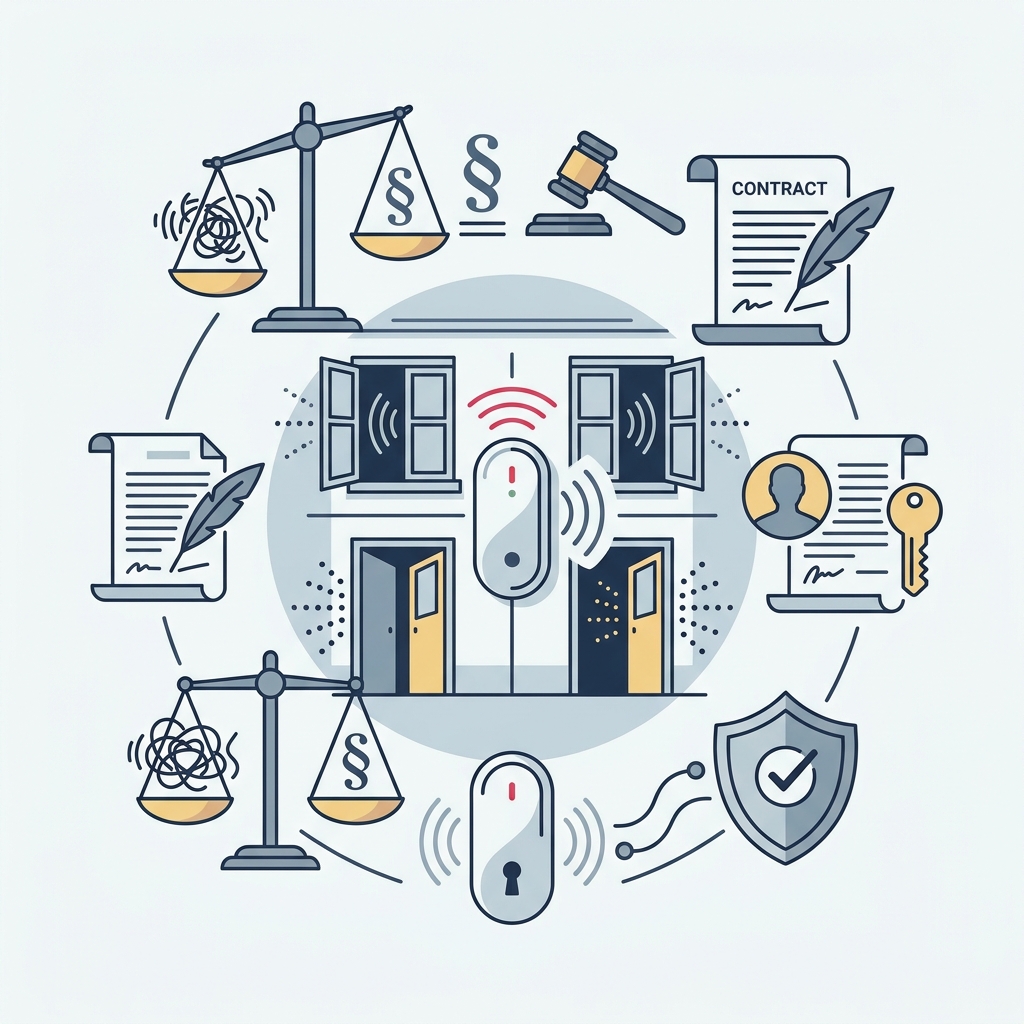
This approach prevents false alarms caused by a slamming door or a burst of laughter, focusing instead on sustained disruptions typical of unauthorized parties. Booking platforms usually back hosts who cancel active reservations if they can provide records of prolonged decibel levels that violate house rules.
The Perfect Ecosystem: Access and Environmental Monitoring
Protecting a short-term rental goes beyond measuring sound levels. Efficient management comes from integrating solutions that automate the entire process without requiring the host to be on-site. Knowing a party is taking place does little good if you have no control over who enters the property.
This is where smart access control comes into play. By pairing noise sensors with a connected lock, the host gains full control over the property straight from their smartphone.
- Prevention of Squatters and Parties If you detect excessive noise and suspicious activity, you can temporarily revoke access permissions.
- Full Traceability You know exactly when the primary guest checked in and whether noise spikes match the arrival of additional visitors.
- Remote Management Save time by automating check-ins and step in only when the sensor alerts you to an actual issue.
Streamline Arrivals
Setting up automated remote check-in guarantees guests don't rely on your physical presence to get inside. When configured properly, you can automatically remind them of the noise policies right before they unlock the door for the first time.
What Do Booking Platforms (Airbnb, Booking.com) Say?
In recent years, major OTAs (Online Travel Agencies) have cracked down on parties. They have explicitly banned disruptive gatherings and actively endorse the use of preventive technology.
Airbnb, for instance, updated its community guidelines to state that hosts may use noise monitors as long as they are disclosed in the listing prior to booking and placed in indoor common areas (living room, hallway). They are never permitted in bedrooms or bathrooms, regardless of whether they record sound, ensuring complete personal privacy.
Being transparent with guests regarding the noise sensor is your strongest defense against claims and the most effective deterrent against unauthorized parties.
Conclusion: Invest in Peace of Mind
Maintaining good relations with neighbors is crucial for the long-term sustainability of tourist accommodations in 2026. The answer to the question regarding the legality of noise sensors in vacation rentals is straightforward: yes, they are completely legal, provided they only track decibel levels and do not record conversations. They serve as an essential deterrent and monitoring tool that, alongside solutions like Raixer for remote keyless access, elevates professional management, protects your property, and safeguards neighborhood harmony.
Frequently Asked Questions
Is it legal to install cameras inside a vacation rental in Spain?
No, not inside the property. Surveillance cameras (which capture video) are strictly prohibited in private areas such as living rooms, hallways, bathrooms, or bedrooms, as they violate basic privacy rights. Only decibel noise sensors or other ambient monitoring devices are permitted.
Can I evict a guest if the sensor detects noise?
Yes, provided the noise levels clearly violate the house rules (agreed upon at booking) or municipal noise ordinances. Sensor logs serve as objective evidence for booking platforms to support terminating the reservation without host penalties.
Do I have to notify guests that a decibel monitor is installed?
Yes, OTA policies like Airbnb's require hosts to clearly disclose the device in the listing description. Full transparency is an essential requirement.
Does a noise sensor detect smoking inside the property?
No. A noise sensor exclusively measures sound pressure (dB). To detect tobacco smoke or shifts in indoor air quality, you will need a dedicated environmental sensor capable of tracking particulate matter, carbon monoxide (CO), or volatile organic compounds (VOCs).