Access Control for Real Estate Showings: Guide
Optimize access control for real estate showings with remote access and temporary passcodes. Save time and secure your properties. Try it today!
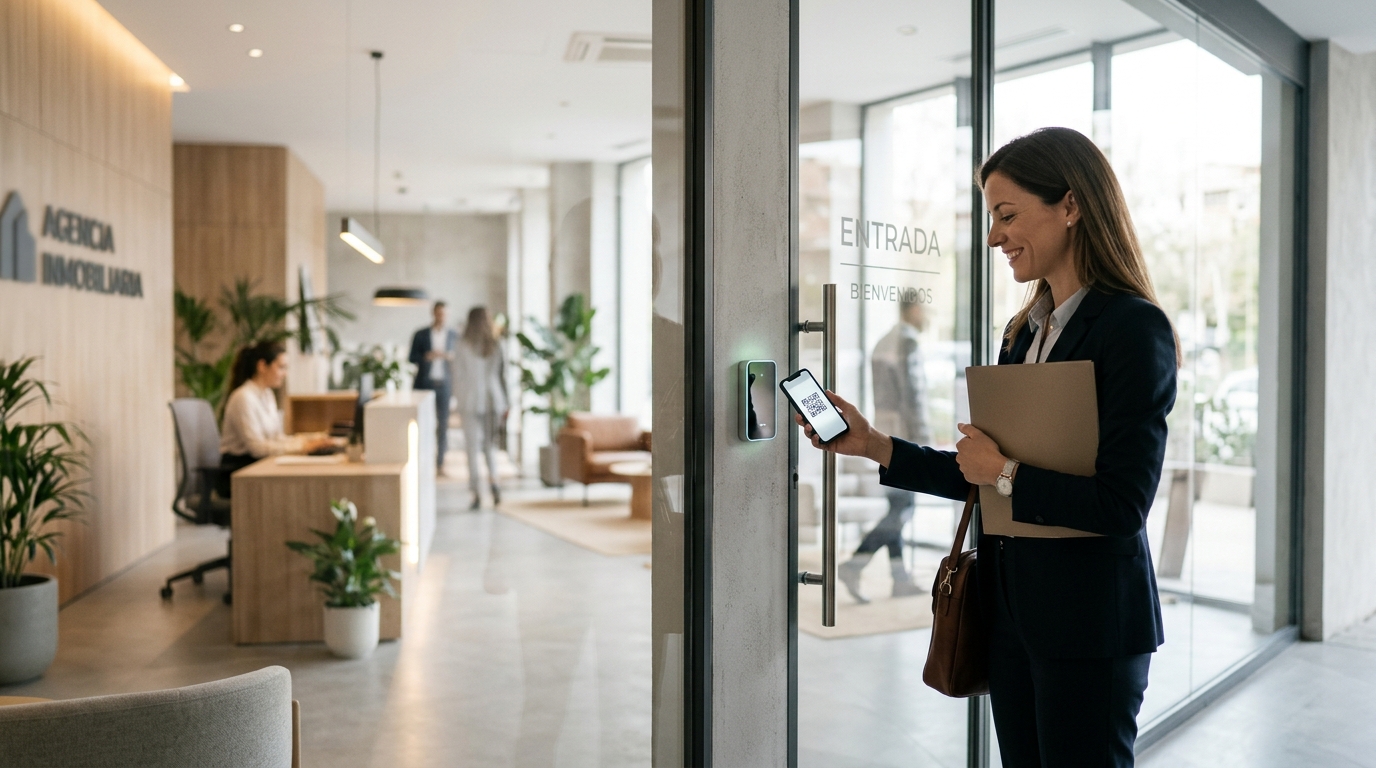
Managing a real estate agency's schedule means coordinating dozens of weekly showings across properties scattered throughout the city. Wasting time on unproductive commutes, traffic delays, and the uncontrolled handover of physical keys to external partners represent one of the industry's biggest operational bottlenecks. Modernizing access control for real estate showings transforms vacant properties into remotely accessible, secure, and scheduled spaces using temporary credentials.
Key Takeaways
- Temporary passcodes eliminate unnecessary commutes and speed up sales viewings.
- Digital control logs who enters, the exact time, and the duration of the visit.
- Smart lock integration prevents unauthorized key duplicates and burglary risks.
The operational challenge of access control for real estate showings
Traditionally, showing a property requires an agent to pick up a set of keys at the main office, drive across town, and wait for a client who frequently cancels at the last minute. When external agents, photographers, appraisers, or maintenance crews are involved, the chain of custody for keys breaks down, increasing the risk of loss or unauthorized duplicates. Implementing a modern access control system solves this problem by replacing physical metal with dynamic digital credentials.
By outfitting each property with connectivity and schedule management, the agency drastically cuts down on unproductive hours spent behind the wheel. Furthermore, listed properties can be shown much more frequently, shortening time on the market and boosting satisfaction for both property owners and prospective buyers.
How temporary passcodes work without on-site visits
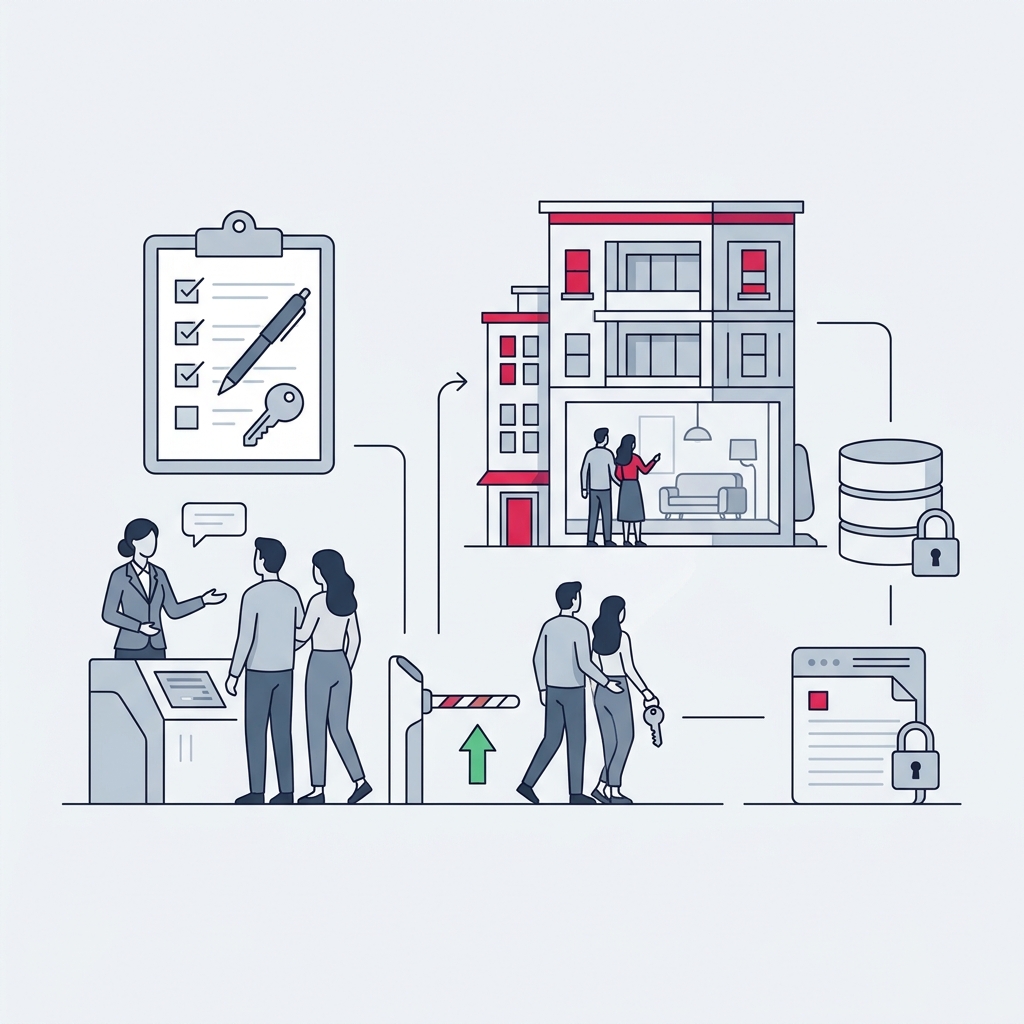
Technology tailored to real estate access relies on two pillars: secure hardware installed at the property and cloud software capable of generating cryptographic passcodes or remote unlock commands. On a daily basis, issuing access takes mere seconds from any smartphone or computer.
No internet needed in the home
Keypads with time-synchronized algorithms (similar to banking OTP tokens) validate temporary passcodes without requiring an active internet connection inside the property.
Benefits of digitalized access for agency operations
Adopting smart locks delivers advantages that go well beyond simply ditching physical keys:
- Self-guided tours Verified prospects can view the home at their own pace without sales pressure.
- Full traceability An immutable audit trail of every access attempt to easily resolve disputes or incidents.
- Seamless collaboration Instant access for external partner agents without passing physical keys back and forth.
- Passive protection A drastic reduction in the risk of illegal occupation or squatting during vacant periods.
Digitalizing access turns a vacant property into a continuously market-ready asset—securely and without geographical friction.
Security and custody against unauthorized access
One of the biggest concerns for owners listing their home for sale or rent is losing control over who enters their property. In this context, implementing digital access technology serves as a top-tier deterrent.
Unlike mechanical key lockboxes hung on lampposts or railings—which are easily compromised with basic hand tools—an integrated electronic system never exposes physical keys and locks out brute-force attempts after multiple incorrect codes. The combination of cloud audit logs and real-time alerts ensures property managers are notified of any unusual activity immediately.
Avoid mechanical lockboxes
Key lockboxes installed in public spaces violate municipal ordinances in many cities and project a low-security, unprofessional image to buyers and investors.
Frequently Asked Questions
What happens if a client runs late for their scheduled showing?
The manager can easily extend the temporary passcode's validity or generate a new code instantly via the mobile app, with no need to travel to the property or physically reprogram the keypad.
Do you need HOA or building community approval to install these systems?
Installing on the private apartment door does not require building association approval. For the building's main street door, devices integrated directly into the apartment's intercom handset operate within the private intercom wiring without altering the shared building panel or infrastructure.
How is access managed if the property's electricity is shut off?
Motorized smart locks and keypads run on long-lasting independent batteries (typically alkaline or lithium cells with low-battery warnings), ensuring fully autonomous operation for months even if the main power is disconnected.
Can the owner still use their traditional physical key?
Yes. Most professional-grade smart cylinders and retrofitted locks feature dual-clutch mechanisms or mount directly over the existing deadbolt, allowing manual mechanical entry with a physical key at any time without resetting the electronic system.