Improving Security in Common Areas of Residential Buildings
Discover how to improve security in common areas of residential communities with smart access control. Protect entrances and garages. Request information!
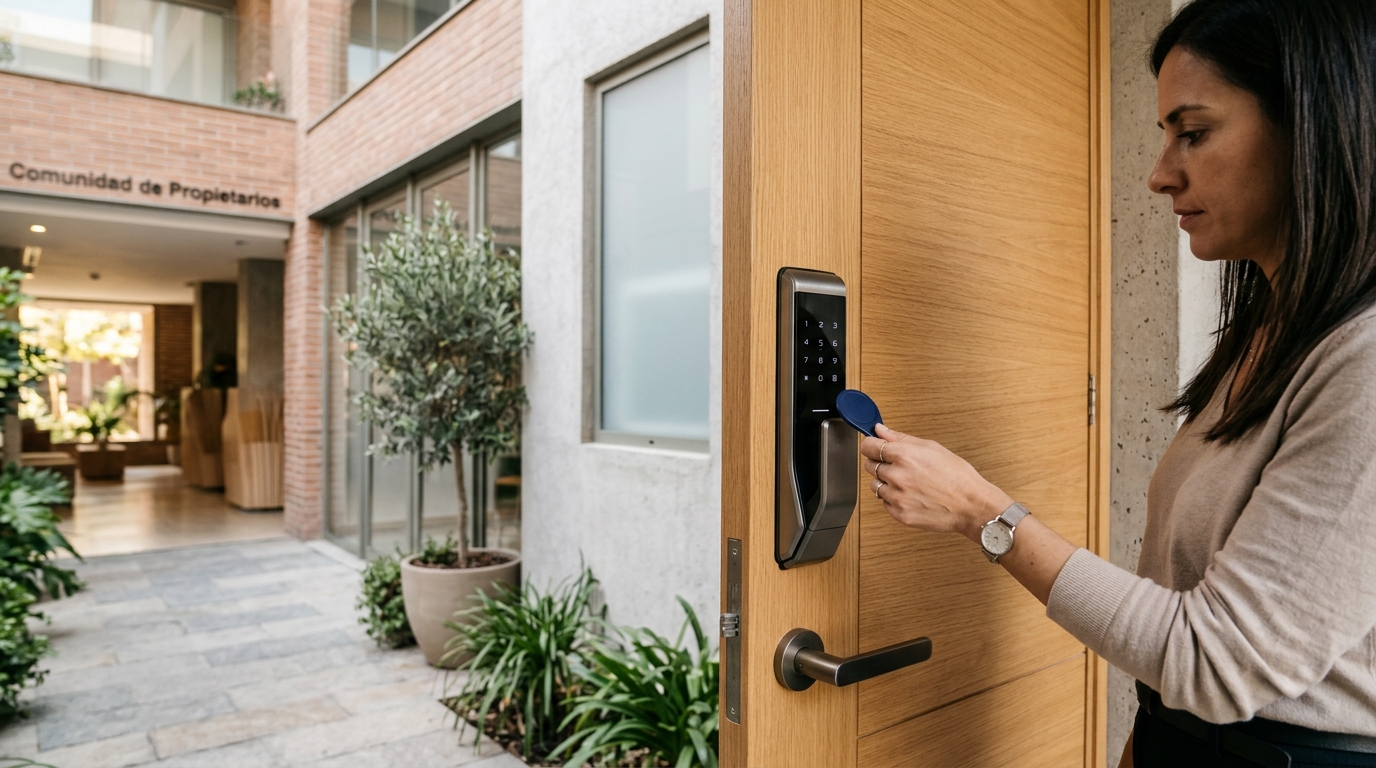
Residential security no longer relies exclusively on traditional mechanical locks and on-site concierges. When residents wonder how to improve security in common areas of residential buildings, the focus usually turns to replacing the front door lock cylinder or installing passive cameras. However, the real blind spots stem from a lack of traceability: uncontrolled duplicated physical keys, indiscriminate access by external services, and pedestrian doors left ajar. Digital access solutions solve these problems at the root without requiring invasive renovations.
Key Takeaways
- Traditional mechanical keys pose the greatest security risk due to the lack of control over copies.
- A smart access control system allows granting, limiting, and revoking access permissions in real time from the cloud.
- Automating main entrances and shared spaces protects storage rooms, garages, and recreational areas without complex building work.
How to improve security in common areas with access technology
The main entrance, vehicle garage access, utility rooms, storage rooms, and sports or pool facilities share an inherent vulnerability: the proliferation of keys. In a medium or large residential building, hundreds of physical copies circulate among owners, short-term tenants, cleaning staff, elevator maintenance technicians, and delivery couriers.
To effectively improve security in common areas of residential communities, the first step is transforming perimeter locks into auditable access points. By integrating access control solutions based on digital credentials (such as smartphones via Bluetooth Low Energy or cloud apps, encrypted RFID/NFC cards, and keypads with temporary PIN codes), the building regains control over who enters and during which time windows.
Guaranteed Compatibility
Adopting technology in residential buildings often raises concerns among elderly residents. Smart systems are installed in parallel with the existing intercom, keeping traditional keys fully functional.
Steps to implement smart access in your building
To ensure a smooth installation without friction among homeowners or regulatory issues, the community board should follow a structured process:
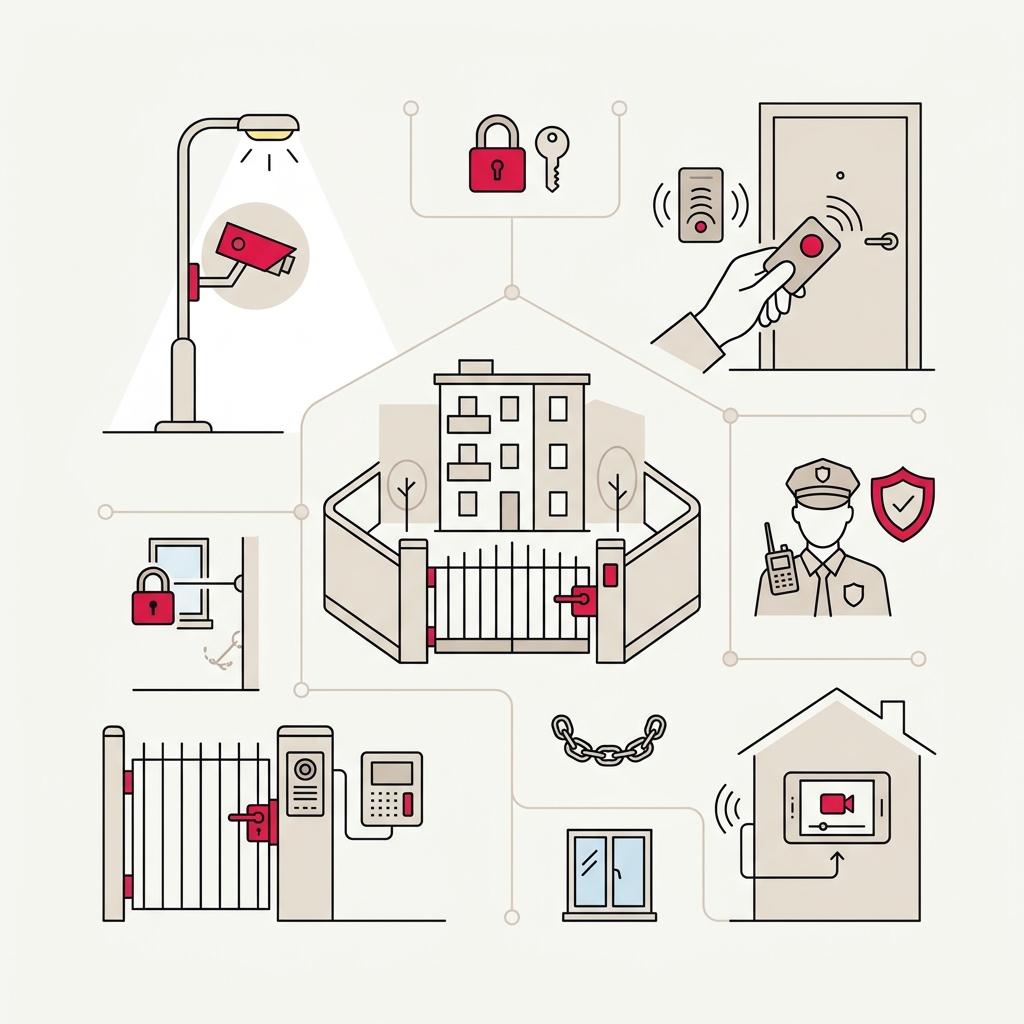
True residential security is not about fortifying entrances with more deadbolts, but knowing at all times who is authorized to step through them.
Managing vendors and external services
One of the persistent challenges when seeking to improve security in common areas of residential buildings is managing external workers entering the premises. It is common practice for cleaning personnel, elevator technicians, or gardeners to carry physical keys that pass from hand to hand among various subcontractor employees.
With a smart system, property managers or the board president can create temporary or recurring authorizations. For instance, the cleaning team can be granted access exclusively on Mondays, Wednesdays, and Fridays from 08:00 to 12:00. Outside of that window, their credentials will not operate the lock. This eliminates unauthorized nighttime or weekend visits.
Access logs in common areas must strictly comply with GDPR regulations. Entry data should only be reviewed in the event of a security incident or legal requirement, preventing intrusive surveillance into the private lives of residents.
In buildings with storage units or bicycle storage areas, using autonomous access control through solutions like Raixer adds an extra layer of protection: each access attempt is logged, and automated alerts can be configured if a door remains propped open longer than allowed.
Swimming pools, gyms, and multipurpose rooms
Recreational facilities represent another common source of community friction. Unauthorized use of swimming pools by non-residents during the summer or chaotic reservations of paddle tennis courts and meeting rooms strain neighbor relations.
Integrating electronic locks in these facilities linked to the building's amenity booking system resolves these issues:
- Capacity control Restrict entries once the facility has reached its maximum permitted occupancy.
- Strict operating hours Automatic deactivation of credentials once the permitted pool or gym hours end.
- Booking-linked access Access codes are enabled exclusively during the user's reserved time slot.
- Trespassing deterrence Prevent entry by external users who do not possess a valid, active credential.
Implementing these technologies across shared facilities relieves building administrators and HOA boards of direct monitoring duties, professionalizing property management and ensuring facilities remain well-preserved.
Frequently Asked Questions
Is it mandatory for all residents to use their mobile phones to enter the building?
No. Professional residential access control systems are installed alongside existing infrastructure. Residents who prefer to do so can continue using their traditional physical keys or RFID key fobs, while others enjoy the convenience of remote mobile unlocking.
What happens during a power outage or an internet disruption in the building?
Smart access devices connect to standard electric strikes, which operate as fail-secure or fail-safe according to local fire evacuation codes, and can be backed up with an uninterrupted power supply (UPS). Furthermore, technologies with BLE support or local keypads continue to function offline without an active internet connection.
Can smart locks be installed in protected or heritage buildings?
Yes. Because the control modules are installed discreetly next to the intercom handset or inside the building's electrical panel, the aesthetic appearance of historic doors and façades remains unchanged, complying with historic preservation regulations.
How is access managed for mail carriers and delivery services?
You can assign temporary virtual codes to courier services or provide residents with remote door-release capabilities via their smartphones whenever a delivery driver rings the intercom, even if the resident is away from home.
What voting majority is required at the homeowners' meeting to approve this installation?
Under prevailing horizontal property legislation, improvements concerning security, energy efficiency, and the removal of architectural barriers typically require approval by a simple majority of property owners representing the majority of ownership quotas.