How to Manage Keys for Service Providers in Residential Buildings
Learn how to manage keys for contractors and service providers in residential buildings safely. Control access with digital keys and eliminate duplicates.
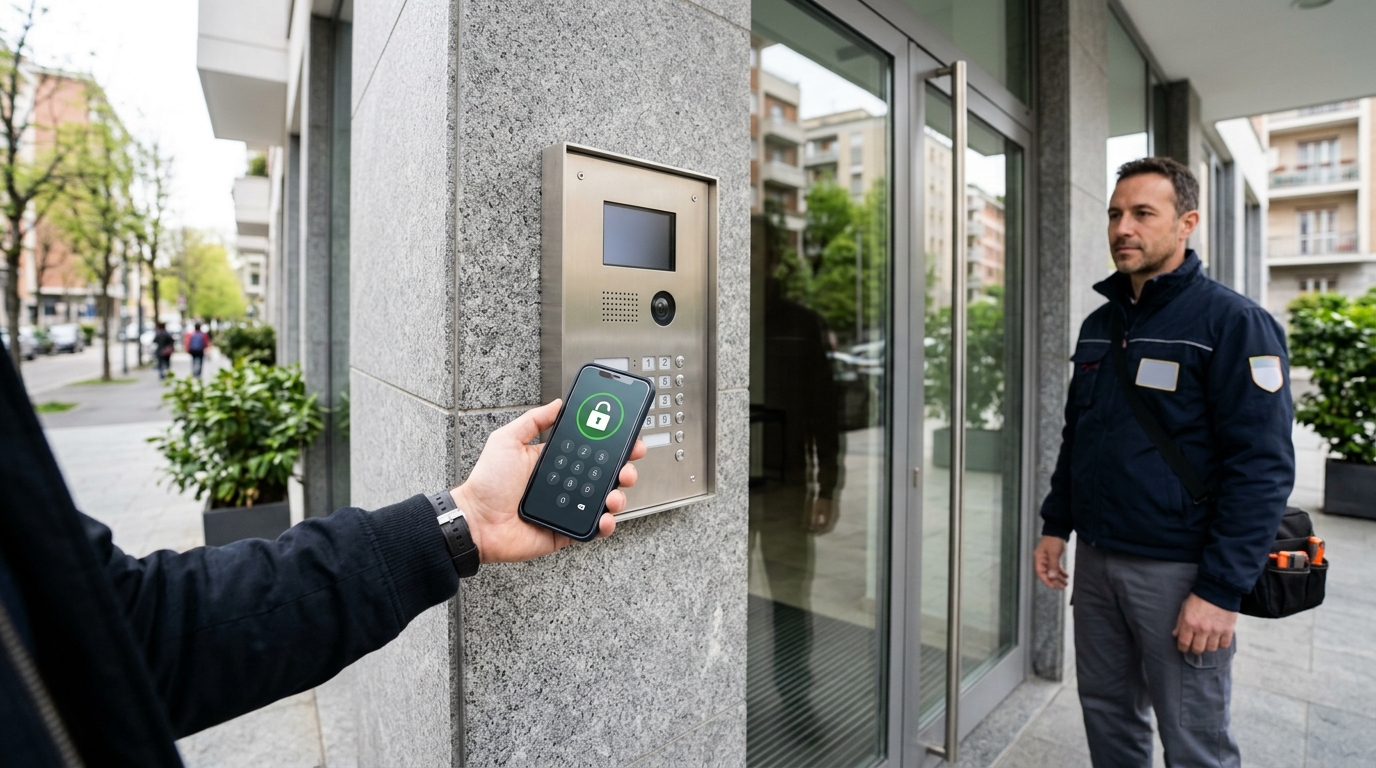
Managing access for service providers, contractors, and maintenance staff in residential buildings is often a major headache. Lost keys, uncontrolled duplicates, unpredictable schedules, and, in the worst cases, costly lock replacements are everyday challenges. Knowing how to manage keys for service providers in residential buildings efficiently is essential to ensuring building security and simplifying daily routines for both residents and property managers.
Key Takeaways
- Digital keys eliminate the risk of lost keys and unauthorized physical duplicates.
- They allow you to assign temporary or recurring permissions to each contractor (landscapers, cleaners, elevator technicians).
- Real-time access logs improve security and oversight across the property.
Why Traditional Key Systems Fail with Service Providers
Foot traffic in an apartment building is constant. When you factor in cleaning staff, elevator maintenance crews, gardeners, telecom technicians, and renovation workers, the number of physical keys in circulation can quickly spiral out of control.
Handing over a physical copy of the front door or common area key to a third party carries inherent risks. There is no way to know if they make additional duplicates, nor can you revoke their access immediately once their contract ends—unless you replace the entire lock cylinder.
The Ideal Device for Main Entrances
Raixer Pro is specifically designed to connect to the building's intercom system, enabling access via smartphone app, missed call, or property management software integration—all without altering the aesthetic of the main entrance door.
Common Use Cases in Residential Buildings
To better understand how this technology solves real-world challenges in residential properties, let's look at how it applies to various types of external workers.
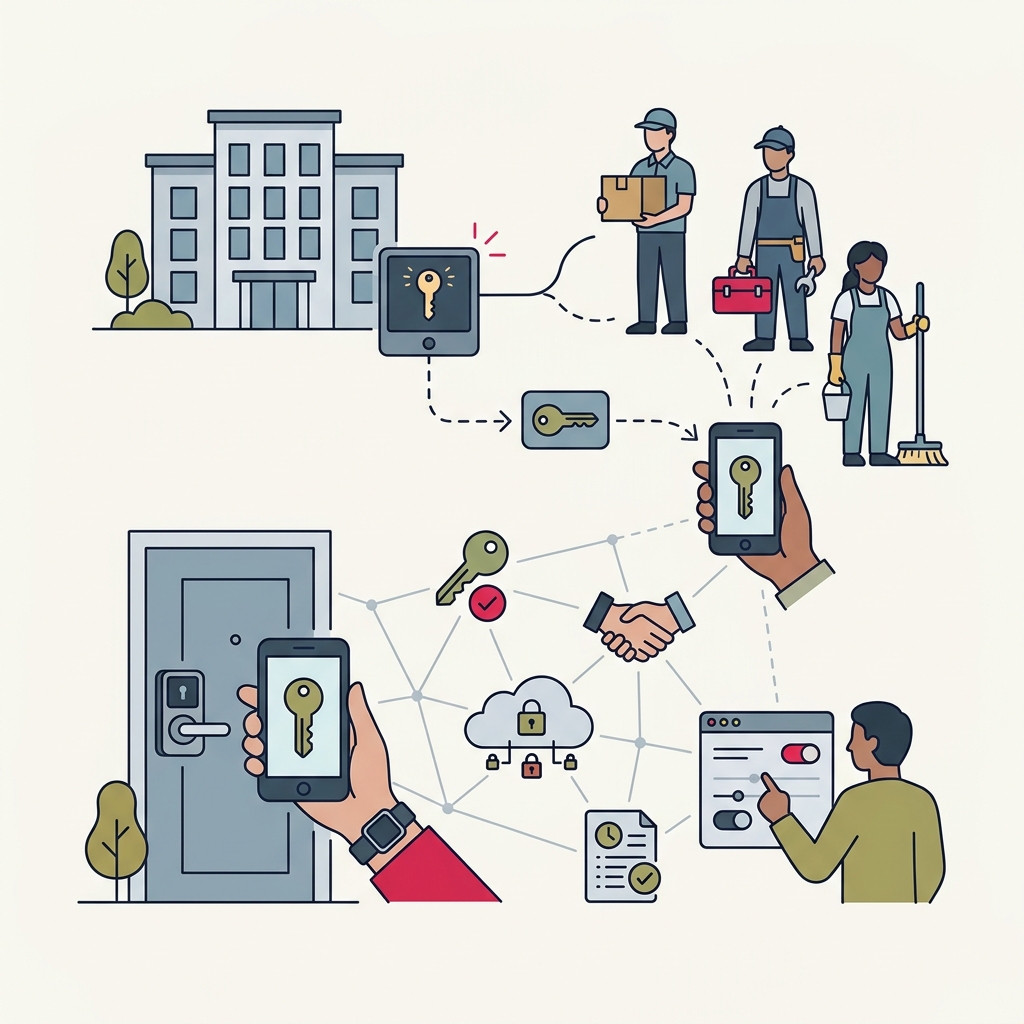
Recurring Services (Cleaning and Maintenance)
Cleaning companies and elevator maintenance technicians visit on a predictable schedule. Instead of handing them a bulky set of keys, you can issue a recurring virtual key. For example, their access can be restricted strictly to business hours from Monday to Friday. Outside of these hours, their app or access code will not work, ensuring peace of mind for residents during evenings and weekends.
One-off Technicians and Renovation Crews
When a resident renovates an apartment or the building hires a contractor to repair the roof, workers need to enter and exit frequently. With a smart access system, the property manager or designated resident can generate temporary credentials that expire automatically once the work is completed (e.g., valid for two weeks only). This prevents keys from floating around months after the job is done.
Utility Meter Readers and Deliveries
While utility meter reading is increasingly automated, older buildings still require physical visits. A one-time remote unlock from the property manager's phone grants access to the technician without requiring anyone to wait around in person. The same approach works seamlessly for couriers delivering packages to indoor mailboxes.
Integrating Garages and Utility Rooms
Managing service providers goes beyond the front entrance. Many jobs require entry to sensitive areas like elevator motor rooms, janitorial closets, boiler rooms, or parking facilities.
Installing a garage access control system and smart devices on secondary doors creates a fully secure ecosystem. The landscaper can be authorized to open the exterior gate and the tool shed, but not the garage. The elevator technician will have access to the lobby and rooftop, but not the shared storage rooms. Achieving this level of granular permission is virtually impossible with mechanical keys without investing in complex, expensive master key systems.
A residential building's security is only as strong as its control over the most exposed key.
Blending Access Methods
To ensure that less tech-savvy contractors or older vendors have zero trouble entering, complement mobile app access with an all-weather PIN keypad.
Frequently Asked Questions
What happens if the contractor runs out of phone battery?
If your system features a keypad or card reader, the contractor can simply use a PIN code or an NFC card. If the setup relies solely on app access, the property manager or an authorized resident can trigger an emergency remote unlock directly from their own smartphone.
Is it legal to log who enters and exits the building?
Yes, logging access events is legal and widely adopted for security reasons. However, the property management or HOA must adequately disclose data processing practices and comply with applicable privacy regulations (such as GDPR), restricting access to log records strictly to authorized individuals (such as the property manager).
Do we need to replace the entrance lock to install this system?
In the vast majority of cases, no. Devices like Raixer Pro connect internally to the building's existing intercom handset or the electromechanical door strike, meaning residents can continue using their traditional physical keys just like before.
Is an internet connection required at the entrance?
Real-time remote unlocking and initial setup require an active connection (Wi-Fi or a 4G/cellular SIM card). However, many smart locks and access control systems support proximity opening (via Bluetooth) even during an internet outage by validating credentials stored locally on the contractor's phone.