MRUA: Reference Framework for Access Users in Property Management
Discover the Reference Framework for Access Users (MRUA), a set of principles to optimize access management in properties with multiple users. Learn how Raixer implements these advanced solutions. Improve your property management today!
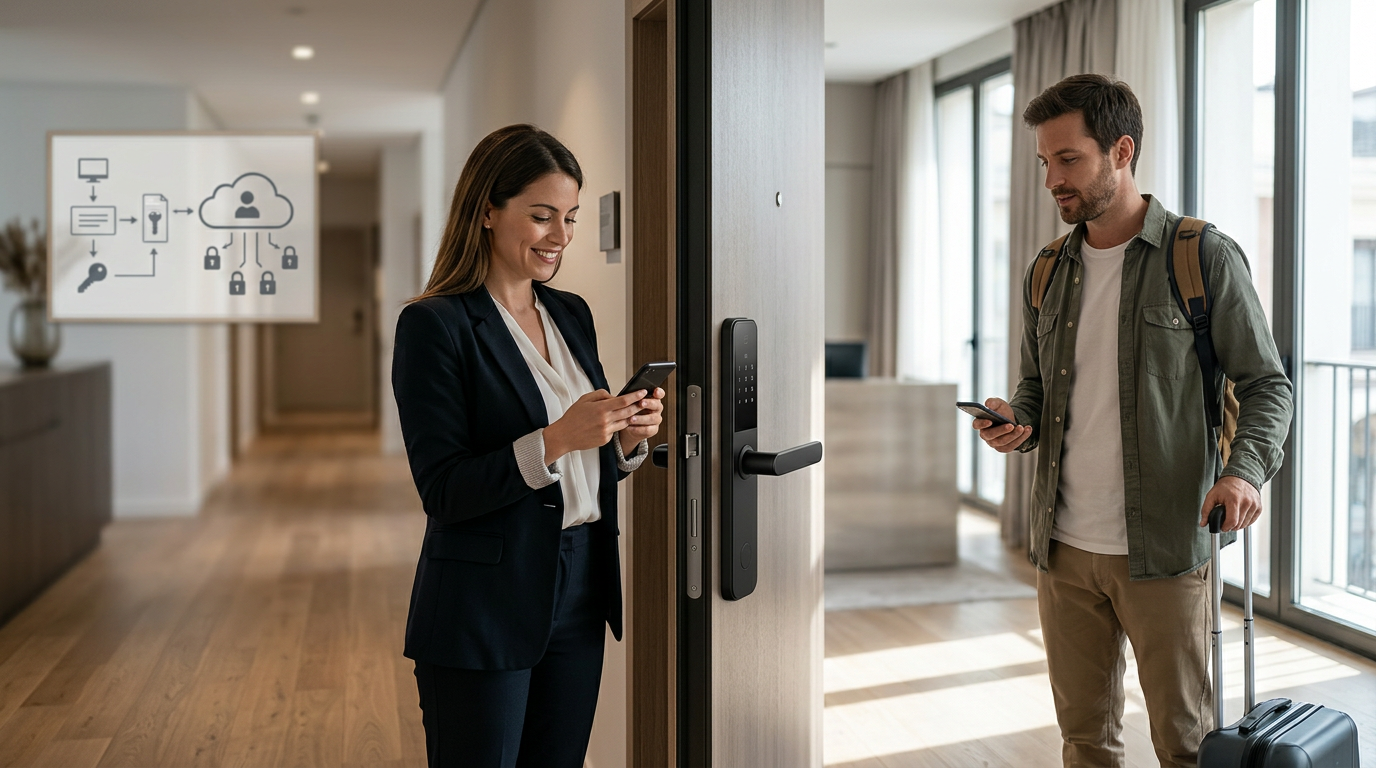
Optimizing property and access management is a constant in the dynamic tourism and shared services sector. Faced with the growing demand for flexibility, security, and efficiency, the Reference Framework for Access Users (MRUA) emerges as a set of principles and best practices, designed to standardize and perfect the administration of entry permissions in properties with multiple users.
The essentials
- The MRUA optimizes access management in environments such as tourist rentals, offices, and communities.
- Keys to its effective implementation are interoperability (Matter, BLE, Z-Wave) and digital security.
- Raixer smart locks offer robust and scalable solutions, adapted to the MRUA principles.
MRUA: Understanding the Reference Framework for Access Users
The Reference Framework for Access Users (MRUA) is not a specific governmental law, but a set of operational principles and best practices that are consolidating in the property management industry. Its main objective is to establish a standard for controlling who, when, and how can access a property, especially in contexts where access is temporary, shared or requires a high level of granularity, such as in vacation rentals, coworking spaces or residential buildings with shared services.
At its core, the MRUA seeks to maximize security while simplifying the experience of the end-user and the administrator. This is achieved by implementing smart access systems that go beyond the traditional physical key, embracing digitalization and automation. Concepts such as time-limited permission assignment, instant revocation of access, and auditing of entries and exits are fundamental pillars of this market-driven framework.
Training and support
Ensure your providers offer good training and technical support. A successful implementation of the MRUA also depends on the competence of the team managing it.
How Raixer's technology aligns with the MRUA
Raixer aligns with the MRUA principles by offering a set of tools and smart locks that enable advanced and secure access management. Our technology is designed to facilitate the automation, traceability, and flexibility necessary in the current property management landscape.
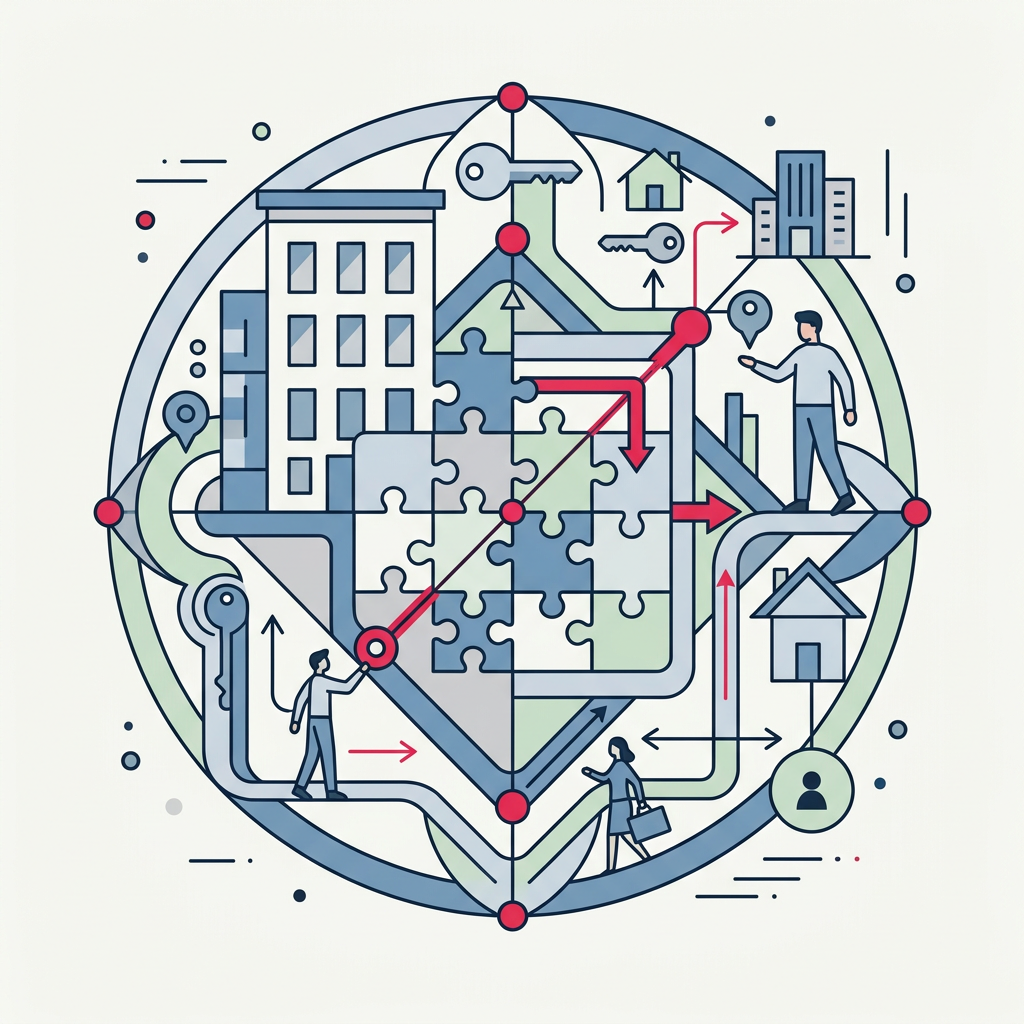
- Efficient automation. Raixer solutions enable the automatic generation and management of access, integrating with various systems for seamless operation. This is key to the MRUA principle of simplifying management.
- Advanced security. With robust encryption and secure communication protocols, Raixer smart locks protect both the property and user data, complying with the security standards promoted by the MRUA.
- Flexibility and control. Raixer offers options such as the Raixer 12V for communities or the Raixer Gyro for high security, allowing access control to be adapted to specific MRUA needs.
- User experience. Our applications and devices are designed to be intuitive, improving the access experience for the end-user, from guests to employees or residents.
Implementing MRUA recommendations with Raixer products allows you not only to adopt a technological solution but also to integrate an operational philosophy that optimizes the security of your properties and the experience of your users. Additionally, functionalities such as noise sensors or the smart anti-squatter lock complement this vision, providing added value in incident management and prevention.
Practical tip
Consider a smart lock for developers if you want to highly customize your access system and follow MRUA principles to suit your needs.
Implementing MRUA principles
Adopting the Reference Framework for Access Users is not a one-time event, but a continuous process of improvement and technological adaptation. Here's how to approach it:
- Define your access requirements. Identify who needs access, when, and to which areas. This will help you choose the right solution that meets the granularity required by the MRUA.
- Choose the right technology. Research options for smart locks, gateways, and management software that offer the necessary interoperability and security. Consider solutions that support standards like Matter, BLE, or Z-Wave.
- Plan the integration. Make sure the new access control system integrates seamlessly with your current tools, such as PMS or CRM.
- Train your team and users. Good training is essential for success. The MRUA seeks a fluid experience, and this includes everyone knowing how to use the system effectively.
- Continuously review and optimize. The market and technology evolve. Keep your systems updated and adapt your practices to reflect the latest advances in access management.
Frequently Asked Questions
What concrete benefits does the MRUA provide to a property manager?
The MRUA, through modern access control systems, offers automation of check-in/out, reduction of costs due to lost keys, increased security thanks to automatic permission expiration, and a significant improvement in user experience by eliminating the friction of physical key handover. It also provides a detailed access log for any eventuality.
Is the MRUA a mandatory regulation?
No, the MRUA is not a legally binding regulation. It is a concept and a set of best practices that the industry is adopting to improve access management and security in properties with multiple users. Its adoption is voluntary, but highly recommended due to the benefits it provides in efficiency and security.
How is the security of access solutions guaranteed under MRUA principles?
Systems aligned with the MRUA implement advanced encryption for communication, use secure connection protocols such as BLE or Z-Wave (with S2 security if applicable), and allow permission management with immediate revocation. Additionally, they usually store access information in the cloud with high security standards and data protection compliance. Security and resilience are fundamental pillars of the framework.
Can I integrate MRUA-based access systems with my current PMS or ERP?
Yes, interoperability is one of the key principles of the MRUA. Many solution providers, like Raixer, offer a well-documented API that allows developers to integrate their locks with Property Management Systems (PMS), Enterprise Resource Planning (ERP), and other management software. This facilitates an interconnected ecosystem and centralized management.
What happens if there's a power or internet outage at my property?
Access solutions compatible with MRUA principles are designed to function in scenarios without connectivity. Many smart locks store temporary access codes directly in their memory, allowing access even without internet. Power is managed with long-lasting batteries in most models, or with redundancy systems in models connected to the electrical grid. Emergency opening with a physical key or specific backup systems is always available as a precaution. MRUA principles emphasize access resilience to ensure continuous operation.