MQTT: The Heart of IoT and Raixer Smart Locks
Discover what MQTT is, why it is essential for IoT and Raixer smart locks. Learn about its efficiency, security, and publish/subscribe model. Optimise your connectivity today!
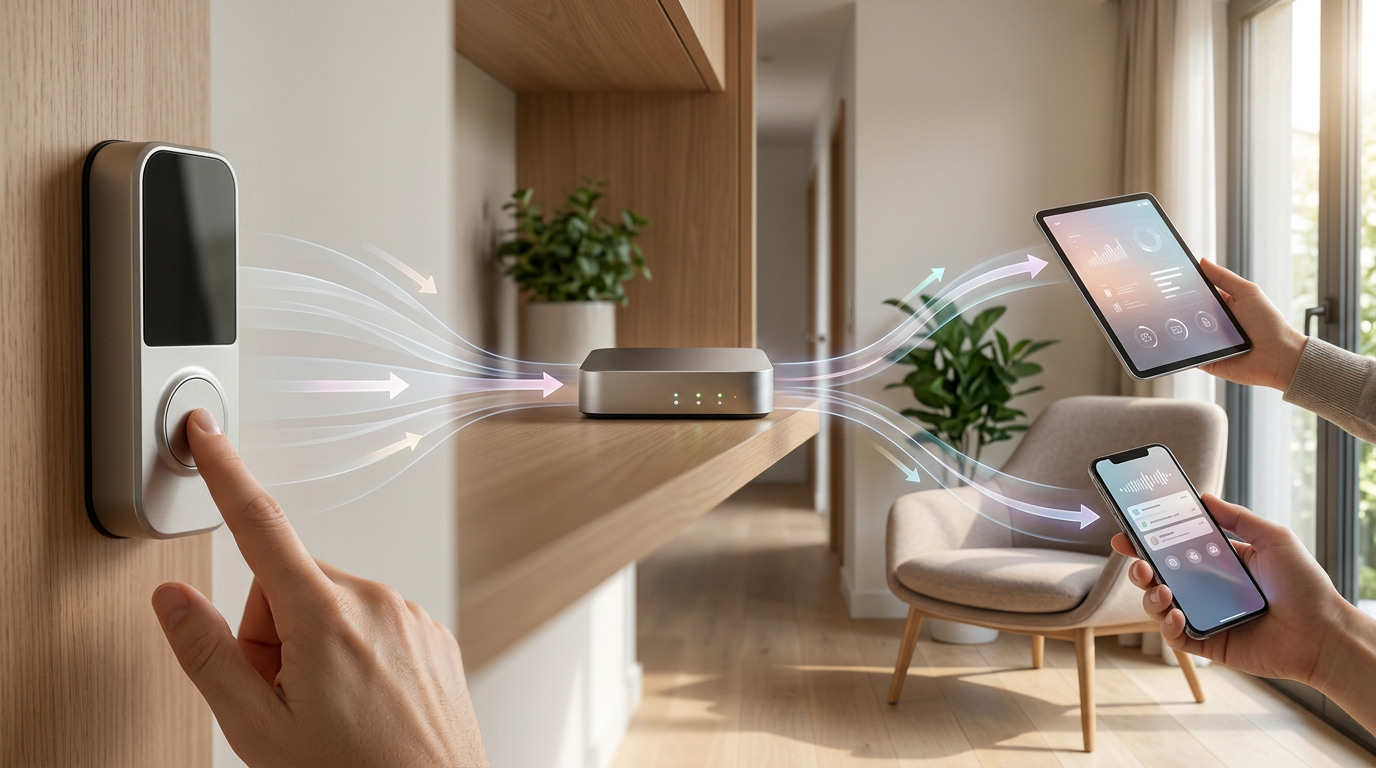
At the heart of modern automation and device interconnection in the so-called Internet of Things (IoT) lies a lightweight and efficient messaging protocol: MQTT (Message Queuing Telemetry Transport). Its simple design and ability to operate with limited resources have made it the backbone of countless applications, from industrial sensors to home security systems and, of course, the management of smart locks in environments such as tourist rentals, offices, and communities.
The essentials
- MQTT is a lightweight messaging protocol ideal for IoT and resource-constrained devices.
- It works with a publish/subscribe model, decoupling message senders and receivers.
- Its efficiency and reliability make it perfect for smart locks and access control systems.
- Security in MQTT is ensured through TLS/SSL for communication and client authentication.
What is MQTT and why is it key for IoT interconnection?
MQTT is an ISO/IEC standard messaging protocol designed for M2M (machine-to-machine) telemetry. It was created by IBM and Arcom in 1999, specifically with environments in mind where resources (bandwidth, battery, processing) are limited and communication reliability is critical. It operates over TCP/IP, allowing it to leverage internet connectivity to exchange data asynchronously.
The reason for its success in the IoT ecosystem, where devices like Raixer smart locks need to communicate efficiently and securely, lies in its operating model. Unlike traditional client-server request-response models (like HTTP), MQTT employs a publish/subscribe pattern. This means that devices do not communicate directly with each other, but rather through a central intermediary, known as an MQTT "broker".
Hierarchical topics
Topics in MQTT are hierarchical, using the '/' character as a separator. This allows great flexibility to organise data and subscribe to groups of topics using wildcards (+ for one level, # for multiple levels).
MQTT in access control and smart locks
The application of MQTT in smart locks and access control systems is particularly advantageous, especially for companies like Raixer that manage multiple devices in various environments.
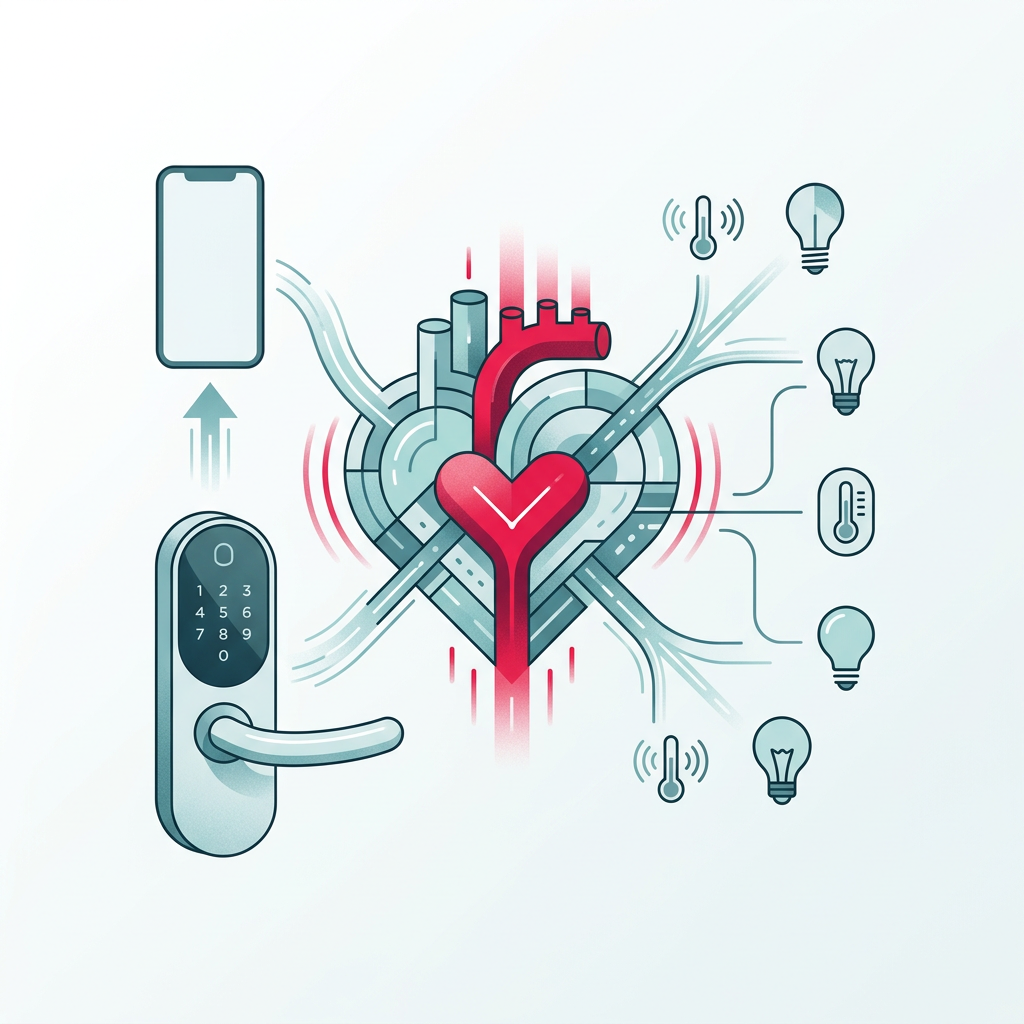
Imagine managing a tourist apartment or multiple coworking offices. Each Raixer lock, whether a Raixer Mini, Raixer Pro, Raixer Gyro or Raixer 12V, can act as an MQTT publisher or subscriber.
Never operate an MQTT system in production without TLS/SSL encryption. Credentials, commands, and status data could be intercepted, severely compromising the security of your accesses.
QoS (Quality of Service)
Although QoS is not strictly a security measure, it contributes to system reliability, which indirectly supports security. MQTT offers three levels of QoS:
QoS 0 (At most once): The message is sent once and there is no guarantee of delivery. Suitable for non-critical data (e.g., frequent but not vital telemetry).
- QoS 1 (At least once): The message is delivered at least once. The publisher expects an acknowledgment and retransmits if it does not receive one. Duplicates may occur.
- QoS 2 (Exactly once): The message is delivered exactly once. It involves a two-way handshake to ensure it is neither lost nor duplicated. Ideal for critical commands, such as opening a lock.
For smart lock applications, a QoS 1 or 2 is often desirable for critical commands, ensuring that opening or closing orders are executed correctly or that we are notified if they are not.
Advantages of MQTT for Raixer and its users
The choice of MQTT as a fundamental part of Raixer's communication infrastructure, whether for automatic remote check-in systems, management of neighbourhood communities, or for software developers, brings tangible benefits:
- Low network consumption Ideal for battery-powered locks or those with limited network connections, maximising autonomy.
- Real-time communication Opening commands are received instantly and the lock status is updated immediately.
- High scalability Allows managing hundreds or thousands of locks centrally without overloading the infrastructure.
- Robustness against failures Features like QoS and LWT improve communication reliability, even in unstable network conditions.
- Facilitates integration As a standard, MQTT easily integrates with other IoT platforms, property management systems (PMS), and analytics tools.
In short, MQTT is not just a communication protocol, but a robust strategy for the efficient and secure management of IoT devices. Its adoption by Raixer allows for advanced and reliable solutions, ensuring that smart access control is effective and always up-to-date.
Frequently asked questions
Is MQTT a secure protocol for my smart locks?
Yes, MQTT can be configured very securely. It requires the implementation of encryption (TLS/SSL) between devices and the broker, as well as robust authentication and authorisation mechanisms to ensure that only authorised clients and brokers can publish or subscribe to specific topics. Raixer implements these measures to guarantee maximum security.
Do I need my own MQTT broker or does Raixer provide it?
Generally, for integrated solutions like Raixer's, the MQTT broker infrastructure and its management are handled by the platform. This greatly simplifies implementation for the end-user, who does not need to worry about broker configuration or maintenance. For developers or custom integrations, there might be options to use their own brokers.
What bandwidth does MQTT consume in smart locks?
MQTT is known for its efficiency and low bandwidth consumption. Messages are very lightweight, often only a few bytes, making it ideal for devices with limited connectivity or those operating on batteries. This contributes to the long battery life of Raixer smart locks.
Can MQTT communicate with my other home automation devices like Alexa or Google Home?
Directly, no. Alexa and Google Home have their own APIs and communication protocols. However, a central system like Raixer's, which uses MQTT to communicate with locks, can have integrations with voice services (Alexa, Google Home) acting as a bridge. This means you can use your voice to interact with your smart locks.
What is the difference between MQTT and HTTP for IoT?
The main difference lies in the communication model. HTTP is a request-response protocol (client requests, server responds) and is "stateless". MQTT is a publish/subscribe protocol, lighter, event-driven, and "stateful" (subscriptions are maintained); ideal for asynchronous and efficient communications between many resource-constrained devices, especially in scenarios where constant communication and low consumption are critical.