Tourist Rental Regulations in Euskadi
Discover the tourist rental regulations in Euskadi, including Decree 101/2018 and municipal requirements. Ensure compliance for your holiday accommodation!

The phenomenon of tourist accommodation has grown significantly in just a few years, forcing the different Autonomous Communities to regulate this matter. The regulations on tourist flats in Euskadi are a complex issue that combines autonomous regulation with municipal ordinances.
[toc]
New decree on tourist accommodation in Euskadi

On July 26, 2018, Decree 101/2018, of July 3, on accommodation and rooms in accommodation for tourist use, was published in the Official Gazette of the Basque Country. This regulation fulfilled the mandate of Tourism Law 13/2016 (you can consult it in full here), which referred to the regulation of tourist rentals.
The Decree covers all the requirements you must meet if you have a property in this Autonomous Community that you wish to convert into holiday accommodation. One of its peculiarities is the obligation to have civil liability insurance (something not required in other regions).
The aim is to ensure a sufficient supply of holiday rentals in this area, making it more attractive for tourism.
In our information centre on tourist accommodation legislation you can find more details about regulations in other cities.
Regulations for tourist flats in Bilbao City Council
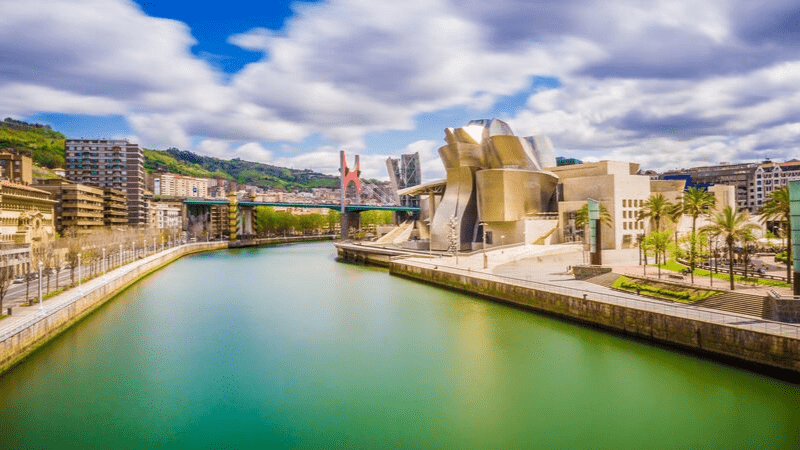
In this city, both full tourist rental and tourist room rental in private homes are permitted. But be careful, not everything is easy; in the areas of the Casco Viejo and Bilbao la Vieja, there can only be tourist apartments on the first floors and a single accommodation per building.
So if your idea is to set up a holiday rental in a property in this area, you will have to be quicker than your neighbours.
And more restrictions and specifications. If you want to rent rooms to tourists in the house where you reside, you cannot rent more than 3, no matter how many more rooms the property has.
If you have a tourist apartment, you may need to make some adaptations, as the municipal ordinance on holiday rentals in Bilbao establishes that these properties must have a living room, dining room (or living-dining room), kitchen, and bedrooms. It says nothing about bathrooms, but it is logical to assume that there must be at least one full bathroom.
In any case, you must register the property in the Register of Tourist Companies and Activities of Euskadi and record in the Property Register that the property or part of it is allocated for tourist use.
Types of accommodation according to Bilbao's «Airbnb Law»
According to Bilbao's ordinance on tourist accommodation, three types are defined as such.
- Tourist Rooms: where the owner of the tourist activity must be registered in the dwelling where rooms are offered for tourist rental. It is not subject to any particular legislation.
- Tourist Accommodation: these are properties entirely dedicated to tourist purposes, and must be located in residential buildings and exclusively on their first floors – or on upper floors, provided they are located below dwellings and have independent access to them from the public road –.
- Hotels, hostels or guesthouses: These remain assimilated to Equipment Use and their regulation is according to the General Urban Planning Plan regulations regarding their location – and those of the PER of Casco Viejo and the PERRI of Bilbao la Vieja if they are implemented in those areas –.
- Tourist apartments and apart-hotels: an apartment is considered, in accordance with the description in Law 13/2016, of July 28, on Tourism of Euskadi, to be those that not only consist of a bedroom but also have a toilet and kitchen.
Holiday rental ordinance of San Sebastián City Council
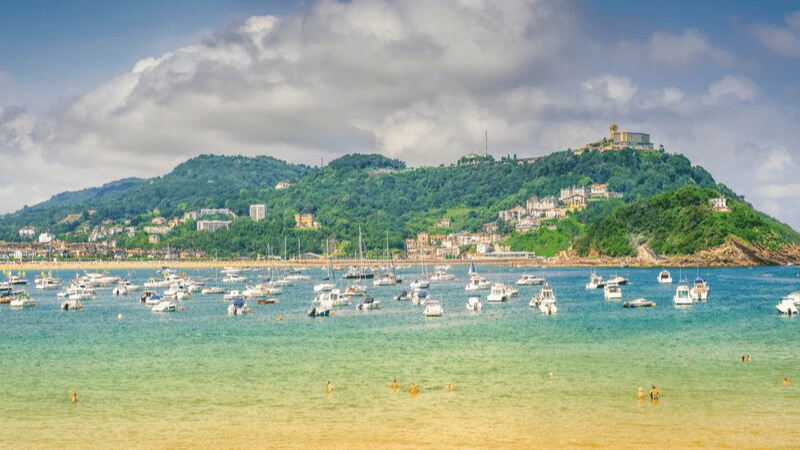
If your property is in beautiful San Sebastián, you can also rent it out completely or even host tourists in your own home.
If you rent rooms, you must have clearly differentiated spaces for the kitchen, dining room or living room, bathroom, and bedroom. Tourists must have at least one bedroom and one bathroom for themselves.
In the case of tourist accommodation, it cannot be less than 35 square meters and the kitchen must have containers for waste separation, indicating the place for its deposit.
The ordinance has divided the map of San Sebastián into several zones, establishing certain limitations. In fact, in zone A, holiday accommodation is completely prohibited.
To carry out the activity, a prior communication model and a report with the owner's and property's data must be submitted to the City Council.
Requirements to obtain a tourist rental license

The Airbnb flat legislation in the Basque Country requires that the start of the activity be communicated to the corresponding City Council, making a responsible declaration that includes the details of the property, the accommodation, and the owner. Paying the corresponding municipal fee.
Registration in the Register of Tourist Companies and Activities of Euskadi is also necessary. The responsible entity will check if the property meets all the requirements, and if so, registration will proceed, and the interested party will be granted a distinctive code that will identify the property as tourist accommodation.
Possible fines and penalties for tourist rentals

If the legal requirements established at the autonomous or municipal level are not met, a sanctioning procedure will be initiated. Be very careful with this; it is not enough to comply with the legislation to obtain the license and then do whatever you want.
Minor infractions are sanctioned with fines of up to €10,000, serious ones with fines of €10,001 to €100,000, and very serious ones can reach up to €600,000. The Basque Country is, along with Catalonia, the Autonomous Community with the highest fines in this matter.
But if you are a legal person and do everything correctly, you don't have to fear these sanctions. However, remember that in this Community it is also mandatory to take out civil liability insurance of €35,000 per accommodation place offered. This entails an extra expense, but it will prevent you from having to dig into your pocket if a tourist suffers any damage in your apartment or if your guests cause damage to the community.