New informational model for short-term rentals: complete guide 2026
Understand Spain's new short-term rental reporting model for 2026. Get a complete guide for owners & managers, covering registration, reporting, and key changes. Stay compliant!

Holiday and temporary rentals in Spain are entering a new phase marked by an increased level of administrative control. At the end of 2026, the Government approved a new annual reporting obligation that changes the way short-term rental data is communicated to the Administration.
This measure is supported by two new key tools: the Unified Rental Register and the Digital Single Window for Rentals, created to centralize information on these types of rentals and facilitate their supervision. From now on, the activity must be systematically registered, even in the case of occasional rentals.
If you are an owner, manager, or you manage access and stays in tourist accommodation, this change directly affects you.
What is the new reporting model for short-term rentals
The new reporting model is a mandatory annual declaration through which detailed information on short-term rentals carried out during a fiscal year is communicated to the Administration.
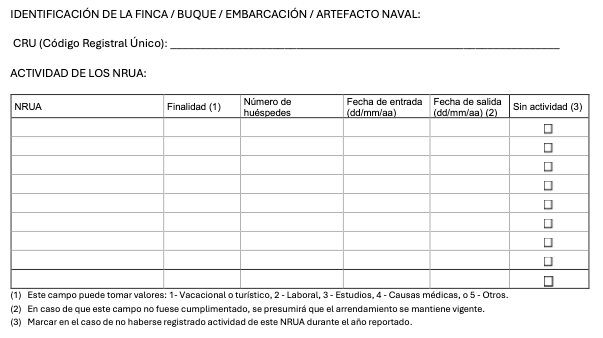
It does not introduce a new tax, but it does require structured reporting on the activity: property data, ownership, occupation periods, registration number and other elements that allow identification of how and when a property has been rented.
This model is integrated into the new digital ecosystem for controlling temporary rentals in Spain.
What is the objective of the new reporting model?
The main objective is to improve the control and traceability of short-term rentals, a segment that has grown rapidly in recent years.
Con esta medida, la Administración busca:
- Tener un conocimiento real del volumen de alquileres temporales
- Reducir la economía sumergida y el fraude
- Verificar que los alojamientos cuentan con un registro válido
- Unificar la información de los diferentes actores
- Facilitar la coordinación entre administraciones
In practice, it represents a further step towards the professionalization of the sector.
Which rentals are affected by this new obligation?
The reporting model applies to short-term rentals, meaning those that do not constitute the tenant's habitual residence.
It includes:
- Tourist rentals
- Temporary rentals for work, studies, or medical treatments
- Stays of a few days or weeks
- Properties advertised or managed through digital platforms
Long-term habitual residence rental contracts are excluded.
Who is obligated to submit the reporting model?
The obligation may fall on different entities, depending on how the rental is managed:
- Owners who rent directly
- Companies that manage third-party properties
- Intermediaries who are actively involved in commercialization
It is essential to correctly identify who must submit the information to avoid errors or duplication.
What information should be included in the reporting model?
Although the definitive format may be specified through regulatory development, the required information revolves around:
- Identification of the property owner
- Data that allows the property to be located
- Accommodation registration number
- Start and end dates of each stay
- Amounts received
- Basic information of the occupants
The accuracy and consistency of this data will be key to avoiding subsequent requirements.
When should the reporting model be submitted?
Frequency
The declaration is annual and covers all activity for the corresponding fiscal year.
Deadline
The submission must be made in the first months of the following year, within the period established by the applicable regulations.
Where and how is it submitted?
The model is submitted electronically, through the systems enabled by the Administration.
For this, it is necessary to have:
- Valid digital identification
- Access to complete information about the stays
- Well-organized and consistent data
Disorderly management of bookings and access can complicate this process.
What happens if the registration number is used incorrectly?
The incorrect use of the registration number — either because it does not correspond to the property, is expired, or is non-existent — can have significant consequences:
- Administrative requirements
- Possible economic penalties
- Incidents with platforms
- Problems with the autonomous administration
Therefore, keeping the registration correctly linked to each property is fundamental.
How technology can help you comply with this obligation
The new reporting obligation highlights a common problem: lack of control over who enters, when, and for how long in a property.
Solutions like those from Raixer, which allow for managing digital access, scheduling entries and exits, and maintaining a clear record of stays, greatly facilitate:
- Real control of occupations
- Consistency between bookings and access
- Traceability of stays
- Organization of the necessary information to comply with regulations
In an increasingly regulated environment, having digital systems is no longer just a matter of convenience, but of compliance.
Frequently asked questions about the new reporting model
Is it mandatory even if I only rent for a few days a year?
Yes. There is no minimum threshold of days. If there has been a short-term rental, there is a reporting obligation.
Is it submitted if I have had no bookings?
If there has been no activity during the fiscal year, in principle it would not be necessary, although it is advisable to review each specific case.
Does it affect the entire Spanish territory?
Yes. The reporting obligation is state-wide, although it coexists with autonomous regulations.
When does it come into effect?
The measure has already been approved and affects the fiscal year determined by the applicable regulations.
What is the deadline for submitting the model?
The exact deadline is established each year, usually in the first months of the following year.
Do I have to keep documentation about the rentals?
Yes. It is advisable to keep contracts, payment receipts, and occupancy records for several years.
Conclusion: another step towards a more regulated holiday rental market
The new reporting model confirms a clear trend: short-term rentals are moving towards a more controlled, digital, and transparent framework.
For owners and managers, adapting to this new scenario means improving the way stays, access, and information are managed. Betting on digital solutions not only facilitates day-to-day operations but also becomes a key tool to comply with new regulatory requirements without friction.